By Ayn Rand
★★★★★
Five Things I Liked About Atlas Shrugged:
1. Francisco D’Anconia
2. Brotherhood of Hugh Akston’s 3 favorite pupils
3. “Who is John Galt?”
4. Dagny Taggart
5. Disappearances of the “prime movers”
My copy of Atlas Shrugged clocks in at 1,069 pages. It took me about 10 days to read, at a rate of approximately 100 pages a day. It is not a novel for the faint of heart, that’s for sure. It is a significant undertaking of time and mind, not something to be picked up on a whim. You kind of have to be mentally prepared for the endurance and discipline it will take to push through those thousand pages – and that’s if you like the book. I can’t imagine the willpower it would take to see the story through to the end if you weren’t enjoying it.
Happily, I enjoyed it. But during the first half, this was little consolation, as I had heard several reports of undergoing a change of heart at the halfway point. My uncle, for example, spoke of making it halfway through only to get so aggravated that he threw the book away. One of my friends also made it halfway before turning on the characters and finishing it only out of stubbornness. I didn’t experience this change of heart, however; I liked it all the way through. Well, with the exception of a certain speech made by a certain John Galt that drags on for a certain 60 pages. But other than that.
Atlas Shrugged is actually a mystery novel, you might be surprised to learn. It is a mystery novel that investigates the question “Who is John Galt?” which people have begun using as a “who knows?” substitute, without realizing they are asking a real question. The answer to “Who is John Galt?” however, is much more than one man’s identity. “Who is John Galt?” answers what happens to society when its “prime movers” (the men and women who keep society in motion) withdraw from the world; what happens when one man promises to “stop the motor of the world”; what happens when society’s leaders direct everyone to cease thinking or desiring, to sacrifice self and thought to the “collective good.”
If you read the back cover summary of Atlas Shrugged, it’s incredibly vague, providing no real sense of what the story is about. I think that’s because the novel, at its heart, isn’t about character or plot, but about abstractions – ideas and archetypes and philosophies. But to provide a more concrete conception of what story to expect if you take on the commitment that is Atlas Shrugged, I’ll try to sum up the basic premises of the plot. Bear with me. A thousand pages is a bit unwieldy to condense into a paragraph.
Dagny Taggart decides as a child that she will grow up to run Taggart Transcontinental, the railroad empire her grandfather founded – and she does. Atlas Shrugged is, simply put, an epic devoted to Dagny’s struggle to preserve the integrity of the railroad that, as the single driving purpose in her life, is her life. In her efforts to save Taggart Transcontinental from ruin, Dagny must combat at every turn the directives of an unthinking government leading society into a tailspin of collective and destructive altruism, and take down the one man she holds responsible for the disintegration of industry via the unthinking apathy of society expressed in the phrase “Who is John Galt?” and the steady disappearance of industry’s main players under the influence of the ‘destroyer’: John Galt.
Even among those who enjoyed Atlas Shrugged, general opinion seems to favor The Fountainhead (and not just because it's shorter). Maybe it’s because I’ve read Atlas Shrugged more recently, but I actually liked it better. I think I found the novel’s larger lens and mystery slant more engaging (and engaging is key when you’re looking at a quadruple-digit page count). There also seemed to be some more diversity in the characters, especially among the protagonists. The Fountainhead’s protagonist – Howard Roark – was the apotheosis of Rand’s ideal man, a symbol more than a real person. His equivalent in Atlas Shrugged, however, is not Dagny Taggart, but John Galt, who only appears in the last third or so of the book. As Atlas Shrugged’s protagonist, Dagny is somewhat more nuanced in her personification of Rand’s philosophy. Though the essential attributes are there from the beginning, it takes the entire novel for her to become an epitomized Randian heroine, and the fact that she does not start out a perfect archetype but becomes so on a 1,000-page journey makes her more relatable, as well as making her story more interesting because it involves not just external conflict but personal.
Ayn Rand's novels are meant to establish a society-wide economic philosophy, but you can just as well take away from them an individual philosophy, a philosophy which says: "Do what you want, because you want to; live your life on your own terms, for your own sake." That philosophy really resonates with me, and - much more than the economic theory - is why I like her novels so much.
"If you saw Atlas, the giant who holds the world on his shoulders, if you saw that he stood, blood running down his chest, his knees buckling, his arms trembling but still trying to hold the world aloft with the last of his strength, and the greater his effort the heavier the world bore down on his shoulders—what would you tell him to do?"
"To Shrug."
Books Read This Year: 49
Top 100 Progress: 44/100
Saturday, June 11, 2011
Sunday, May 29, 2011
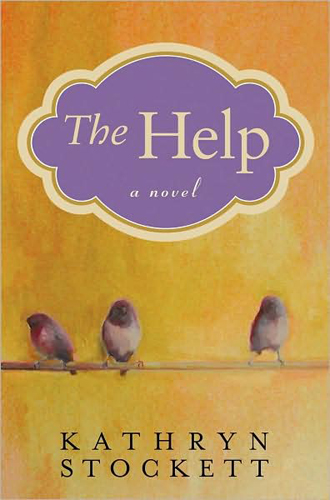
The Help
By Kathryn Stockett
★★★★★
Five Things I Liked About The Help:
1. Camaraderie between the maids.
2. Characters & characterization.
3. Storytelling, of the story and in the story.
4. Love tangential to hate.
5. The feeling I got while reading it.
I was skeptical of The Help, as I am of any book that makes a run of the soccer-mom-book-club circuit, or makes an appearance on Oprah’s bookshelf. The Help became so trendy so fast, in fact, that although it was only released in 2009, it already has a feature film adaptation coming out this August. Do you know how fast that baby must have gone into production? Super, duper fast. Faster than Twilight fast.
But. BUT. It was actually good.
The Help is told from the perspective of three different women. Two of them – Aibeleen and Minny – are household maids for white women, polishing their silver, cooking their food, and raising their babies; the other, Miss Eugenia “Skeeter” Phelan, is a young white aspiring writer. When Skeeter is told by a New York publisher that she needs to come up with something innovative to write about, she toys with the seed of an idea – a dangerous, daunting, and bravely provocative idea. She decides to compile a book of interviews with colored maids about their white employers, some of which are Skeeter’s closest friends. But even if Skeeter can succeed in convincing maids to tell a white woman the truth and manage to get the book both written and published, her problems will only be just beginning. Because in Jackson, Mississippi, a secret like this won’t stay hidden forever, and when the truth comes out, you can be sure it’s going to turn the town upside-down and make its inhabitants as hot as a Mississippi kitchen in August.
The Help felt really reminiscent to me of The Secret Life of Bees, which I’m sure has a lot to do with the subject matter, but I think also a lot to do with the tone: heartfelt and warm, despite the cold cruelty of segregated southern life. One of the ways The Help achieved this warmth was by suffusing the story with love – love between the maids and their families, love between the maids and the white children they raise, love between the maids and their unlikely ally, Miss Skeeter, and even, sometimes, love between the maids and their employers. Stockett was painstaking in her portrayal of her characters and the varying kinds of relationships that tied them together. The relationships between the maids the white children that adored them until they grew up to become their parents with their parents’ beliefs was heartbreaking, the supportive relationships amongst the colored community were heartwarming, and the relationships between the colored community and the whites that abused them was just plain infuriating. These relationships are all navigated carefully to avoid stereotypes, and no character is either wholly good or bad*. The story also avoids getting overly caught up in the racial conflict, leaving room to explore the flaws in Skeeter’s world, too – her relationship with her mother, her on-and-off first boyfriend, her future, and herself.
One of the striking things about The Help was the time period. Reading about the hostile racism and segregation, my mind subconsciously conjured up an image of pre-1900 America, simply because the social climate felt so different from my experience of today that it felt like it belonged to another century altogether, but then Stockett would throw in some detail – the recent introduction of air conditioning, To Kill a Mockingbird’s release, the Kennedy assassination – that anchored the story where it belongs: in the 1960’s, only 50 years ago.
Another striking thing – an example of the deep-seeded hypocrisy rampant amongst the southern whites that really resonated with me – was when Skeeter points out the hypocrisy of the Junior League raising money for the Poor Starving (black) Children of Africa when they won’t even pay their own black maids, with plenty of little mouths of their own to feed, minimum wage.
The Help was a lovely surprise. A resonant story that manages to be both critical and heartfelt at the same time, it is as much an enjoyable read as it is a candid portrayal of one of the more shameful periods of our country’s history. However, though the portrayal is not a forgiving one, neither does it flatly condemn everything about that time, including as it does many nuanced moments of tenderness between the help and the women they work for.
*I was going to say that there’s no strict black and white… but then I realized that it would be a not entirely appropriate accidental pun.
Books Read This Year: 48
Top 100 Progress: 44/100
Friday, May 27, 2011
Beauty Queens
By Libba Bray
★★★☆☆
Three Things I Liked About Beauty Queens:
1. The pirates from the hit reality TV show Captains Bodacious, who also end up marooned on the island.
2. Miss Texas (and the other Misses).
3. The dialogue and narrative voice.
So I know I usually complain about the hideous covers of young adult novels, but I actually like this one. It’s sassy and creative and doesn’t quite show the model’s face, though if you look closely at the top you get some chin and mouth action. But I can forgive it that.
Libba Bray is becoming known for writing zany, eccentric stories with heart. Her last novel, Going Bovine, which won the prestigious Printz Award for excellence in young adult literature*, was about a boy who gets mad cow disease. When he embarks on a fantastical road trip with a garden gnome as a companion, the question becomes: Is the whole trip a hallucination, or just the fantastical elements, like fire-breathing dragons and feisty fairy girls?
Beauty Queens is no less extravagant. It’s pretty much Lord of the Flies meets the Miss America pageant. The contestants for Miss Teen Dream are being flown to the beachfront location of the pageant when they crash land on an apparently deserted island. The flight attendants, cameramen, and handlers all perish, as do over half of the 50 wannabe Miss Teen Dreams. Stranded with no adults, no civilization, no audience or rescue squad, and lacking their customary arsenal of beauty supplies, will these beauty queens hold on to their Teen Dream, or will they go native? Beauty Queens is, ultimately, a girl power novel about finding and being true to yourself. It’s also about showing society where they can stick their unrealistic standards.
I knew going in that this is an outlandish, somewhat campy novel, and you kind of just have to buckle your seatbelt and get ready to go along for the ride (trusting that it won’t see you crash-landed with the pageant tribe), but there were some things that were just a bit too much to take. The surviving girls had sustained injuries in the crash ranging from gashes to broken arms, to the horrific mental image of Miss New Mexico with an airplane tray lodged in her forehead. But these are not given much attention. Bray never acknowledges how the girls deal with their gashes, only references a messy job done setting the broken arm with one girl’s pre-pre-med knowledge of medicine, and leaves the tray in Miss New Mexico’s forehead for the duration of the novel… how she survives several weeks in the treacherous jungle climate of the island without medical attention is not explained, nor even acknowledged. And even though I know full well that such technical details of their survival are not the point of this book… I couldn’t quite get over it. I kept thinking about Miss New Mexico and that horrible tray. How did she swim in the ocean? What if she bumped her hand against a low-hanging branch? Turned over in her sleep? There are so many perils that could befall even the most able-bodied person in this situation, much less a beauty queen with a tray in her head!! Okay. Sorry for talking so much about the tray thing. It just gets under my skin, that’s all.
Also, as much as I support the statements Bray is making in the novel – live on your own terms, not for society’s expectations; corporate America is getting out of hand; so is materialism and reality TV, etc. – they were hit-you-over-the-head overt. Again, I know this just part of the novel’s style, but it didn’t quite work for me. Additionally, I don’t want to stereotype beauty queens… but I will confess that I kind of doubt that in any one batch of pageant contestants, there would be quite so many hiding their loud-and-proud girl-power lights under a bushel, or using the pageant for their own ends. For a novel so eager to break stereotypes… there were a lot of Types in it, the kind of Types that are supposed to be the anti-Types, but really just become Types of their own. Finally, considering that this was a book about beauty queens being stranded Lord of the Flies-style on an island, it had a déjà vu quality to it that I think was the result of the very Bond-esque nature of The Corporation** subplot – and we all know Bond movies are not known for originality of plot.
But all in all, Beauty Queens was a witty and entertaining read, with quick dialogue, likable (if somewhat unrealistic) characters, perfect for the post-finals academic detox. I would recommend it to fans of young adult literature that doesn’t pander to the damsel-in-distress/paranormal romance/shallow drivel that takes up most of the young adult section these days.
*Which John Green won for Looking for Alaska in 2006.
**The Corporation is the company behind the Miss Teen Dream pageant, along with the entire slew of television programs, beauty products, and other commodities fake-advertised for in the novel. They are the enemy.
Books Read This Year: 47
Top 100 Progress: 44/100
★★★☆☆
Three Things I Liked About Beauty Queens:
1. The pirates from the hit reality TV show Captains Bodacious, who also end up marooned on the island.
2. Miss Texas (and the other Misses).
3. The dialogue and narrative voice.
So I know I usually complain about the hideous covers of young adult novels, but I actually like this one. It’s sassy and creative and doesn’t quite show the model’s face, though if you look closely at the top you get some chin and mouth action. But I can forgive it that.
Libba Bray is becoming known for writing zany, eccentric stories with heart. Her last novel, Going Bovine, which won the prestigious Printz Award for excellence in young adult literature*, was about a boy who gets mad cow disease. When he embarks on a fantastical road trip with a garden gnome as a companion, the question becomes: Is the whole trip a hallucination, or just the fantastical elements, like fire-breathing dragons and feisty fairy girls?
Beauty Queens is no less extravagant. It’s pretty much Lord of the Flies meets the Miss America pageant. The contestants for Miss Teen Dream are being flown to the beachfront location of the pageant when they crash land on an apparently deserted island. The flight attendants, cameramen, and handlers all perish, as do over half of the 50 wannabe Miss Teen Dreams. Stranded with no adults, no civilization, no audience or rescue squad, and lacking their customary arsenal of beauty supplies, will these beauty queens hold on to their Teen Dream, or will they go native? Beauty Queens is, ultimately, a girl power novel about finding and being true to yourself. It’s also about showing society where they can stick their unrealistic standards.
I knew going in that this is an outlandish, somewhat campy novel, and you kind of just have to buckle your seatbelt and get ready to go along for the ride (trusting that it won’t see you crash-landed with the pageant tribe), but there were some things that were just a bit too much to take. The surviving girls had sustained injuries in the crash ranging from gashes to broken arms, to the horrific mental image of Miss New Mexico with an airplane tray lodged in her forehead. But these are not given much attention. Bray never acknowledges how the girls deal with their gashes, only references a messy job done setting the broken arm with one girl’s pre-pre-med knowledge of medicine, and leaves the tray in Miss New Mexico’s forehead for the duration of the novel… how she survives several weeks in the treacherous jungle climate of the island without medical attention is not explained, nor even acknowledged. And even though I know full well that such technical details of their survival are not the point of this book… I couldn’t quite get over it. I kept thinking about Miss New Mexico and that horrible tray. How did she swim in the ocean? What if she bumped her hand against a low-hanging branch? Turned over in her sleep? There are so many perils that could befall even the most able-bodied person in this situation, much less a beauty queen with a tray in her head!! Okay. Sorry for talking so much about the tray thing. It just gets under my skin, that’s all.
Also, as much as I support the statements Bray is making in the novel – live on your own terms, not for society’s expectations; corporate America is getting out of hand; so is materialism and reality TV, etc. – they were hit-you-over-the-head overt. Again, I know this just part of the novel’s style, but it didn’t quite work for me. Additionally, I don’t want to stereotype beauty queens… but I will confess that I kind of doubt that in any one batch of pageant contestants, there would be quite so many hiding their loud-and-proud girl-power lights under a bushel, or using the pageant for their own ends. For a novel so eager to break stereotypes… there were a lot of Types in it, the kind of Types that are supposed to be the anti-Types, but really just become Types of their own. Finally, considering that this was a book about beauty queens being stranded Lord of the Flies-style on an island, it had a déjà vu quality to it that I think was the result of the very Bond-esque nature of The Corporation** subplot – and we all know Bond movies are not known for originality of plot.
But all in all, Beauty Queens was a witty and entertaining read, with quick dialogue, likable (if somewhat unrealistic) characters, perfect for the post-finals academic detox. I would recommend it to fans of young adult literature that doesn’t pander to the damsel-in-distress/paranormal romance/shallow drivel that takes up most of the young adult section these days.
*Which John Green won for Looking for Alaska in 2006.
**The Corporation is the company behind the Miss Teen Dream pageant, along with the entire slew of television programs, beauty products, and other commodities fake-advertised for in the novel. They are the enemy.
Books Read This Year: 47
Top 100 Progress: 44/100
Saturday, May 21, 2011
Catch Me If You Can
By Frank W. Abagnale
★★★☆☆
Three Things I Liked About Catch Me If You Can:
1. Frank’s youth.
2. Frank’s unabashed amusement at his past capers.
3. The truth behind the movie.
Catch Me If You Can is one of my favorite movies. I just have this somewhat random fascination with intellectual criminals, like in Ocean’s 11,The Thomas Crowne Affair, or I Love You Phillip Morris. But of all those criminals, Frank Abagnale probably fascinates me the most.
Frank Abagnale ran away from home when he was 16. Before his twenty-first birthday, he had impersonated a pilot, a doctor, a lawyer, and a professor, stolen over 2 million dollars in check fraud and was a wanted criminal across the globe, and had evaded capture by the FBI multiple times – even slipping from their custody by “flushing” himself down the toilet of an airplane on the tarmac of JFK. Talk about stranger than fiction. For his crimes, he served time in France and Sweden before he was eventually captured on American soil, charged, and served a truncated sentence in prison. Since his release, he has gone on to work for the FBI, assisting them as one of the world’s foremost experts on fraud.
Though I enjoyed reading Frank’s memoirs and hearing about his capers first hand without the influence of a Hollywood editing team, I do have to say I didn’t get much more out of the book than I got out of the movie. It wasn’t particularly well written, and there weren’t terribly many more exploits detailed in the book that weren’t in the movie. I did enjoy observing the tone in which the memoirs were written, however. Though Frank alludes to periods of anxiety, loneliness, and some twinges of conscience, I think by and large his years as a world-class criminal were enjoyable ones, spent running on the adrenaline of being young and clever and getting away with it – and his tone shows it. Rather than writing a contrite memoir espousing how sorry he is for what he did, how he was just a young boy who went astray, he owns up to his misdeeds with matter-of-factness, a little pride, and a touch of amusement, and I can hardly blame him. After all, there is something inherently both impressive and amusing about an 18-year old kid passing himself off as a Harvard grad and passing the bar exam after a few weeks of studying, or teaching a collegiate sociology class with a fake PhD by reading one chapter ahead, or believably overseeing a shift of hospital interns by hiding in the linen closet to look up terms in a medical dictionary.
★★★☆☆
Three Things I Liked About Catch Me If You Can:
1. Frank’s youth.
2. Frank’s unabashed amusement at his past capers.
3. The truth behind the movie.
Catch Me If You Can is one of my favorite movies. I just have this somewhat random fascination with intellectual criminals, like in Ocean’s 11,The Thomas Crowne Affair, or I Love You Phillip Morris. But of all those criminals, Frank Abagnale probably fascinates me the most.
Frank Abagnale ran away from home when he was 16. Before his twenty-first birthday, he had impersonated a pilot, a doctor, a lawyer, and a professor, stolen over 2 million dollars in check fraud and was a wanted criminal across the globe, and had evaded capture by the FBI multiple times – even slipping from their custody by “flushing” himself down the toilet of an airplane on the tarmac of JFK. Talk about stranger than fiction. For his crimes, he served time in France and Sweden before he was eventually captured on American soil, charged, and served a truncated sentence in prison. Since his release, he has gone on to work for the FBI, assisting them as one of the world’s foremost experts on fraud.
Though I enjoyed reading Frank’s memoirs and hearing about his capers first hand without the influence of a Hollywood editing team, I do have to say I didn’t get much more out of the book than I got out of the movie. It wasn’t particularly well written, and there weren’t terribly many more exploits detailed in the book that weren’t in the movie. I did enjoy observing the tone in which the memoirs were written, however. Though Frank alludes to periods of anxiety, loneliness, and some twinges of conscience, I think by and large his years as a world-class criminal were enjoyable ones, spent running on the adrenaline of being young and clever and getting away with it – and his tone shows it. Rather than writing a contrite memoir espousing how sorry he is for what he did, how he was just a young boy who went astray, he owns up to his misdeeds with matter-of-factness, a little pride, and a touch of amusement, and I can hardly blame him. After all, there is something inherently both impressive and amusing about an 18-year old kid passing himself off as a Harvard grad and passing the bar exam after a few weeks of studying, or teaching a collegiate sociology class with a fake PhD by reading one chapter ahead, or believably overseeing a shift of hospital interns by hiding in the linen closet to look up terms in a medical dictionary.
Books Read This Year: 46
Top 100 Progress: 44/100
Tuesday, May 17, 2011
The Curious Incident of the Dog in the Night-time (Top 100 #44)
By Mark Haddon
★★★★★
Five Things I Liked About The Curious Incident:
1. Christopher
2. Hidden letters
3. Hot strawberry milkshakes
4. White noise
5. Palm-to-palm hugging
The Curious Incident of the Dog in the Night-time has been for years one of those books I’m aware of but never been quite intrigued enough by to buy or read. But recently I’ve heard a lot of good things about it, perhaps the most impressive being my brother’s recommendation. He’s not known for being a big reader, and what he does read tends more toward fantasy than literary fiction. So, needless to say, when I heard he enjoyed this book my curiosity was spiked. Then I found a wonderful used copy at a book sale* in my town a couple weeks ago – perfectly worn to floppy softness without being broken or ratty – and it jumped to the top of my To Read list (now a To Read pile, thanks to that book sale!). After all, it's not often that my brother and I overlap in reading material!
Have you ever read a book with an autistic narrator/protagonist before? No? Me neither. Until now. Christopher is 15 years old (though it's easy to forget and start thinking of him as much younger), hates the colors yellow and brown, being touched, and speaking with or being surrounded by strangers, likes hot strawberry milkshakes, can calculate the powers of 2 out to 245 in his head, wanders the streets in the wee hours of the night when he can’t sleep, takes everything literally, and is relentlessly logical – though not always in a way that seems logical to us. Christopher lives alone with his father, under the impression that his mother died some time ago of a sudden heart attack. One night, Christopher discovers his neighbor’s dog – Wellington – murdered in the garden with a fork. This curious incident spurs Christopher to embark on an investigation in the style of Sherlock Holmes (his literary idol and kindred spirit, both possessing powers of observation far beyond the norm) in which he uncovers not only a canine killer, but a network of cracks in his carefully organized life that threaten to cave under pressure and overwhelm him with an inundation of reality.
The power of Haddon’s writing is entirely in the construction of Christopher’s voice. Although Christopher’s story is a somewhat sad one, Haddon doesn’t make the mistake of confusing empathy with pity. You don’t need to be autistic to identify with Christopher. His neuroses are, of course, more severe than the average person’s, but we all have irrational fears, things that make us lose our cool, things that cause us angst. (My current thing is wasps… I feel vulnerable to stealth attacks and dive-bombs whenever I venture outdoors.)
Furthermore, seeing the world through Christopher’s eyes is some of the most convincing evidence to support the suggestion that we only ever use a small percentage of our brain, because it seems that for anyone to have such powers of intellect they must be working with a more powerful mental machine than the rest of us. And speaking from personal experience, I can vouch that the portrayal of Christopher’s mental capabilities seems pretty accurate to me, not an exaggeration at all. That being said, Christopher’s intelligence is as much a handicap as it is a blessing, preventing him from viewing the world in any terms other than black and white, right and wrong, yes and no.
I love this quote from the Goodreads summary: “Herein lies the key to the brilliance of Mark Haddon’s choice of narrator: The most wrenching of emotional moments are chronicled by a boy who cannot fathom emotion.” The result is a poignant, unique, and resonant novel as enjoyable for adults as teens, and for literary as non-literary readers (my brother being case in point). It's also a really quick read, so... you have no excuse.
*Calling that event a book sale is like calling The Strand a bookstore – technically true, but it doesn’t begin to cover it. Picture an ice rink. Now fill it with tables. Now strew those tables with piles of books. Now add more books stacked in boxes beneath the tables. Now put $1-3 price tags on each book. Now add a “All items half-off” sign to the door of the rink. Boggles the imagination, doesn’t it? If it hadn’t been so chilly, I’d have thought I was in heaven.
Books Read This Year: 45
★★★★★
Five Things I Liked About The Curious Incident:
1. Christopher
2. Hidden letters
3. Hot strawberry milkshakes
4. White noise
5. Palm-to-palm hugging
The Curious Incident of the Dog in the Night-time has been for years one of those books I’m aware of but never been quite intrigued enough by to buy or read. But recently I’ve heard a lot of good things about it, perhaps the most impressive being my brother’s recommendation. He’s not known for being a big reader, and what he does read tends more toward fantasy than literary fiction. So, needless to say, when I heard he enjoyed this book my curiosity was spiked. Then I found a wonderful used copy at a book sale* in my town a couple weeks ago – perfectly worn to floppy softness without being broken or ratty – and it jumped to the top of my To Read list (now a To Read pile, thanks to that book sale!). After all, it's not often that my brother and I overlap in reading material!
Have you ever read a book with an autistic narrator/protagonist before? No? Me neither. Until now. Christopher is 15 years old (though it's easy to forget and start thinking of him as much younger), hates the colors yellow and brown, being touched, and speaking with or being surrounded by strangers, likes hot strawberry milkshakes, can calculate the powers of 2 out to 245 in his head, wanders the streets in the wee hours of the night when he can’t sleep, takes everything literally, and is relentlessly logical – though not always in a way that seems logical to us. Christopher lives alone with his father, under the impression that his mother died some time ago of a sudden heart attack. One night, Christopher discovers his neighbor’s dog – Wellington – murdered in the garden with a fork. This curious incident spurs Christopher to embark on an investigation in the style of Sherlock Holmes (his literary idol and kindred spirit, both possessing powers of observation far beyond the norm) in which he uncovers not only a canine killer, but a network of cracks in his carefully organized life that threaten to cave under pressure and overwhelm him with an inundation of reality.
The power of Haddon’s writing is entirely in the construction of Christopher’s voice. Although Christopher’s story is a somewhat sad one, Haddon doesn’t make the mistake of confusing empathy with pity. You don’t need to be autistic to identify with Christopher. His neuroses are, of course, more severe than the average person’s, but we all have irrational fears, things that make us lose our cool, things that cause us angst. (My current thing is wasps… I feel vulnerable to stealth attacks and dive-bombs whenever I venture outdoors.)
Furthermore, seeing the world through Christopher’s eyes is some of the most convincing evidence to support the suggestion that we only ever use a small percentage of our brain, because it seems that for anyone to have such powers of intellect they must be working with a more powerful mental machine than the rest of us. And speaking from personal experience, I can vouch that the portrayal of Christopher’s mental capabilities seems pretty accurate to me, not an exaggeration at all. That being said, Christopher’s intelligence is as much a handicap as it is a blessing, preventing him from viewing the world in any terms other than black and white, right and wrong, yes and no.
I love this quote from the Goodreads summary: “Herein lies the key to the brilliance of Mark Haddon’s choice of narrator: The most wrenching of emotional moments are chronicled by a boy who cannot fathom emotion.” The result is a poignant, unique, and resonant novel as enjoyable for adults as teens, and for literary as non-literary readers (my brother being case in point). It's also a really quick read, so... you have no excuse.
*Calling that event a book sale is like calling The Strand a bookstore – technically true, but it doesn’t begin to cover it. Picture an ice rink. Now fill it with tables. Now strew those tables with piles of books. Now add more books stacked in boxes beneath the tables. Now put $1-3 price tags on each book. Now add a “All items half-off” sign to the door of the rink. Boggles the imagination, doesn’t it? If it hadn’t been so chilly, I’d have thought I was in heaven.
Books Read This Year: 45
Top 100 Progress: 44/100
Sunday, May 15, 2011
What Happened to Goodbye
By Sarah Dessen
★★★☆☆
Three Things I Liked About What Happened to Goodbye:
1. Easter eggs*
2. Dave
3. Deb
(4. Restaurant business)
No matter whether it’s a new one or one I’ve read a couple times already, Sarah Dessen’s books always have an inherent familiarity about them. It’s partly her tradition of setting every book within about a 50-mile radius of each other, and partly the ever-reliable Dessen formula. It’s not necessarily a bad thing, especially for Dessen fans – you know exactly what to expect, and you get just that. And what you get is a (usually, if you ignore Dreamland) likeable heroine with some confidence/identity/family issues who meets some friends and a guy in a welcoming, quirky, and usually new (to her) setting that help her to conquer her issues just in time for a satisfying but just shy of perfectly tidy ending. You also get a series of really hokey covers. That’s part of the deal. Just try to ignore them.
Note: The fourth Thing I Like About What Happened to Goodbye is in parentheses because it’s an honorary Thing. I enjoyed the book enough to give it four stars, but docked it one penalty star for not measuring up to my favorite Dessen book (The Truth About Forever).
Mclean Sweet (um… let’s not even discuss this name) has lived in four towns in two years since her parents’ messy divorce. She lives with her father, a restaurant contractor called in to resuscitate restaurants in their dying throes, staying only as long as it takes to get the restaurant back on its feet before moving on to the next one – and the next town. In each different town, Mclean takes on a different identity, from theatre noir Lizbet (really, where does Dessen come up with these names?) to social butterfly Beth. She makes a policy of never staying long enough to get attached and always leaving too quickly for goodbyes. That is, until she moves to Lakeview. In spite her of efforts, her real name sticks before she can establish her new one, and suddenly, for the first time in two years, Mclean finds herself being… Mclean. As she falls in with an endearingly flawed group of friends (the best kind), including the brilliant and charming boy next door, Dave, Mclean rediscovers the joy of being anchored to people and place. When her life threatens to be uprooted yet again, she finds she still has no interest in goodbye – but this time, it’s because she wants to stay.
More than a romance, What Happened to Goodbye is a story about navigating the choppy waters of divorce, making peace with your past, and settling into your own skin. Mclean’s relationship with Dave trails in importance behind her relationships with her mom, her dad, and herself.
My biggest problem with Mclean (other than her name) was that she was more of a narrative voice than an actual character. The personalities of the secondary characters – especially offbeat and headstrong Deb, full of acronyms and surprises – far outshone Mclean’s bland brand of identity confusion. For a novel focused more on character development and emotional growth than the romantic relationship, Mclean failed to really come off the page for me. That said, the Dessen narrative voice is ever enjoyable, and fans will certainly not be disappointed.
*Characters from her other books that make minor reappearances.
Books Read This Year: 44
Top 100 Progress: 42/100
Saturday, May 7, 2011
The Inheritance of Loss
By Kiran Desai
★★★★★
Five Things I Liked About The Inheritance of Loss:
1. Sai and Gyan’s romance
2. Mutt the dog
3. Noni and Lola’s anglophilia and sisterly banter
4. Fluid backwards and forwards chronology
5. Vividness of setting (India!)
I read The Inheritance of Loss for my English class, but it’s the kind of book I might have picked up of my own accord anyway (one of the many things I love about college reading lists). Inheritance is another Booker Prize winner, but I found it far more enjoyable than the last one I read. Also, I’m a sucker for a pretty cover, and this one’s as pretty as they come! I will be proud to display this spine on my bookshelf, for more reasons than one.
The Inheritance of Loss takes place in the foothills of the Himalayas in a small Indian town called Kalimpong, and sets the personal lives of a small but diverse cast of characters against the backdrop of an Indian-Nepali insurgency led by the Gorkha National Liberation Front*. The arrival of his orphaned granddaughter, Sai, causes the hardened shell of a solitary judge to begin to crack, letting memories of the past seep into his consciousness and disturb his carefully cultivated stoicism. Meanwhile, the judge’s cook, who steps in as a makeshift father figure for Sai, lives off the hope he harbors for his son Biju, who is making his way in the New York underworld of immigrants and restaurant workers, hoping to earn a green card and enough money to return home to his father. Back in India, the Gorkha insurgency brings to the surface undercurrents of tension in the Kalimpong community between the Westernized elite and the indigenous poor, illustrated poignantly by the romance that blooms between Sai and her Nepali tutor, Gyan. At stake is not only the judge’s peace of mind, Biju’s success in America, or the future of Sai and Gyan’s fledgling romance, but the very culture of a nation, a hierarchical and historied way of life chafing against the past, present, and future all at once.
The Inheritance of Loss is divided into chapters, which are then divided into smaller sections by scene, sometimes a couple pages long, and sometimes only a few lines. The chapters alternate between Sai, the judge, and the cook in India and Biju in America, as well as between the judge’s past and the novel’s present. Desai’s writing is rich in imagery – color, sight, sound, and smell - bringing to life the lush exoticism of the Indian countryside (spiders, snakes, and scorpions made multiple appearances as merely a matter of course, *shiver*), the distinct and shifting voices, desires and fears, and convictions of the ensemble cast, and the nuances of a highly stratified country navigating a new layer of social complexity.
For some reason, The Inheritance of Loss seemed reminiscent of Jonathan Safran Foer’s work to me. Maybe it’s their shared ability to characterize large-scale social upheaval by focusing on the personalized conflicts of a handful of individuals, or their occasional playfulness with traditional style, or the high-resolution snapshot they give you of another culture’s daily circumstances, a sharply focused foreground of mundanity against the blurred background of the remarkable.
I’d recommend The Inheritance of Loss to anyone, but perhaps particularly to those who’ve enjoyed Memoirs of a Geisha, Everything is Illuminated, or Extremely Loud and Incredibly Close.
*If you don’t know what the GNLF is, don’t fret – I didn’t either. Basically, the GNLF campaigned to break off the Nepali-speaking areas of northern India into an independent state. Tensions arose, ensued, and were largely not overcome. The movement continues today.
Books Read This Year:
Top 100 Progress: 42/100
Subscribe to:
Posts (Atom)