Showing posts with label book review blog. Show all posts

Thursday, June 16, 2011

Sisterhood Everlasting

By Ann Brashares
★★★★☆

Four Things I Liked About Sisterhood Everlasting:
1. Reuniting with old fictional friends
2. Location, location, location
3. Getting it right
4. Quick, enjoyable Atlas Shrugged detox

I am kind of perplexed as to why this book exits. Why did Ann Brashares feel the need to forcibly extend a series that had already reached a satisfyingly open-ended conclusion? Especially when this new book doesn’t appear to have been written with a specific audience in mind: It’s not really an appropriate companion novel for the first four, being very much an adult novel, not young adult as they were; nor will it appear to adult readers who haven’t read the original (young adult) series.  And especially when continuing the series meant XXXXXXXXXXXXXX. Well, I can’t tell you what it meant, because that would ruin a crucial plot point and element of surprise in the book. And I hate plot ruiners! (Ruiners can be a word if I say it is.) Suffice to say that something BIG and (in relation to the first four books, and in my opinion) unnecessary goes down in order to pave the way for this fifth installment.

The Sisterhood of the Traveling Pants series was a fixture on my teen and preteen bookshelf, right next to The Princess Diaries and Bloody Jack. So despite some exasperation with Ann for continuing the series in an obvious ploy to reach out to her old (and probably somewhat diminished since the series “ended”) readership, I must admit I was pretty pleased by the prospect of reuniting with Lena, Tibby, Carmen, and Bridget. And, in spite of XXXXXXXXXXXXXX, I was not disappointed.

As it says on the cover, Sisterhood Everlasting picks up 10 years after Forever in Blue left off. Not that much has changed. Sure, Carmen is a successful TV actress living in New York and engaged to be married to a TV producer, Bridget is living with Eric in San Francisco, and Tibby moved with Brian to Australia two years ago, while Lena – ever static – hasn’t left Providence or RISD but has taken a professorship there and continues to pine after Kostos, but the problems they’re facing are virtually just slightly grown up versions of what they dealt with before. They’ve also felt steadily more out of sync ever since they all scattered on the winds after losing their lease on the flat they shared in New York after graduation. Good thing Tibby sends them all tickets out of the blue for an impromptu reunion trip to Greece! Or so they think. It turns out XXXXXXXXXXXXXX happens in Greece and turns their already precariously organized lives topsy-turvy. In the aftermath, the girls struggle to come to terms with XXXXXXXXXXXXXX, each other, and themselves.

The danger of writing a book like Sisterhood Everlasting is tying up satisfyingly loose ends into too neat of knots. Fortunately, Sisterhood Everlasting frays enough more ends to require plenty of its own re-tying. (Whether those ends really needed fraying is another discussion.) As I said, one of the best things to recommend this book is the prospect of once again enjoying the company of Lena, Tibby, Carmen, and Bridget. So although the end (predictably) comes together pretty neatly and as a stand alone novel this would only merit about 3 stars, as long you’re a fan of the series, I’m pretty sure you’ll enjoy the trip down memory lane.

Comment Questions:
1) If you’ve read the series, which sister was your favorite, or which did you most identify with? Mine was Lena, as much as her inertia frustrated me.
2) Will you read Sisterhood Everlasting, or are you over this series?

Books Read This Year: 51
Top 100 Progress: 44/100

Sunday, May 29, 2011

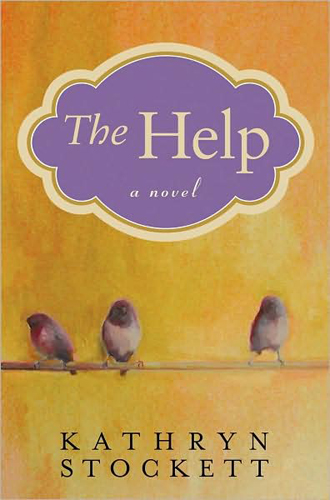
The Help

By Kathryn Stockett
★★★★★

Five Things I Liked About The Help:
1. Camaraderie between the maids. 
2. Characters & characterization.
3. Storytelling, of the story and in the story.
4. Love tangential to hate.
5. The feeling I got while reading it.

I was skeptical of The Help, as I am of any book that makes a run of the soccer-mom-book-club circuit, or makes an appearance on Oprah’s bookshelf. The Help became so trendy so fast, in fact, that although it was only released in 2009, it already has a feature film adaptation coming out this August. Do you know how fast that baby must have gone into production? Super, duper fast. Faster than Twilight fast.

But. BUT. It was actually good. 

The Help is told from the perspective of three different women. Two of them – Aibeleen and Minny – are household maids for white women, polishing their silver, cooking their food, and raising their babies; the other, Miss Eugenia “Skeeter” Phelan, is a young white aspiring writer. When Skeeter is told by a New York publisher that she needs to come up with something innovative to write about, she toys with the seed of an idea – a dangerous, daunting, and bravely provocative idea. She decides to compile a book of interviews with colored maids about their white employers, some of which are Skeeter’s closest friends. But even if Skeeter can succeed in convincing maids to tell a white woman the truth and manage to get the book both written and published, her problems will only be just beginning. Because in Jackson, Mississippi, a secret like this won’t stay hidden forever, and when the truth comes out, you can be sure it’s going to turn the town upside-down and make its inhabitants as hot as a Mississippi kitchen in August. 

The Help felt really reminiscent to me of The Secret Life of Bees, which I’m sure has a lot to do with the subject matter, but I think also a lot to do with the tone: heartfelt and warm, despite the cold cruelty of segregated southern life. One of the ways The Help achieved this warmth was by suffusing the story with love – love between the maids and their families, love between the maids and the white children they raise, love between the maids and their unlikely ally, Miss Skeeter, and even, sometimes, love between the maids and their employers. Stockett was painstaking in her portrayal of her characters and the varying kinds of relationships that tied them together. The relationships between the maids the white children that adored them until they grew up to become their parents with their parents’ beliefs was heartbreaking, the supportive relationships amongst the colored community were heartwarming, and the relationships between the colored community and the whites that abused them was just plain infuriating. These relationships are all navigated carefully to avoid stereotypes, and no character is either wholly good or bad*. The story also avoids getting overly caught up in the racial conflict, leaving room to explore the flaws in Skeeter’s world, too – her relationship with her mother, her on-and-off first boyfriend, her future, and herself.

One of the striking things about The Help was the time period. Reading about the hostile racism and segregation, my mind subconsciously conjured up an image of pre-1900 America, simply because the social climate felt so different from my experience of today that it felt like it belonged to another century altogether, but then Stockett would throw in some detail – the recent introduction of air conditioning, To Kill a Mockingbird’s release, the Kennedy assassination – that anchored the story where it belongs: in the 1960’s, only 50 years ago.

Another striking thing – an example of the deep-seeded hypocrisy rampant amongst the southern whites that really resonated with me – was when Skeeter points out the hypocrisy of the Junior League raising money for the Poor Starving (black) Children of Africa when they won’t even pay their own black maids, with plenty of little mouths of their own to feed, minimum wage.

The Help was a lovely surprise. A resonant story that manages to be both critical and heartfelt at the same time, it is as much an enjoyable read as it is a candid portrayal of one of the more shameful periods of our country’s history. However, though the portrayal is not a forgiving one, neither does it flatly condemn everything about that time, including as it does many nuanced moments of tenderness between the help and the women they work for. 

*I was going to say that there’s no strict black and white… but then I realized that it would be a not entirely appropriate accidental pun.

Books Read This Year: 48
Top 100 Progress: 44/100

Friday, May 27, 2011

Beauty Queens

By Libba Bray
★★★☆☆

Three Things I Liked About Beauty Queens:
1. The pirates from the hit reality TV show Captains Bodacious, who also end up marooned on the island.
2. Miss Texas (and the other Misses).
3. The dialogue and narrative voice.

So I know I usually complain about the hideous covers of young adult novels, but I actually like this one. It’s sassy and creative and doesn’t quite show the model’s face, though if you look closely at the top you get some chin and mouth action. But I can forgive it that.

Libba Bray is becoming known for writing zany, eccentric stories with heart. Her last novel, Going Bovine, which won the prestigious Printz Award for excellence in young adult literature*, was about a boy who gets mad cow disease. When he embarks on a fantastical road trip with a garden gnome as a companion, the question becomes: Is the whole trip a hallucination, or just the fantastical elements, like fire-breathing dragons and feisty fairy girls?

Beauty Queens is no less extravagant. It’s pretty much Lord of the Flies meets the Miss America pageant. The contestants for Miss Teen Dream are being flown to the beachfront location of the pageant when they crash land on an apparently deserted island. The flight attendants, cameramen, and handlers all perish, as do over half of the 50 wannabe Miss Teen Dreams. Stranded with no adults, no civilization, no audience or rescue squad, and lacking their customary arsenal of beauty supplies, will these beauty queens hold on to their Teen Dream, or will they go native? Beauty Queens is, ultimately, a girl power novel about finding and being true to yourself. It’s also about showing society where they can stick their unrealistic standards.

I knew going in that this is an outlandish, somewhat campy novel, and you kind of just have to buckle your seatbelt and get ready to go along for the ride (trusting that it won’t see you crash-landed with the pageant tribe), but there were some things that were just a bit too much to take. The surviving girls had sustained injuries in the crash ranging from gashes to broken arms, to the horrific mental image of Miss New Mexico with an airplane tray lodged in her forehead. But these are not given much attention. Bray never acknowledges how the girls deal with their gashes, only references a messy job done setting the broken arm with one girl’s pre-pre-med knowledge of medicine, and leaves the tray in Miss New Mexico’s forehead for the duration of the novel… how she survives several weeks in the treacherous jungle climate of the island without medical attention is not explained, nor even acknowledged. And even though I know full well that such technical details of their survival are not the point of this book… I couldn’t quite get over it. I kept thinking about Miss New Mexico and that horrible tray. How did she swim in the ocean? What if she bumped her hand against a low-hanging branch? Turned over in her sleep? There are so many perils that could befall even the most able-bodied person in this situation, much less a beauty queen with a tray in her head!! Okay. Sorry for talking so much about the tray thing. It just gets under my skin, that’s all.

Also, as much as I support the statements Bray is making in the novel – live on your own terms, not for society’s expectations; corporate America is getting out of hand; so is materialism and reality TV, etc. – they were hit-you-over-the-head overt. Again, I know this just part of the novel’s style, but it didn’t quite work for me. Additionally, I don’t want to stereotype beauty queens… but I will confess that I kind of doubt that in any one batch of pageant contestants, there would be quite so many hiding their loud-and-proud girl-power lights under a bushel, or using the pageant for their own ends. For a novel so eager to break stereotypes… there were a lot of Types in it, the kind of Types that are supposed to be the anti-Types, but really just become Types of their own. Finally, considering that this was a book about beauty queens being stranded Lord of the Flies-style on an island, it had a déjà vu quality to it that I think was the result of the very Bond-esque nature of The Corporation** subplot – and we all know Bond movies are not known for originality of plot.

But all in all, Beauty Queens was a witty and entertaining read, with quick dialogue, likable (if somewhat unrealistic) characters, perfect for the post-finals academic detox. I would recommend it to fans of young adult literature that doesn’t pander to the damsel-in-distress/paranormal romance/shallow drivel that takes up most of the young adult section these days.

*Which John Green won for Looking for Alaska in 2006.
**The Corporation is the company behind the Miss Teen Dream pageant, along with the entire slew of television programs, beauty products, and other commodities fake-advertised for in the novel. They are the enemy.

Books Read This Year: 47
Top 100 Progress: 44/100

Tuesday, May 17, 2011

The Curious Incident of the Dog in the Night-time (Top 100 #44)

By Mark Haddon
★★★★★

Five Things I Liked About The Curious Incident:
1. Christopher
2. Hidden letters
3. Hot strawberry milkshakes
4. White noise
5. Palm-to-palm hugging

The Curious Incident of the Dog in the Night-time has been for years one of those books I’m aware of but never been quite intrigued enough by to buy or read. But recently I’ve heard a lot of good things about it, perhaps the most impressive being my brother’s recommendation. He’s not known for being a big reader, and what he does read tends more toward fantasy than literary fiction. So, needless to say, when I heard he enjoyed this book my curiosity was spiked. Then I found a wonderful used copy at a book sale* in my town a couple weeks ago – perfectly worn to floppy softness without being broken or ratty – and it jumped to the top of my To Read list (now a To Read pile, thanks to that book sale!). After all, it's not often that my brother and I overlap in reading material!

Have you ever read a book with an autistic narrator/protagonist before? No? Me neither. Until now. Christopher is 15 years old (though it's easy to forget and start thinking of him as much younger), hates the colors yellow and brown, being touched, and speaking with or being surrounded by strangers, likes hot strawberry milkshakes, can calculate the powers of 2 out to 245 in his head, wanders the streets in the wee hours of the night when he can’t sleep, takes everything literally, and is relentlessly logical – though not always in a way that seems logical to us. Christopher lives alone with his father, under the impression that his mother died some time ago of a sudden heart attack. One night, Christopher discovers his neighbor’s dog – Wellington – murdered in the garden with a fork. This curious incident spurs Christopher to embark on an investigation in the style of Sherlock Holmes (his literary idol and kindred spirit, both possessing powers of observation far beyond the norm) in which he uncovers not only a canine killer, but a network of cracks in his carefully organized life that threaten to cave under pressure and overwhelm him with an inundation of reality.

The power of Haddon’s writing is entirely in the construction of Christopher’s voice. Although Christopher’s story is a somewhat sad one, Haddon doesn’t make the mistake of confusing empathy with pity. You don’t need to be autistic to identify with Christopher. His neuroses are, of course, more severe than the average person’s, but we all have irrational fears, things that make us lose our cool, things that cause us angst. (My current thing is wasps… I feel vulnerable to stealth attacks and dive-bombs whenever I venture outdoors.)

Furthermore, seeing the world through Christopher’s eyes is some of the most convincing evidence to support the suggestion that we only ever use a small percentage of our brain, because it seems that for anyone to have such powers of intellect they must be working with a more powerful mental machine than the rest of us. And speaking from personal experience, I can vouch that the portrayal of Christopher’s mental capabilities seems pretty accurate to me, not an exaggeration at all. That being said, Christopher’s intelligence is as much a handicap as it is a blessing, preventing him from viewing the world in any terms other than black and white, right and wrong, yes and no.

I love this quote from the Goodreads summary: “Herein lies the key to the brilliance of Mark Haddon’s choice of narrator: The most wrenching of emotional moments are chronicled by a boy who cannot fathom emotion.” The result is a poignant, unique, and resonant novel as enjoyable for adults as teens, and for literary as non-literary readers (my brother being case in point). It's also a really quick read, so... you have no excuse.

*Calling that event a book sale is like calling The Strand a bookstore – technically true, but it doesn’t begin to cover it. Picture an ice rink. Now fill it with tables. Now strew those tables with piles of books. Now add more books stacked in boxes beneath the tables. Now put $1-3 price tags on each book. Now add a “All items half-off” sign to the door of the rink. Boggles the imagination, doesn’t it? If it hadn’t been so chilly, I’d have thought I was in heaven. 

Books Read This Year: 45
Top 100 Progress: 44/100

Sunday, May 15, 2011

What Happened to Goodbye

By Sarah Dessen
★★★☆☆

Three Things I Liked About What Happened to Goodbye
1. Easter eggs*
2. Dave
3. Deb
(4. Restaurant business)

No matter whether it’s a new one or one I’ve read a couple times already, Sarah Dessen’s books always have an inherent familiarity about them. It’s partly her tradition of setting every book within about a 50-mile radius of each other, and partly the ever-reliable Dessen formula. It’s not necessarily a bad thing, especially for Dessen fans – you know exactly what to expect, and you get just that. And what you get is a (usually, if you ignore Dreamland) likeable heroine with some confidence/identity/family issues who meets some friends and a guy in a welcoming, quirky, and usually new (to her) setting that help her to conquer her issues just in time for a satisfying but just shy of perfectly tidy ending. You also get a series of really hokey covers. That’s part of the deal. Just try to ignore them.

Note: The fourth Thing I Like About What Happened to Goodbye is in parentheses because it’s an honorary Thing. I enjoyed the book enough to give it four stars, but docked it one penalty star for not measuring up to my favorite Dessen book (The Truth About Forever).

Mclean Sweet (um… let’s not even discuss this name) has lived in four towns in two years since her parents’ messy divorce. She lives with her father, a restaurant contractor called in to resuscitate restaurants in their dying throes, staying only as long as it takes to get the restaurant back on its feet before moving on to the next one – and the next town. In each different town, Mclean takes on a different identity, from theatre noir Lizbet (really, where does Dessen come up with these names?) to social butterfly Beth. She makes a policy of never staying long enough to get attached and always leaving too quickly for goodbyes. That is, until she moves to Lakeview. In spite her of efforts, her real name sticks before she can establish her new one, and suddenly, for the first time in two years, Mclean finds herself being… Mclean. As she falls in with an endearingly flawed group of friends (the best kind), including the brilliant and charming boy next door, Dave, Mclean rediscovers the joy of being anchored to people and place. When her life threatens to be uprooted yet again, she finds she still has no interest in goodbye – but this time, it’s because she wants to stay. 

More than a romance, What Happened to Goodbye is a story about navigating the choppy waters of divorce, making peace with your past, and settling into your own skin. Mclean’s relationship with Dave trails in importance behind her relationships with her mom, her dad, and herself. 

My biggest problem with Mclean (other than her name) was that she was more of a narrative voice than an actual character. The personalities of the secondary characters – especially offbeat and headstrong Deb, full of acronyms and surprises – far outshone Mclean’s bland brand of identity confusion. For a novel focused more on character development and emotional growth than the romantic relationship, Mclean failed to really come off the page for me. That said, the Dessen narrative voice is ever enjoyable, and fans will certainly not be disappointed.

*Characters from her other books that make minor reappearances.

Books Read This Year: 44
Top 100 Progress: 42/100

Saturday, May 7, 2011

The Inheritance of Loss

By Kiran Desai
★★★★★

Five Things I Liked About The Inheritance of Loss:
1. Sai and Gyan’s romance
2. Mutt the dog
3. Noni and Lola’s anglophilia and sisterly banter
4. Fluid backwards and forwards chronology
5. Vividness of setting (India!)

I read The Inheritance of Loss for my English class, but it’s the kind of book I might have picked up of my own accord anyway (one of the many things I love about college reading lists). Inheritance is another Booker Prize winner, but I found it far more enjoyable than the last one I read. Also, I’m a sucker for a pretty cover, and this one’s as pretty as they come! I will be proud to display this spine on my bookshelf, for more reasons than one.

The Inheritance of Loss takes place in the foothills of the Himalayas in a small Indian town called Kalimpong, and sets the personal lives of a small but diverse cast of characters against the backdrop of an Indian-Nepali insurgency led by the Gorkha National Liberation Front*. The arrival of his orphaned granddaughter, Sai, causes the hardened shell of a solitary judge to begin to crack, letting memories of the past seep into his consciousness and disturb his carefully cultivated stoicism. Meanwhile, the judge’s cook, who steps in as a makeshift father figure for Sai, lives off the hope he harbors for his son Biju, who is making his way in the New York underworld of immigrants and restaurant workers, hoping to earn a green card and enough money to return home to his father. Back in India, the Gorkha insurgency brings to the surface undercurrents of tension in the Kalimpong community between the Westernized elite and the indigenous poor, illustrated poignantly by the romance that blooms between Sai and her Nepali tutor, Gyan. At stake is not only the judge’s peace of mind, Biju’s success in America, or the future of Sai and Gyan’s fledgling romance, but the very culture of a nation, a hierarchical and historied way of life chafing against the past, present, and future all at once.

The Inheritance of Loss is divided into chapters, which are then divided into smaller sections by scene, sometimes a couple pages long, and sometimes only a few lines. The chapters alternate between Sai, the judge, and the cook in India and Biju in America, as well as between the judge’s past and the novel’s present. Desai’s writing is rich in imagery – color, sight, sound, and smell - bringing to life the lush exoticism of the Indian countryside (spiders, snakes, and scorpions made multiple appearances as merely a matter of course, *shiver*), the distinct and shifting voices, desires and fears, and convictions of the ensemble cast, and the nuances of a highly stratified country navigating a new layer of social complexity.

For some reason, The Inheritance of Loss seemed reminiscent of Jonathan Safran Foer’s work to me. Maybe it’s their shared ability to characterize large-scale social upheaval by focusing on the personalized conflicts of a handful of individuals, or their occasional playfulness with traditional style, or the high-resolution snapshot they give you of another culture’s daily circumstances, a sharply focused foreground of mundanity against the blurred background of the remarkable.

I’d recommend The Inheritance of Loss to anyone, but perhaps particularly to those who’ve enjoyed Memoirs of a GeishaEverything is Illuminated, or Extremely Loud and Incredibly Close.

*If you don’t know what the GNLF is, don’t fret – I didn’t either. Basically, the GNLF campaigned to break off the Nepali-speaking areas of northern India into an independent state. Tensions arose, ensued, and were largely not overcome. The movement continues today.

Books Read This Year:
Top 100 Progress: 42/100

Sunday, May 1, 2011

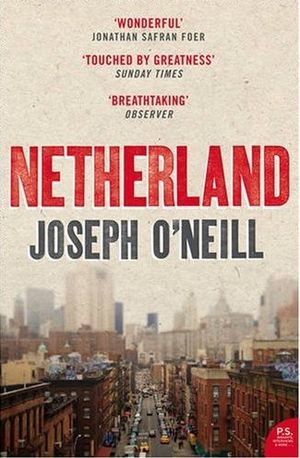
Netherland

By Joseph O’Neill
★★☆☆☆

Two Things I Liked About Netherland:
1. It was free.
2. Multi-national settings.

I got this book for free along with my consent to attend a book discussion on it at my school… a book discussion that will be taking place in about 40 minutes. I’m going to try to dash off this review in the next 20 minutes before I have to leave as a way to get my thoughts about the book in order, so that maybe I’ll have something to say at the meeting. I think I might be one of the few people who ended up actually reading it, partly do to the busy schedule of a college student approaching the final haul before summer, and partly because, well, it’s kind of boring, and I can’t really blame people for giving up after a few pages.

In the wake of 9/11 and the return of his British wife and young son to London without him – for some “space” to “figure things out” – Hans van der Broek stumbles on an amateur New York immigrant cricket team and from there finds himself drawn into the fantastical and potentially delusional world of Chuck Ramkisoon - a Trinidadian immigrant - and his grand scheme to establish the international New York Cricket Club and stadium. The experience instigates a surge of nostalgia that reconnects Hans with his life – from his Dutch childhood, to his early adulthood in London, where he met his wife, to the interlude between their arrival in New York and the fragmenting of their marriage with 9/11 and his wife’s departure, to his present loneliness in a foreign country he’s learning to call his own, and even to his future, from whence comes his narrating self.

I think the expectation is that any novel that includes 9/11 must pivot around it, but if anything 9/11 is just a side-note in Netherland, a tragedy non-specific to Hans that abstractly affected him but wasn’t something he really identified his problems with. And maybe that’s how it should be – that we should, of course, acknowledge the attacks for what they are, but draw the line at claiming some kind of injustice on a personal level. It brings up an interesting question, though, as to how much bearing 9/11 should have on a story that makes a point of bringing it up.

I was predisposed to give Netherland a solid chance because one of my author idols, Jonathan Safran Foer, sung its praises from the rooftop of the cover. That got me through the first 50 or so pages. Determination, my perpetual reluctance to give up on a book once I’ve started it, and obligation to the person responsible for giving this book to me for free got me through the next 200.

That’s not to say that Netherland is a terrible book. It’s not. O’Neill has a nostalgic voice and a poetic style that I found myself admiring. The timeline lends interest, undulating between flashback, real-time, and flash-forward, and between New York City, London, and the Hague. Objectively, I liked it. But that’s not the goal of successful literature – objectivity. You want your readers to be sucked into your world, so much so that it becomes, for the duration of the story, more real to them than reality. And that is where Netherland failed for me. I was never sucked into Hans’s world, as objectively appealing as it may have been.

Other issues I had with Netherland: For whatever reason, I’m usually turned off by a protagonist whose great conflict is a kind of general discontent – he has problems with his wife, yes; problems with his identity and direction, yes; alienation in his adopted country, yes. Any of these, in another novel, could have been enough to be the central conflict, but in Netherland, I felt like they were never given quite enough attention to take on that role. It was all of them, so it was none of them. And Chuck Ramkisoon, who was supposed to be the great variable in Hans’s narrative, never felt fully realized either. I felt like he kind of flickered in and out of the story, never sticking around long enough to make a real impression on me. Maybe that’s what O’Neill was going for, but I didn’t find it satisfying.

Actually, I think that sentiment kind of sums up my reaction to the novel as a whole: Maybe it’s what O’Neill was going for, but it didn’t satisfy me.

Books Read This Year: 38
Top 100 Progress: 42/100

Friday, April 22, 2011

The Mark of the Golden Dragon

By L.A. Meyer
★★★☆☆

Release Date: October 3rd, 2011

Three Things I Liked About The Mark of the Golden Dragon:
1. Higgins
2. Ravi 
3. The Black Highwayman

The Mark of the Golden Dragon is the 9th installment in a series I’ve been reading since I was about 11. Unofficially dubbed ‘Bloody Jack’ (after the title of the first book), the series follows Mary “Jacky” Faber, a girl who started her illustrious (and sometimes infamous) life at sea as a woebegone London orphan who, desperate for steady food and a safe place to sleep each night, disguises herself as a boy to take up as a ship’s boy on the HMS Dolphin. Since then, Jacky’s adventures have earned her numerous nicknames (Puss in Boots, La Belle Dame Sans Merci, & etc.), taken her all over the world from the Cape of Good Hope to the northern Atlantic, and required such flexibility of loyalties that they’re blurred almost beyond distinction. Over the course of 9 novels, she’s defeated pirates and dabbled in piracy, won a medal of honor at Trafalgar, attended the prestigious Lawson Peabody School for Girls in Boston (briefly), traversed the Mississippi on a river boat, swum for shipwrecked treasure in the Caribbean, served as a spy on the French lines, met both Napoleon and George III, and been the protégé of a fearsome Chinese pirate queen… just to scratch the service. Nonetheless, though her predicaments and allegiances vary by book (and sometimes even by chapter), Jacky has always endeavored to remain true to two things: Her betrothed, Jaimy, whom she met on her very first voyage and hasn’t spent a consecutive five chapters with ever since, and doing what’s right by her friends. And she’s mostly succeeded. Usually. And she fails with the best intentions.

The Mark of the Golden Dragon sees Jacky safely rescued from a lifetime sentence to the penal colony in Australia and reunited with Jaimy, only to be washed overboard with Ravi in a typhoon off the coast of Southeast Asia. Presumed dead by her crew and loved ones on board her beloved ship, the Lorelei Lee, Jacky and Ravi manage to stay afloat until they wash up onshore. After a few months of navigating the foreign world of the East Indies followed by a fortuitous rescue by trusty ‘ole Higgins (I’m not spoiling anything; readers of the series will know Jacky is ever indefatigable), Jacky hastens back to London, where she infiltrates the London ton with the goal of procuring full pardons for both she and Jaimy (who was wrongfully convicted in the previous novel and sentenced to the same penal colony as Jacky herself), as well as rescuing Jaimy from the life of madness and revenge he has descended into since her presumed death.

Speaking of Jaimy, his vendetta against the two men he holds responsible for Jacky’s putative death has earned him a place on my list of favorite things in The Mark of the Golden Dragon, as well as the nickname “The Black Highwayman” for holding up carriages in search of his quarries, robbing rich occupants Robin Hood style. With his billowing black cloak and mask, and tortured obsession with avenging his (presumed) lost love, he cuts a very dramatic and romantic figure, quite a departure from the relatively unexciting upstanding Lieutenant of the Royal Navy and – pardon my French – whipped fiancé of Bloody Jack, infamous on both sides of the Atlantic, he’s dutifully been for the last few books. It was refreshing to see him break lose.

Jacky has personality and charisma in spades, which enthralls readers and fellow characters alike, and is one of the many reasons I’ve stuck with her for 8 years, in spite of the fact that the recipe for the books grows a bit more stale and contrived with each installment. Yes, the constant cat and mouse game between Jacky and her betrothed, Jaimy, is getting a little tiresome, as are her incorrigible flirtations during their periods of separation. Not to mention her necessary but increasingly implausible resilience and ability to worm her way out of the most dire of circumstances. But on the whole, these are flaws I put up with the way you ignore or tolerate the quirks of an old friend – because you love them, because you’ve known them forever, because their good qualities more than make up for the less so.

Read this book, I say. But first, start at the beginning. (It’s a very good place to start…*)

Conversation Starter:
Which Jacky installment has been your favorite, and what do you think of how the series has developed? How many books do you think she has left in her?

* Forgive me, I watched The Sound of Music on a daily basis as a child.

Books Read This Year: 36
Top 100 Progress: 42/100

Sunday, April 17, 2011

The Last Little Blue Envelope

By Maureen Johnson
★★☆☆☆

Release Date: April 26th, 2011*

Two Things I Liked About The Last Little Blue Envelope:
1. Rainy New Year’s in Dublin.
2. English uncle.

Another sequel review, I’m afraid. I’m in the mood to keep it short and sweet, though. So bear with me.

The Last Little Blue Envelope is the sequel to 13 Little Blue Envelopes, which came out several years ago. Ginny’s aunt Peg, an eccentric artist, traipsed off to Europe two years ago, and hadn’t been heard from since. That is, until a letter arrives unannounced from the recently deceased Peg, informing Ginny of her secret battle with brain cancer and her final wish that Ginny follow the instructions in the 13 envelopes enclosed with the letter, as well as a few rules: no cell phone, laptop, company, or plan. Never one for adventure, Ginny nonetheless embarks on a European tour directed by clues in the 13 envelopes. The letters lead her from England to Paris, Rome, Amsterdam, and Greece, and help Ginny forge a farewell connection with her beloved aunt as the letters paint a picture of Peg’s final years and introduce Ginny to many of Peg’s friends and loved ones scattered across the continent. Unfortunately, Ginny’s backpack gets stolen in Greece before she can read the last letter, and so her trip comes to a premature end. But before she goes home, she stops off in London to discover and sell a collection of her aunt’s paintings left behind as Ginny’s inheritance.

The Last Little Blue Envelope picks up a few months after 13 Little Blue Envelopes. It’s December of Ginny’s senior year, and she’s wondering how to turn her summer experiences into a college essay, why her summer romantic interest – Keith, a harmless bad-boy poseur artiste she met in London – isn’t communicating as much as he used to, and what ever happened to her 13th letter and her key to closure. A couple weeks before Christmas break, she gets an email from someone in England, informing her that they have her letter and want to meet up with her. So, on a whim, she flies to London to spend the holidays with her British uncle (who married Peg before she died) – only to be faced with a couple of back-to-back setbacks: 1] Her romantic interest has a new romantic interest, and 2] Oliver, the devastatingly handsome bearer of her letter, isn’t about to just hand it over. The letter contains instructions to obtain the parts to a final piece of Peg’s art for Ginny to sell, and Oliver wants a finder’s fee of half the proceeds. Instead of spending the holidays cuddled up with Keith with mugs of tea in front of a cozy English fireplace (or something), Ginny finds herself crammed into the backseat of Keith’s dilapidated automobile with Keith, his new girlfriend, and Oliver, driving across Europe to complete Peg’s final project.

The Last Little Blue Envelope wasn’t terrible, and it had its moments – I especially got a kick out of a scene where Keith’s girlfriend, used to driving on the opposite side of the road, has to navigate the infamous Arc du Triumph traffic circle – but overall it had that stale sequel aesthetic, as if perhaps Maureen spent a little too much time away from the characters before going back to tie up the loose ends from the first novel. Oliver’s bad boy standoffishness as a mask for financial and emotional insecurity was a little too predictable, as was Ginny’s transition of romantic interest from one bad-boy to another, without enough swoon-factor to compensate, and the story in general was a little too much more of the same of the first 12 letters. Maureen said she only decided to write this sequel after getting a multitude of requests for one, and it shows – The Last Little Blue Envelope reads like an afterthought, not a planned finale.

Books Read This Year: 34
Top 100 Progress: 42/100

* I received an advance copy of The Last Little Blue Envelope through NetGalley.com

Sunday, March 27, 2011

The Hobbit (Top 100 #42)

By J.R.R. Tolkien
★★★★☆

Four Things I Liked About The Hobbit:
1. The storytelling.
2. Bilbo*
3. Gandalf
4. Middle-Earth's vividness.

I should probably try to stop being surprised each time I end up liking something Lord of the Rings related. It first happened when my dad forced me to watch the trilogy before our trip to New Zealand**, and in spite of my petulant pre-teen reluctance, I enjoyed them enough to later embark on a Lord of the Rings marathon with my friends (we made it through the first two before our eyes glazed over from prolonged screen exposure). I likewise resisted reading The Hobbit, though my uncle gave me a lovely copy several years ago, and with the same result: I liked it, in spite of myself. The only reason I didn't give it 5 stars is because though it was enjoyable, it wasn't quite a compulsive, withdrawal inducing read, nor did I put it down and think, "WOW," which are my two main criteria for 5-star ratings. It's a precise science, I know.

Bilbo Baggins is a content hobbit. He has a snug little hobbit-hole home, several square meals a day - whenever the urge strikes - and the closest he's gotten to an adventure is listening to old tales. Until Gandalf shows up for tea with a gang of 13 unruly dwarves, a fantastic*** proposition, and high expectations for poor Bilbo, whom he intends to extract from the quiet hobbit life and recruit as the dwarves' hired burglar. The quest is to recover the dwarf king's stolen gold from the dragon Smaug, who hoards it in a mountain fortress months' travel and innumerable dangers away from Bilbo's cozy Shire. Bilbo, who has hardly set foot outside the Shire, encounters trolls, goblins, elves, a shape-shifting bear, giant spiders (think Acromantula, -shudders-) the infamous cave-dwelling creature Gollum, and a magical ring of invisibility in his trek through the forbidding wildernesses of Middle-Earth, each terrain riddled with its own particular dangers. Gandalf has placed a great responsibility on Bilbo's shoulders, and though Bilbo frets and fears and even faints, he rises admirably to the occasion, and goes home a hobbit hero (I'm not spoiling anything for you here, it's pretty clear from the get-go that our little hero comes out on top).

Bilbo is so endearing. I know he's like a 50-year-old, chubby fantasy creature who battles trolls and goblins and giant spiders and can totally take care of himself, but I thought of him kind of like a child the whole time. I think part of it was a) his perpetual complaints about inconstant food-supply, and b) his perpetual longing to be back home in his hobbit-hole. It just made him seem so cuddly and vulnerable; I wanted to give him a hug, a mug of hot tea, and a warm cookie to make it all better. And yet he is every bit the hero, saving his friends time and time again with a little ingenuity, a lot of luck, and, of course, his trusty invisible ring.

The Hobbit is a classic fantasy adventure story (go figure, Tolkien probably invented this genre), but with a level of almost unparalleled detail and creativity in the composition of the world. I was seamlessly absorbed into both the story and Middle-Earth by Tolkien's modest and subtle, yet vivid descriptions. Which is saying a lot, considering how prejudiced I was going in.

Surprises: How considerably lighter a tale it is than the Lord of the Rings trilogy; how little foreshadowing there was for the trilogy; how little time was spent dwelling on Gollum (he's never mentioned again after the initial encounter); and how readable it was (I don't know why I expected it to be a slow read, other than that I expected not to like it, which is the biggest speed impediment there is).

No more will I wrinkle my nose (mentally) when people tell me their favorite book is by Tolkien. It's not my favorite book, but I definitely know where they're coming from, and I'm actually looking forward to reading the Lord of the Rings trilogy, which is also on the Top 100 list. I'd recommend The Hobbit to people who were childhood fans of Tamora Pierce, Harry Potter, Dianna Wynne Jones, Ella Enchanted, or The Enchanted Forest Chronicles.

* Incidentally, in the forthcoming film adaptation, Bilbo is going to be played by Watson, from the ubiquitous (on this blog, anyway) Sherlock. Also, it goes to show how influential (and dare I say, ubiquitous?) Tolkien's work is that there's no squiggly line under the name 'Bilbo.' Testing... how about 'Voldemort'? Shucks. There goes the squiggly line (though you can't see it). Well, it's just a matter of time.
** Blogger also refutes 'Zealand' with its squiggly red line of ignorance, so it's obviously no kind of authority on what words should be recognized as real and not. Why Bilbo (endearing as he is) makes that list over a country, I do not know.
*** As in, "conceived or appearing as if conceived by an unrestrained imagination; odd and remarkable; bizarre," or "highly unrealistic or impractical," or "incredibly great or extreme," or all of the above.

Books Read This Year: 27
Top 100 Progress: 42/100


Thursday, March 24, 2011

Persuasion (Top 100 #41)

By Jane Austen
★★★★☆

Four Things I Like About Persuasion:
1. Bath
2. Captain Wentworth
3. Anne's family members (for comic relief)
4. Secret letters

I'm just plugging away at the Top 100 list lately, aren't I? And I'm currently reading #42 (The Hobbit)!

I was tempted to give Persuasion only three stars, until I realized that the low rating would have been for fault of mine, not Miss Austen's. To be honest, I didn't give Persuasion the attention an Austen novel deserves. I was reading it in full distraction mode, in small blips of time on the go while in transit during my spring break - riding the D.C. metro, flying from D.C. to Indy, in the car between errands - rather than my preferred 30+ minute-long sittings. Which is all well and good to realize, but still left me in an ambiguous situation, rating-wise. Should I rate up, assuming it was better than my spotty reading was able to appreciate? Or do I rate down, on the basis of actual enjoyment, permitting that perhaps Persuasion just isn't my favorite Austen novel? I thought it over and settled on the former, deciding that I did in fact enjoy the consituent parts of the novel, even if I didn't read it closely enough to satisfactorily stich them all together.

Our heroine, Anne Elliott, and a Mr. Frederick Wentworth fell in love when she was 19, but parted ways when Anne was persuaded to break off their engagement on the grounds that he had little to offer in the way of social standing or support, and Frederick - a sailor - set off to make his fortune at sea. Seven years later, the novel opens with the Elliott family finding it necessary to relocate, Mr. Elliott having frivolously squandered the nest-egg Mrs. Elliott left behind when she died. Unable to afford the upkeep of their estate, Kellynch Hallf, they decide to rent it out to Admiral Croft, a respectable retired naval officer, and his wife. While Anne's father and her sister Elizabeth go ahead to their new lodgings in Bath, Anne first spends a month staying with her sister Mary, just three miles from Kellynch Hall. The proximity requires that Mary's family, the Musgroves, receive Mrs. Croft's brother, newly ashore from the navy - none other than Anne's former fiance, now Captain Wentworth, who has made a name and fortune for himself. The reunion proves at first almost unbearably awkward for Anne, perceiving that Captain Wentworth has not forgiven her for her rejection. But when the families move on to Bath and Anne is pursued by a new and engaging suitor, it appears that all hope may not be lost after all (much to our surprise).

Phew. I did not expect that summary to take so long. I guess Austen is more complicated than you might think, which really shouldn't surprise me considering the complexity of the social graces back then, her primary subject matter. My apologies if I've over-complicated it; I'm a bit tired, and writing this straight into the post rather than typing it out in Word, because my computer decided that spring break would be a good time to have a harddrive breakdown. Hrmph.

Persuasion has all the requisite wit, perceptiveness of social and emotional subtleties, and diverse and realistically quirky cast of characters one expects of Jane Austen, with just enough of the differences that keep her novels distinct and interesting. For one, Persuasion is the shortest Austen novel I've read, capping at just under 250 pages. For another, this is not a novel of first impressions (see: Pride and Prejudice), but second chances. Rather than detailing the many uncertainties, missteps, and excitements of falling in love, Perusasion navigates the grey area of repairing burned bridges and breathing new life into flames thought to be extinguished.

My only major qualm with Persuasion is the suddenness of the conversion from Anne and Wentworth awkwardly orbiting one another to sharing flushed, meaningful glances that ignite the short fuse from 'I'm still interested' to 'I must confess my never-forgotten love for you immediately!' I felt there could have been more time spent developing the middleground. I mean, they hardly even talked! What was supposed to have altered the balance of the status quo? Perhaps this qualm is again more a fault of my own poor reading rather than a flaw of Austen's writing, and if so, please do contest me and let me know. I've also been informed that Austen was writing Persuasion whilst ill (it was her last finished novel), so perhaps she hastened through the final stages of courtship so as to finish before a death that felt to be drawing near, I do not know. In any case, if you've read and enjoyed other Austen novels, I guarantee you will feel the same about Persuasion

Books Read This Year: 26
Top 100 Progress: 41/100

Monday, March 21, 2011

Zombicorns

By John Green
★★★★☆

Four Things I Like About Zombicorns:
1. John Green*
2. Mia’s dog having an existential crisis
3. Chicago/The Bean
4. Using a library as a hideout from zombie ambush

Zombicorns is not just another clever story penned (or rather, typed) by young adult author/rock-star John Green. It’s not just a zombie apocalypse novella. It is not even just a zombie apocalypse novel written by a rock-star.

It’s a profound statement about corn**. And souls. And what makes humans human. And whether that makes us better than other living things. And what, ultimately, we live for. Pretty heavy stuff for any novella, much less one with a zombie unicorn on the cover, if you ask me.

Also, despite appearances, it’s not at all about unicorns (see disclaimer beneath title). Sorry if that revelation just dealt you a heavy blow of disappointment. You’ll get over it. I promise. Just read the real story.

Mia is one of the last of her kind – that is, our kind: humans. She has cloistered herself in a Chicago cellar, eating Spam, drinking expensive wine by the bottle, and writing her memoirs about the aftermath of the sudden outbreak of D131Y – a virus spread through corn that Z’s up (aka zombifies) all who ingest it – while she debates whether continued survival is really worth the effort, or whether she should just give up and commit Zuicide. The only living, loving soul left to her in the world is her dog, Mr. President. You know, the one who suffers an existential crisis. Which was probably just Mia projecting, but I prefer to pretend it was all Mr. President. (Incidentally, I can’t blame her for the wine. I’d probably be in the cups, too, if I survived the zombie apocalypse only to have to ‘complete’ my Z’d up family so they wouldn’t force-feed me zombie corn.)

Only John Green can make a zombie apocalypse novella a profound statement of any kind.

Exhibit A: “I came to the conclusion a while ago that there is nothing romantic or supernatural about loving someone: Love is the privilege of being responsible for another.”

Exhibit B: “Being a person, I had come to realize, is a communal activity. Dogs know how to be dogs. But people do not know how to be people unless and until they learn from other people. Which got me to wondering whether it’s possible to learn how to be a person in a world where all the people are dead.”

And these are just examples short enough to include. There were several other marvelous multi-paragraph examples of John’s evidently innate ability to profoundify anything.

Also, only John Green could make me ever want to read a zombie apocalypse novella. And like it.

That being said, it’s not perfect. But it’s not supposed to be. He wrote it for fun, he didn’t ruthlessly edit the way you do before Official Publication, and he’s disseminating it for free on the Internet purely for the enjoyment of his fans. Which I think is pretty dang cool, so I am more than happy to overlook a few typos and inconsistencies and tangents here and there.

If the idea of a novella about corn and zombies intrigues you, you can watch John read the first chapter here.

You can download your very own personal copy of Zombicorns here.

* If you know anything about John Green, you know this counts as a thing to like about something he’s written. His name on the cover of a book is like a big official seal that says “This Book Is Guaranteed To Be Both Entertaining and Intelligent,” only better, because you can trust John Green’s name more than you can trust the kind of seals they slap on to try to sell more copies of subpar bestsellers.
** You know, like how it keeps cropping up in the most unlikely of places. Sugar, fuel, plastic…

Books Read This Year: 24
Top 100 Progress: 40/100

Sunday, March 20, 2011

Howards End

By E.M. Forster
★★★☆☆

Three Things I Liked About Howards End:
1. England! (It never fails to excite me.)
2. The dialogue.
3. The imagery, especially music.

It's been too long. My apologies. School infringes on my reading/reviewing time. I don't approve. Happily, I'm on spring break now, so my reading rate will be amped up for the next week (yessss!).

Three days ago I spent about eight hours tucked into a corner of the library, the light of my laptop burning into my eyes as I furiously typed out a dissatisfying 5-page paper on this book. Consequently, whenever I think about it now I feel like I’m pressing my nose into the crease of the spine and trying to read. My brain goes a bit numb, so forgive me if this entry is on the short side.

Howards End is a story of two families, and the house that entwines them. The Schlegels: Margret, the eldest, a mix of pragmatism and idealism; Helen, the younger sister, passionate and full of ideals; and Tibby, the ascetic younger brother, who perceives life through self-constructed bars of knowledge and Oxford. The Wilcoxes: Ruth, the matron whose spirit is the life-force of both Howards End and Howards End; Henry, the patriarch, a stoic businessman who fails to appreciate his wife’s passion for a house; and their sons, Paul and Charles, the former sent off to Nigeria to further imperialist ventures, the latter a carbon copy of his father. The families meet on holiday in Germany, and their acquaintance is renewed when the Wilcoxes move into a flat across the street from the Schlegels’ London residence, Wickham Place. The passionate and cultured Schlegel sisters spin through the ordered lives of the Wilcoxes and through their carefully preserved status quo into upheaval.

Howards End reminds me of Jane Austen, as far as the English setting and the focus on interpersonal relationships. It has a wider scope, though, addressing not only personal relationships, but also class conflicts, imperialism, the stretching of societal gender roles, and the chafing of the industrializing modern society against the quaint pastoral lifestyle of old England.

Howards End isn’t quite a page-turner (hence only three stars; I just struggle giving anything top marks if it's not both readable AND well-written), but it’s an enjoyable read, and Forster’s dialogue is so convincing and his descriptions so poetic that one can’t help but admire them. My paper required that I watch the movie adaption as well as read the book (in order to compare and contrast them), and having done so, I really recommend them as a package deal. The movie isn’t a replacement for the book (I would never advocate so), but it’s a lovely companion, not to mention a wonderful movie in its own right, with beautiful set design, a fitting soundtrack, and outstanding acting performances*.

* Hey, Emma Thompson didn’t win her Oscar for nothing.

Books Read This Year: 21
Top 100 Progress: 39/40

Sunday, March 6, 2011

A Study In Scarlet

By Arthur Conan Doyle
★★★☆☆

Three Things I Like About A Study in Scarlet:
1. Non sequiturs that emerge from Sherlock's internal logic.
2. Sherlock's manic approach to sleuthing.
3. Use of Mormon Salt Lake City as a setting for intrigue.

A couple weeks ago I came across a recommendation for a new BBC drama called Sherlock – a modern adaption of Sherlock Holmes. The series (thus far) consists of 3 90-minute episodes, based on Doyle’s novellas and short stories. I downloaded the first episode, “A Study in Pink,” based on A Study in Scarlet, and loved it.* Being a stickler about reading books before watching their movies and never having read ay Sherlock Holmes before, I decided to spend some time with the genuine article before watching the next two episodes.

A Study in Scarlet is the first Sherlock Holmes story. It begins with the first meeting of Dr. Watson and Sherlock. Dr. Watson is fresh from Afghanistan, having retired from service following an injury and subsequent illness, and is looking for a flat mate. Within 24 hours he and Sherlock have moved into 221 Baker Street and Dr. Watson is embroiled in Sherlock’s latest case – a man found murdered with the ambiguous word “Rache” written on the wall in blood, though the body has suffered no wounds. The mystery spans from the streets of London all the way to the wilderness of the American West, as the backstory unfolds in the fledgling Mormon city of Salt Lake City, Utah.

Like I said, I’ve never had any experience with Sherlock Holmes before. This was a good introduction – being that it is the introduction – but I’ve heard that Doyle’s later stories are much better, and I do have to agree that this one had its flaws. Sherlock didn't say "elementary" even once! And the backstory to the murder is excessive and takes up almost half the novel. I cut Doyle plenty of slack, though, because this was his very first novel and he wrote it in 3 weeks. Plus, how can you really criticize the work of someone who created one of the most iconic characters of all time?**

I enjoyed this novel particularly in juxtaposition with the first episode of Sherlock, which played off A Study in Scarlet without exactly replicating it. I won’t go into details for fear of spoiling either the book or the show, but the general introductory framework of A Study in Scarlet remains intact in the episode, as does the presence of the word “Rache” and the means of murder, though the actual circumstances and motives vary vastly. So if you have the time and interest, I definitely recommend reading A Study in Scarlet (it won’t even take you long, as it’s hardly 100 pages) and then watching Sherlock. I daresay you won’t be disappointed.

I’ll be reading more Sherlock Holmes soon, partly because I’m getting a kick out of him right now, and partly because The Adventures of Sherlock Holmes will be #40 on my BBC Top 100 list. Woot!


* Seriously, it’s awesome. Sherlock is played to perfection, and the modern setting is used surprisingly effectively. It kicks the recent Robert Downey Jr./Jude Law version’s butt. And there’s three times more of it! What are you still doing here?
** Random thought, but I wonder if people will be making television adaptions of Harry Potter in like 100 years. That is, if anyone still watches TV anymore.

Books Read This Year: 20
Top 100 Progress: 39/40

Sunday, February 27, 2011

Before I Fall

By Lauren Oliver
★★☆☆☆

Two Things I Liked About Before I Fall:
1. Thinking about appreciation for the simplest and most important things in your life.
2. Butterfly effect.

I didn’t like this book. I thought it was inexpertly and unsubtly written – the themes and morals were heavy-handed to an extreme, holding up signs that read, “Look at me! I’m important and meaningful!” in sloppy black sharpie – and the characters, oh boy. Talk about unsympathetic.

Samantha Kingston is your average* high-school girl: she skates along in her classes, has 3 best friends and a boyfriend she’s crushed on since middle school, overcame her un-cool former self, and spends her weekends at parties with the high-school upper crust. Everyone envies her, her life is perfect**, yadda yadda … And then in one split-second on the ride home from a typical Friday night, her life as she knows it comes to an end – literally. That is, until she wakes up again in the morning. Now Sam has seven chances to relive her last day, to untangle the knot of actions and inactions that led to that last moment, and make sense of a senseless tragedy.

This is one of those books where you’re supposed to grow with the character as they learn what makes life beautiful and how to be a better person. Okay, fine. I often like those books – even love them. The problem is that the whole book aimed to add substance to a character that was by nature substanceless, a collection of stereotypes more than an actual person.

Perhaps you think I am not being fair. Perhaps you’d like more evidence.

Samantha and her best friends Elody and Ally are basically the minions of their ringleader, Lindsey, and are apparently so grateful to have been chosen into popularity that they’ll follow Lindsey’s every whim, no matter how reckless or shallow or even cruel, no questions asked. Samantha’s transgressions range from the (relatively) minor: isolating herself from her family, ignoring the (wonderful) boy who’s been in love with her since the 3rd grade, dating an (decidedly un-wonderful) idiot just because he’s hot and popular, and belittling underclassmen and peers alike; to the contemptible: frequently skipping class, smoking and drinking, and flirting with her math teacher; to the unforgivable: relentlessly tormenting a girl to the point of suicide because of some vendetta Lindsey has against her, without ever questioning why.

The kicker? Samantha closes the prologue with the line, “Is what I did really so much worse than what anybody else does? Is it really so much worse than what you do?”

Well, yes, actually. Yes it is.

Uggghhh. I know I’m supposed to sympathize with these characters – I mean, Samantha’s dead, after all, and via a means I wouldn’t wish on anyone – but they’re just so inherently clichéd and unlikeable that instead of sympathizing I just thought, “You brought this on yourself.”***

* Read: Generically stereotyped popular girl with "Real Thoughts" and "Substance" buried deep down under her cruel and conformist façade.
** Rule #1 of character development: never, ever tell me your character is perfect. Seriously. It will turn your readers against you and undermine every attempt you make to give the character substance later.
*** And she did; misdeeds aside, Samantha’s fatal mistake was being stupid enough to get in a car with a drunk Lindsey at the wheel, who’s a dangerous driver even when she’s sober. I mean, come on. It’s sad, of course, but it wouldn’t have happened if she’d made better choices. I get so mad when people end up throwing their life away for stupid things like underage drinking.

Same Story, Different Review:

Books Read This Year: 18
Top 100 Progress: 38/100