By Donna Tartt
★★★★☆
Four Things I Liked About The Secret History:
1. Secret society
2. College
3. Mystery
4. Suspense
I’ve been intrigued by this book on the Top 100 List for some time now. Maybe it’s the innate fascination with anything “secret,” the compulsion to be included. It’s also set at a college in Vermont, which a) adds to the air of seclusion and mystery and b) have you ever noticed how few novels actually deal with the college years? It’s rather remarkable, considering how romanticized the freedom of those years is. And they’re arguably a period even more fertile for character development than the teenage years. You’d think authors would be all over that! But they’re not.
Anyway. The Secret History opens with the murder of one member of an exclusive group of friends. It then rewinds to the beginning, working its way back to the opening scene, and then spending the rest of the novel detailing the aftermath. The story revolves around an entitled, eccentric, and somewhat depraved group of 5 students who make up one unconventional professor’s elite classics seminar. Richard, the narrator and new arrival to Hampden College, is initially drawn to the group by their heady aura of mystery and sophistication; they were apart from the rest of the student body and also, seemingly, above. He soon learns, however, that they harbor a dark secret, and once he’s involved, there’s no going back…
The Secret History is one of those books that only ever divulge just enough to tantalize you with the promise that the rest is forthcoming, which works well to keep the reader interested, but can also be kind of frustrating. Especially since you never know whose story you can trust or to what extent the narrator is reliable – or mislead himself. This would have been a five star book, but it got a little too wrapped up in itself… like it was so enamored of how interesting it thought itself that it couldn’t tell when it was losing its audience and ought to find a natural way to finish up quickly.
Books Read This Year: 97
Top 100 Progress: 48/100
Showing posts with label BBC's Top 100 Book List. Show all posts
Saturday, December 24, 2011
Monday, November 21, 2011
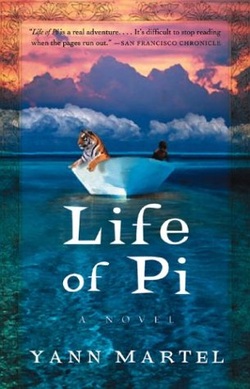
Life of Pi (Top 100 #48)
By Yann Martel
★★★★★
Five Things I Liked About Life of Pi:
1. Sense of wonder toward universe, in spite of crushing aloneness
2. Richard Parker
3. Truth vs. faith; Truth vs. “the better story”
4. Resiliency of the human body/spirit
5. The writing!
Life of Pi topped the bestseller lists several years ago now. For a long time, I ignored it. I’d heard what the premise was, and it sounded both not my thing and altogether lacking in plot. Last year, though, at one of the sprawling book sale wonderlands I plundered, I wound up buying a copy anyway. At $1, it seemed like a low-risk investment. If I didn’t like it (or never even read it!), well, one dollar wouldn’t exactly empty my pockets. It took me a while to get around to actually reading it, but turns out, that was $1 very well spent.
The premise itself is absurd: a teenage boy, shipwrecked at sea en route from India to Canada, is stranded in the middle of the Pacific sharing his lifeboat with a 450-lb Bengal tiger. Suspend your disbelief long enough to pick up the book and give the first few pages a chance, and I’ll wager you’ll soon get on board (pun intended) with Pi Patel and his unbelievable tale. Pi’s family, who owned a zoo back in India and were transporting several animals - including the great Bengal tiger, Richard Parker - with them on their emigration to Canada, perished in the shipwreck. A zebra, orangutan, and hyena that initially found salvation from the greedy clutches of the sea in the lifeboat with Pi and Richard Parker also perished, at the hands (or rather jaws) of Richard Parker. Much the rest of the novel is devoted to Pi’s survival at sea, the practicalities of his efforts to tame Richard Parker and keep himself and the tiger fed, quenched, and relatively protected from the elements, as well as the more intangible yet equally or even more pressing experiences of unremitting loneliness and loss, and the incredible, improbable wonder that swells in a human heart communing without distraction with the vast and unmitigated power of nature in motion.
The resolution of Life of Pi is beautifully orchestrated, casting into doubt first the veracity of Pi’s narrative and then prodding you to question to what extent it matters. How much do the stories we tell about our experiences reflect truth and to what extent are they woven with fabrication? How much do we script these stories to include the divinity or wonder that cushions us from the harsh realities of the world? How salient are divinity and wonder in our everyday lives? Is it necessary to suffer in order to remember to recognize and appreciate simple glimpses of universality - in the endless expanse of a starry sky, in the cyclical calm and turmoil of the open sea, in the respectful gaze of a potential predator - that are present in even the most hopeless of moments? These are the kind of questions Life of Pi raises, questions that stop you short and make you attempt to bring ideas too big for one moment into focus in your mind. Working to wrangle those ideas into the forefront of your mind, bit by bit until each piece is clear enough to begin incorporating into the unmanageable whole, is a privileged and ennobling experience.
Conversation Starter: Have you ever experienced a moment in nature, or just life in general, when you were overcome with an absolute, almost tangible awareness of the inherent divine dignity present in the world around you?
Books Read This Year: 91
Top 100 Progress: 48/100
★★★★★
Five Things I Liked About Life of Pi:
1. Sense of wonder toward universe, in spite of crushing aloneness
2. Richard Parker
3. Truth vs. faith; Truth vs. “the better story”
4. Resiliency of the human body/spirit
5. The writing!
Life of Pi topped the bestseller lists several years ago now. For a long time, I ignored it. I’d heard what the premise was, and it sounded both not my thing and altogether lacking in plot. Last year, though, at one of the sprawling book sale wonderlands I plundered, I wound up buying a copy anyway. At $1, it seemed like a low-risk investment. If I didn’t like it (or never even read it!), well, one dollar wouldn’t exactly empty my pockets. It took me a while to get around to actually reading it, but turns out, that was $1 very well spent.
The premise itself is absurd: a teenage boy, shipwrecked at sea en route from India to Canada, is stranded in the middle of the Pacific sharing his lifeboat with a 450-lb Bengal tiger. Suspend your disbelief long enough to pick up the book and give the first few pages a chance, and I’ll wager you’ll soon get on board (pun intended) with Pi Patel and his unbelievable tale. Pi’s family, who owned a zoo back in India and were transporting several animals - including the great Bengal tiger, Richard Parker - with them on their emigration to Canada, perished in the shipwreck. A zebra, orangutan, and hyena that initially found salvation from the greedy clutches of the sea in the lifeboat with Pi and Richard Parker also perished, at the hands (or rather jaws) of Richard Parker. Much the rest of the novel is devoted to Pi’s survival at sea, the practicalities of his efforts to tame Richard Parker and keep himself and the tiger fed, quenched, and relatively protected from the elements, as well as the more intangible yet equally or even more pressing experiences of unremitting loneliness and loss, and the incredible, improbable wonder that swells in a human heart communing without distraction with the vast and unmitigated power of nature in motion.
The resolution of Life of Pi is beautifully orchestrated, casting into doubt first the veracity of Pi’s narrative and then prodding you to question to what extent it matters. How much do the stories we tell about our experiences reflect truth and to what extent are they woven with fabrication? How much do we script these stories to include the divinity or wonder that cushions us from the harsh realities of the world? How salient are divinity and wonder in our everyday lives? Is it necessary to suffer in order to remember to recognize and appreciate simple glimpses of universality - in the endless expanse of a starry sky, in the cyclical calm and turmoil of the open sea, in the respectful gaze of a potential predator - that are present in even the most hopeless of moments? These are the kind of questions Life of Pi raises, questions that stop you short and make you attempt to bring ideas too big for one moment into focus in your mind. Working to wrangle those ideas into the forefront of your mind, bit by bit until each piece is clear enough to begin incorporating into the unmanageable whole, is a privileged and ennobling experience.
Conversation Starter: Have you ever experienced a moment in nature, or just life in general, when you were overcome with an absolute, almost tangible awareness of the inherent divine dignity present in the world around you?
Books Read This Year: 91
Top 100 Progress: 48/100
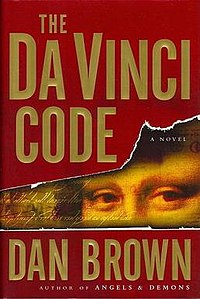
The Da Vinci Code (Top 100 #47)
By Dan Brown
★★★★☆
Four Things I Liked About The Da Vinci Code:
1. Page-turner
2. National Treasure-type intellectual adventure
3. Codes! Spies! Intrigue!
4. History gone wild
I know I’m like really late reading this book; the craze was six or seven years ago. But I was young at the time, too young to read The Da Vinci Code. For a couple years now I’ve been meaning to remedy my lack of Da Vinci Code knowledge, to find out what all the hype is about, and whether the book really lives up to it. The verdict? Yeah, I think it does. The Da Vinci Code’s reputation was for being a fast-paced, enthralling read, for proposing a semi-scandalous alternative church history that made it a blasphemous book in certain circles, though ultimately a harmless hypothetical, FICTIONAL adventure. And that’s exactly what it was.
There’s only so much you can say about the storyline without exposing information that so thrillingly unfolds as you read, so although many of you may already have read this book and are thus immune to spoilers, I will keep my description barebones. The Da Vinci Code is an academic’s adventure through and through. Implicated in the death of Louvre head curator Jacques Sauniere, Harvard scholar and world-renowned symbologist Robert Langdon teams up with cryptologist agent Sophie Arveu to exonerate himself by tracking down the curator’s real killer. Their investigation finds them quickly embroiled in the complicated real-life plot of a fantasy quest - for the Holy Grail. The Da Vinci Code has everything a good thriller should: a high-stakes scavenger hunt, danger, intrigue, betrayal, romantic tension, scandal… it’s no wonder it was such a runaway bestseller.
You don’t have to believe that The Da Vinci Code’s theories might be true - or even think they could be - for it to be a thought-provoking read on some level. Whatever your reaction to the radical theories proposed in the story, it is interesting to contemplate what would happen if the rediscovery of forgotten, unknown, lost ancient documents were uncovered that caused an upheaval of our current understanding of world history. How would such a fundamental shift in our knowledge of the past change our world in the present? It’s an intriguing thought. Given the right knowledge, that upheaval could be tremendous, to the point of being unsettling to think about. Our history informs who we are today, as individuals and as societies. If that were to change… it would call into question the most fundamental constructs of our identities as human beings, would it not? Another theme that arises in The Da Vinci Code that I think captures people’s fascination is the idea of age-old mystery persisting into our modern era; the romantic notions of scandalous secret societies and dangerous, adventuresome quests that seem confined to the pages of historical fiction - but translated into a modern setting.
The Da Vinci Code isn’t one of the best books I’ve ever read, but it captures the imagination and kept me on the edge of my seat, and I’m a firm believer that those things count for a lot more than certain readers give them credit for.
Conversation Starter: Did you read The Da Vinci Code when it was popular? If so, did it live up to the hype for you? If not, how come?
Books Read This Year: 91
Top 100 Progress: 47/100
★★★★☆
Four Things I Liked About The Da Vinci Code:
1. Page-turner
2. National Treasure-type intellectual adventure
3. Codes! Spies! Intrigue!
4. History gone wild
I know I’m like really late reading this book; the craze was six or seven years ago. But I was young at the time, too young to read The Da Vinci Code. For a couple years now I’ve been meaning to remedy my lack of Da Vinci Code knowledge, to find out what all the hype is about, and whether the book really lives up to it. The verdict? Yeah, I think it does. The Da Vinci Code’s reputation was for being a fast-paced, enthralling read, for proposing a semi-scandalous alternative church history that made it a blasphemous book in certain circles, though ultimately a harmless hypothetical, FICTIONAL adventure. And that’s exactly what it was.
There’s only so much you can say about the storyline without exposing information that so thrillingly unfolds as you read, so although many of you may already have read this book and are thus immune to spoilers, I will keep my description barebones. The Da Vinci Code is an academic’s adventure through and through. Implicated in the death of Louvre head curator Jacques Sauniere, Harvard scholar and world-renowned symbologist Robert Langdon teams up with cryptologist agent Sophie Arveu to exonerate himself by tracking down the curator’s real killer. Their investigation finds them quickly embroiled in the complicated real-life plot of a fantasy quest - for the Holy Grail. The Da Vinci Code has everything a good thriller should: a high-stakes scavenger hunt, danger, intrigue, betrayal, romantic tension, scandal… it’s no wonder it was such a runaway bestseller.
You don’t have to believe that The Da Vinci Code’s theories might be true - or even think they could be - for it to be a thought-provoking read on some level. Whatever your reaction to the radical theories proposed in the story, it is interesting to contemplate what would happen if the rediscovery of forgotten, unknown, lost ancient documents were uncovered that caused an upheaval of our current understanding of world history. How would such a fundamental shift in our knowledge of the past change our world in the present? It’s an intriguing thought. Given the right knowledge, that upheaval could be tremendous, to the point of being unsettling to think about. Our history informs who we are today, as individuals and as societies. If that were to change… it would call into question the most fundamental constructs of our identities as human beings, would it not? Another theme that arises in The Da Vinci Code that I think captures people’s fascination is the idea of age-old mystery persisting into our modern era; the romantic notions of scandalous secret societies and dangerous, adventuresome quests that seem confined to the pages of historical fiction - but translated into a modern setting.
The Da Vinci Code isn’t one of the best books I’ve ever read, but it captures the imagination and kept me on the edge of my seat, and I’m a firm believer that those things count for a lot more than certain readers give them credit for.
Conversation Starter: Did you read The Da Vinci Code when it was popular? If so, did it live up to the hype for you? If not, how come?
Books Read This Year: 91
Top 100 Progress: 47/100
Sunday, June 26, 2011
The Three Musketeers (Top 100 #45)
By Alexandre Dumas
★★★★☆
Four Things I Liked About The Three Musketeers:
1. D’Artagnan
2. Paris
3. The valets
4. Intrigue! Sword fighting! Plotting!
I generally try to start my reviews with a little bit of backstory, but in this case, there isn’t really any backstory to give. The Three Musketeers was one of those books that ended up on my “Obviously I’m going to read this” list rather by accident. It’s one of the Top 100, I liked Dumas’ The Count of Monte Cristo, and it’s fat – perfect for my summer of brick-thick books (previously: Atlas Shrugged, up next: War & Peace and East of Eden).
Considering what a fixture The Three Musketeers is in our working cultural knowledge, I’d wager that very few people are actually familiar with the story. For example, contrary to what you might assume from the title, The Three Musketeers stars one recklessly brave young man named d’Artagnan, who is in fact not a musketeer at all – at least not at the beginning. D’Artagnan comes to Paris with a letter of introduction from his father to M. de Tréville, captain of King Louis XIII’s musketeers, seeking to make a place for himself in the world. Having lost his letter in an altercation en route to Paris, the interview fails to install him as a musketeer, but does earn him a position as a guard, as well as facilitating his fateful first meeting with the three musketeers who become his most faithful friends: Athos, Porthos, and Aramis. D’Artagnan quickly adapts to city and military life, and in almost one fell swoop manages to fall in love and become embroiled in the rich political turmoil of the time, caught between the king, the queen, the cardinal (Richelieu), and the beautiful but deadly Lady de Winter.
The Three Musketeers is, more than anything else, a tale of adventure. But it is not just a tale of adventure. For us, it serves as authentic historical fiction, though it was not written as such at the time. It’s also part romance, part political portrait, and part 17th century chivalric code. But my favorite aspect, I think, was the characterization. As canned as the expression sounds, d’Artagnan really does jump off the page. He’s impulsive, passionate, loyal, and eager to prove himself. His friends Athos, Porthos, and Aramis are equally well developed; none of them are simply stock soldiers. Athos harbors a dark past, Porthos is a good-hearted hedonist who revels in good wine and good company, and Aramis continually professes that he “is only a musketeer temporarily” until he takes his monastic orders. The four friends also each have a personal valet, none of which fade into the background of the story but have their own distinct personalities and roles to play in the novel. That can be said of just about every character in The Three Musketeers. Even when someone only appears in a few scenes, and with minimal physical description, it is very easy to imagine them as a real character, in the dictionary definition sense of the word: “the combination of traits and qualities distinguishing the individual nature of a person or thing.”
Reading The Three Musketeers, it was easy to picture it as a movie, especially the summer blockbuster/family action flick variety of humor, romance, good-hearted bravado, and lots of sword-fighting fun. Of course, I’m not the first to have this impression – The Three Musketeers has been adapted to the silver screen any number of times, the most recent of which is coming out this fall. I’m not sure how high my hopes are, though, even though I think Logan Lerman – who I cast as Jacky Faber’s beau, Jaimy Fletcher, in an earlier post – makes a perfect d’Artagnan. I mean, there’s a clip of boat flying over the Louvre. How true an adaptation can it really be when there are flying boats involved? Also, it's in 3D. I like 3D about as much as I like Kindles.
Random fact: The novel takes place back when the Louvre was still a palace, and I constantly had to remind myself of that as I read. Nowadays, it’s really weird to think of the Louvre as anything but a museum, and stranger still to think of anyone actually living there.
Books Read This Year: 52
Top 100 Progress: 45/100
★★★★☆
Four Things I Liked About The Three Musketeers:
1. D’Artagnan
2. Paris
3. The valets
4. Intrigue! Sword fighting! Plotting!
I generally try to start my reviews with a little bit of backstory, but in this case, there isn’t really any backstory to give. The Three Musketeers was one of those books that ended up on my “Obviously I’m going to read this” list rather by accident. It’s one of the Top 100, I liked Dumas’ The Count of Monte Cristo, and it’s fat – perfect for my summer of brick-thick books (previously: Atlas Shrugged, up next: War & Peace and East of Eden).
Considering what a fixture The Three Musketeers is in our working cultural knowledge, I’d wager that very few people are actually familiar with the story. For example, contrary to what you might assume from the title, The Three Musketeers stars one recklessly brave young man named d’Artagnan, who is in fact not a musketeer at all – at least not at the beginning. D’Artagnan comes to Paris with a letter of introduction from his father to M. de Tréville, captain of King Louis XIII’s musketeers, seeking to make a place for himself in the world. Having lost his letter in an altercation en route to Paris, the interview fails to install him as a musketeer, but does earn him a position as a guard, as well as facilitating his fateful first meeting with the three musketeers who become his most faithful friends: Athos, Porthos, and Aramis. D’Artagnan quickly adapts to city and military life, and in almost one fell swoop manages to fall in love and become embroiled in the rich political turmoil of the time, caught between the king, the queen, the cardinal (Richelieu), and the beautiful but deadly Lady de Winter.
The Three Musketeers is, more than anything else, a tale of adventure. But it is not just a tale of adventure. For us, it serves as authentic historical fiction, though it was not written as such at the time. It’s also part romance, part political portrait, and part 17th century chivalric code. But my favorite aspect, I think, was the characterization. As canned as the expression sounds, d’Artagnan really does jump off the page. He’s impulsive, passionate, loyal, and eager to prove himself. His friends Athos, Porthos, and Aramis are equally well developed; none of them are simply stock soldiers. Athos harbors a dark past, Porthos is a good-hearted hedonist who revels in good wine and good company, and Aramis continually professes that he “is only a musketeer temporarily” until he takes his monastic orders. The four friends also each have a personal valet, none of which fade into the background of the story but have their own distinct personalities and roles to play in the novel. That can be said of just about every character in The Three Musketeers. Even when someone only appears in a few scenes, and with minimal physical description, it is very easy to imagine them as a real character, in the dictionary definition sense of the word: “the combination of traits and qualities distinguishing the individual nature of a person or thing.”
Reading The Three Musketeers, it was easy to picture it as a movie, especially the summer blockbuster/family action flick variety of humor, romance, good-hearted bravado, and lots of sword-fighting fun. Of course, I’m not the first to have this impression – The Three Musketeers has been adapted to the silver screen any number of times, the most recent of which is coming out this fall. I’m not sure how high my hopes are, though, even though I think Logan Lerman – who I cast as Jacky Faber’s beau, Jaimy Fletcher, in an earlier post – makes a perfect d’Artagnan. I mean, there’s a clip of boat flying over the Louvre. How true an adaptation can it really be when there are flying boats involved? Also, it's in 3D. I like 3D about as much as I like Kindles.
Random fact: The novel takes place back when the Louvre was still a palace, and I constantly had to remind myself of that as I read. Nowadays, it’s really weird to think of the Louvre as anything but a museum, and stranger still to think of anyone actually living there.
Books Read This Year: 52
Top 100 Progress: 45/100
Saturday, May 21, 2011
Catch Me If You Can
By Frank W. Abagnale
★★★☆☆
Three Things I Liked About Catch Me If You Can:
1. Frank’s youth.
2. Frank’s unabashed amusement at his past capers.
3. The truth behind the movie.
Catch Me If You Can is one of my favorite movies. I just have this somewhat random fascination with intellectual criminals, like in Ocean’s 11,The Thomas Crowne Affair, or I Love You Phillip Morris. But of all those criminals, Frank Abagnale probably fascinates me the most.
Frank Abagnale ran away from home when he was 16. Before his twenty-first birthday, he had impersonated a pilot, a doctor, a lawyer, and a professor, stolen over 2 million dollars in check fraud and was a wanted criminal across the globe, and had evaded capture by the FBI multiple times – even slipping from their custody by “flushing” himself down the toilet of an airplane on the tarmac of JFK. Talk about stranger than fiction. For his crimes, he served time in France and Sweden before he was eventually captured on American soil, charged, and served a truncated sentence in prison. Since his release, he has gone on to work for the FBI, assisting them as one of the world’s foremost experts on fraud.
Though I enjoyed reading Frank’s memoirs and hearing about his capers first hand without the influence of a Hollywood editing team, I do have to say I didn’t get much more out of the book than I got out of the movie. It wasn’t particularly well written, and there weren’t terribly many more exploits detailed in the book that weren’t in the movie. I did enjoy observing the tone in which the memoirs were written, however. Though Frank alludes to periods of anxiety, loneliness, and some twinges of conscience, I think by and large his years as a world-class criminal were enjoyable ones, spent running on the adrenaline of being young and clever and getting away with it – and his tone shows it. Rather than writing a contrite memoir espousing how sorry he is for what he did, how he was just a young boy who went astray, he owns up to his misdeeds with matter-of-factness, a little pride, and a touch of amusement, and I can hardly blame him. After all, there is something inherently both impressive and amusing about an 18-year old kid passing himself off as a Harvard grad and passing the bar exam after a few weeks of studying, or teaching a collegiate sociology class with a fake PhD by reading one chapter ahead, or believably overseeing a shift of hospital interns by hiding in the linen closet to look up terms in a medical dictionary.
★★★☆☆
Three Things I Liked About Catch Me If You Can:
1. Frank’s youth.
2. Frank’s unabashed amusement at his past capers.
3. The truth behind the movie.
Catch Me If You Can is one of my favorite movies. I just have this somewhat random fascination with intellectual criminals, like in Ocean’s 11,The Thomas Crowne Affair, or I Love You Phillip Morris. But of all those criminals, Frank Abagnale probably fascinates me the most.
Frank Abagnale ran away from home when he was 16. Before his twenty-first birthday, he had impersonated a pilot, a doctor, a lawyer, and a professor, stolen over 2 million dollars in check fraud and was a wanted criminal across the globe, and had evaded capture by the FBI multiple times – even slipping from their custody by “flushing” himself down the toilet of an airplane on the tarmac of JFK. Talk about stranger than fiction. For his crimes, he served time in France and Sweden before he was eventually captured on American soil, charged, and served a truncated sentence in prison. Since his release, he has gone on to work for the FBI, assisting them as one of the world’s foremost experts on fraud.
Though I enjoyed reading Frank’s memoirs and hearing about his capers first hand without the influence of a Hollywood editing team, I do have to say I didn’t get much more out of the book than I got out of the movie. It wasn’t particularly well written, and there weren’t terribly many more exploits detailed in the book that weren’t in the movie. I did enjoy observing the tone in which the memoirs were written, however. Though Frank alludes to periods of anxiety, loneliness, and some twinges of conscience, I think by and large his years as a world-class criminal were enjoyable ones, spent running on the adrenaline of being young and clever and getting away with it – and his tone shows it. Rather than writing a contrite memoir espousing how sorry he is for what he did, how he was just a young boy who went astray, he owns up to his misdeeds with matter-of-factness, a little pride, and a touch of amusement, and I can hardly blame him. After all, there is something inherently both impressive and amusing about an 18-year old kid passing himself off as a Harvard grad and passing the bar exam after a few weeks of studying, or teaching a collegiate sociology class with a fake PhD by reading one chapter ahead, or believably overseeing a shift of hospital interns by hiding in the linen closet to look up terms in a medical dictionary.
Books Read This Year: 46
Top 100 Progress: 44/100
Tuesday, May 17, 2011
The Curious Incident of the Dog in the Night-time (Top 100 #44)
By Mark Haddon
★★★★★
Five Things I Liked About The Curious Incident:
1. Christopher
2. Hidden letters
3. Hot strawberry milkshakes
4. White noise
5. Palm-to-palm hugging
The Curious Incident of the Dog in the Night-time has been for years one of those books I’m aware of but never been quite intrigued enough by to buy or read. But recently I’ve heard a lot of good things about it, perhaps the most impressive being my brother’s recommendation. He’s not known for being a big reader, and what he does read tends more toward fantasy than literary fiction. So, needless to say, when I heard he enjoyed this book my curiosity was spiked. Then I found a wonderful used copy at a book sale* in my town a couple weeks ago – perfectly worn to floppy softness without being broken or ratty – and it jumped to the top of my To Read list (now a To Read pile, thanks to that book sale!). After all, it's not often that my brother and I overlap in reading material!
Have you ever read a book with an autistic narrator/protagonist before? No? Me neither. Until now. Christopher is 15 years old (though it's easy to forget and start thinking of him as much younger), hates the colors yellow and brown, being touched, and speaking with or being surrounded by strangers, likes hot strawberry milkshakes, can calculate the powers of 2 out to 245 in his head, wanders the streets in the wee hours of the night when he can’t sleep, takes everything literally, and is relentlessly logical – though not always in a way that seems logical to us. Christopher lives alone with his father, under the impression that his mother died some time ago of a sudden heart attack. One night, Christopher discovers his neighbor’s dog – Wellington – murdered in the garden with a fork. This curious incident spurs Christopher to embark on an investigation in the style of Sherlock Holmes (his literary idol and kindred spirit, both possessing powers of observation far beyond the norm) in which he uncovers not only a canine killer, but a network of cracks in his carefully organized life that threaten to cave under pressure and overwhelm him with an inundation of reality.
The power of Haddon’s writing is entirely in the construction of Christopher’s voice. Although Christopher’s story is a somewhat sad one, Haddon doesn’t make the mistake of confusing empathy with pity. You don’t need to be autistic to identify with Christopher. His neuroses are, of course, more severe than the average person’s, but we all have irrational fears, things that make us lose our cool, things that cause us angst. (My current thing is wasps… I feel vulnerable to stealth attacks and dive-bombs whenever I venture outdoors.)
Furthermore, seeing the world through Christopher’s eyes is some of the most convincing evidence to support the suggestion that we only ever use a small percentage of our brain, because it seems that for anyone to have such powers of intellect they must be working with a more powerful mental machine than the rest of us. And speaking from personal experience, I can vouch that the portrayal of Christopher’s mental capabilities seems pretty accurate to me, not an exaggeration at all. That being said, Christopher’s intelligence is as much a handicap as it is a blessing, preventing him from viewing the world in any terms other than black and white, right and wrong, yes and no.
I love this quote from the Goodreads summary: “Herein lies the key to the brilliance of Mark Haddon’s choice of narrator: The most wrenching of emotional moments are chronicled by a boy who cannot fathom emotion.” The result is a poignant, unique, and resonant novel as enjoyable for adults as teens, and for literary as non-literary readers (my brother being case in point). It's also a really quick read, so... you have no excuse.
*Calling that event a book sale is like calling The Strand a bookstore – technically true, but it doesn’t begin to cover it. Picture an ice rink. Now fill it with tables. Now strew those tables with piles of books. Now add more books stacked in boxes beneath the tables. Now put $1-3 price tags on each book. Now add a “All items half-off” sign to the door of the rink. Boggles the imagination, doesn’t it? If it hadn’t been so chilly, I’d have thought I was in heaven.
Books Read This Year: 45
★★★★★
Five Things I Liked About The Curious Incident:
1. Christopher
2. Hidden letters
3. Hot strawberry milkshakes
4. White noise
5. Palm-to-palm hugging
The Curious Incident of the Dog in the Night-time has been for years one of those books I’m aware of but never been quite intrigued enough by to buy or read. But recently I’ve heard a lot of good things about it, perhaps the most impressive being my brother’s recommendation. He’s not known for being a big reader, and what he does read tends more toward fantasy than literary fiction. So, needless to say, when I heard he enjoyed this book my curiosity was spiked. Then I found a wonderful used copy at a book sale* in my town a couple weeks ago – perfectly worn to floppy softness without being broken or ratty – and it jumped to the top of my To Read list (now a To Read pile, thanks to that book sale!). After all, it's not often that my brother and I overlap in reading material!
Have you ever read a book with an autistic narrator/protagonist before? No? Me neither. Until now. Christopher is 15 years old (though it's easy to forget and start thinking of him as much younger), hates the colors yellow and brown, being touched, and speaking with or being surrounded by strangers, likes hot strawberry milkshakes, can calculate the powers of 2 out to 245 in his head, wanders the streets in the wee hours of the night when he can’t sleep, takes everything literally, and is relentlessly logical – though not always in a way that seems logical to us. Christopher lives alone with his father, under the impression that his mother died some time ago of a sudden heart attack. One night, Christopher discovers his neighbor’s dog – Wellington – murdered in the garden with a fork. This curious incident spurs Christopher to embark on an investigation in the style of Sherlock Holmes (his literary idol and kindred spirit, both possessing powers of observation far beyond the norm) in which he uncovers not only a canine killer, but a network of cracks in his carefully organized life that threaten to cave under pressure and overwhelm him with an inundation of reality.
The power of Haddon’s writing is entirely in the construction of Christopher’s voice. Although Christopher’s story is a somewhat sad one, Haddon doesn’t make the mistake of confusing empathy with pity. You don’t need to be autistic to identify with Christopher. His neuroses are, of course, more severe than the average person’s, but we all have irrational fears, things that make us lose our cool, things that cause us angst. (My current thing is wasps… I feel vulnerable to stealth attacks and dive-bombs whenever I venture outdoors.)
Furthermore, seeing the world through Christopher’s eyes is some of the most convincing evidence to support the suggestion that we only ever use a small percentage of our brain, because it seems that for anyone to have such powers of intellect they must be working with a more powerful mental machine than the rest of us. And speaking from personal experience, I can vouch that the portrayal of Christopher’s mental capabilities seems pretty accurate to me, not an exaggeration at all. That being said, Christopher’s intelligence is as much a handicap as it is a blessing, preventing him from viewing the world in any terms other than black and white, right and wrong, yes and no.
I love this quote from the Goodreads summary: “Herein lies the key to the brilliance of Mark Haddon’s choice of narrator: The most wrenching of emotional moments are chronicled by a boy who cannot fathom emotion.” The result is a poignant, unique, and resonant novel as enjoyable for adults as teens, and for literary as non-literary readers (my brother being case in point). It's also a really quick read, so... you have no excuse.
*Calling that event a book sale is like calling The Strand a bookstore – technically true, but it doesn’t begin to cover it. Picture an ice rink. Now fill it with tables. Now strew those tables with piles of books. Now add more books stacked in boxes beneath the tables. Now put $1-3 price tags on each book. Now add a “All items half-off” sign to the door of the rink. Boggles the imagination, doesn’t it? If it hadn’t been so chilly, I’d have thought I was in heaven.
Books Read This Year: 45
Top 100 Progress: 44/100
Sunday, May 1, 2011
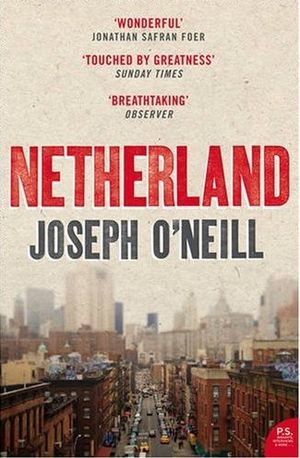
Netherland
By Joseph O’Neill
★★☆☆☆
Two Things I Liked About Netherland:
1. It was free.
2. Multi-national settings.
I got this book for free along with my consent to attend a book discussion on it at my school… a book discussion that will be taking place in about 40 minutes. I’m going to try to dash off this review in the next 20 minutes before I have to leave as a way to get my thoughts about the book in order, so that maybe I’ll have something to say at the meeting. I think I might be one of the few people who ended up actually reading it, partly do to the busy schedule of a college student approaching the final haul before summer, and partly because, well, it’s kind of boring, and I can’t really blame people for giving up after a few pages.
In the wake of 9/11 and the return of his British wife and young son to London without him – for some “space” to “figure things out” – Hans van der Broek stumbles on an amateur New York immigrant cricket team and from there finds himself drawn into the fantastical and potentially delusional world of Chuck Ramkisoon - a Trinidadian immigrant - and his grand scheme to establish the international New York Cricket Club and stadium. The experience instigates a surge of nostalgia that reconnects Hans with his life – from his Dutch childhood, to his early adulthood in London, where he met his wife, to the interlude between their arrival in New York and the fragmenting of their marriage with 9/11 and his wife’s departure, to his present loneliness in a foreign country he’s learning to call his own, and even to his future, from whence comes his narrating self.
I think the expectation is that any novel that includes 9/11 must pivot around it, but if anything 9/11 is just a side-note in Netherland, a tragedy non-specific to Hans that abstractly affected him but wasn’t something he really identified his problems with. And maybe that’s how it should be – that we should, of course, acknowledge the attacks for what they are, but draw the line at claiming some kind of injustice on a personal level. It brings up an interesting question, though, as to how much bearing 9/11 should have on a story that makes a point of bringing it up.
I was predisposed to give Netherland a solid chance because one of my author idols, Jonathan Safran Foer, sung its praises from the rooftop of the cover. That got me through the first 50 or so pages. Determination, my perpetual reluctance to give up on a book once I’ve started it, and obligation to the person responsible for giving this book to me for free got me through the next 200.
That’s not to say that Netherland is a terrible book. It’s not. O’Neill has a nostalgic voice and a poetic style that I found myself admiring. The timeline lends interest, undulating between flashback, real-time, and flash-forward, and between New York City, London, and the Hague. Objectively, I liked it. But that’s not the goal of successful literature – objectivity. You want your readers to be sucked into your world, so much so that it becomes, for the duration of the story, more real to them than reality. And that is where Netherland failed for me. I was never sucked into Hans’s world, as objectively appealing as it may have been.
Other issues I had with Netherland: For whatever reason, I’m usually turned off by a protagonist whose great conflict is a kind of general discontent – he has problems with his wife, yes; problems with his identity and direction, yes; alienation in his adopted country, yes. Any of these, in another novel, could have been enough to be the central conflict, but in Netherland, I felt like they were never given quite enough attention to take on that role. It was all of them, so it was none of them. And Chuck Ramkisoon, who was supposed to be the great variable in Hans’s narrative, never felt fully realized either. I felt like he kind of flickered in and out of the story, never sticking around long enough to make a real impression on me. Maybe that’s what O’Neill was going for, but I didn’t find it satisfying.
Actually, I think that sentiment kind of sums up my reaction to the novel as a whole: Maybe it’s what O’Neill was going for, but it didn’t satisfy me.
Books Read This Year: 38
Top 100 Progress: 42/100
★★☆☆☆
Two Things I Liked About Netherland:
1. It was free.
2. Multi-national settings.
I got this book for free along with my consent to attend a book discussion on it at my school… a book discussion that will be taking place in about 40 minutes. I’m going to try to dash off this review in the next 20 minutes before I have to leave as a way to get my thoughts about the book in order, so that maybe I’ll have something to say at the meeting. I think I might be one of the few people who ended up actually reading it, partly do to the busy schedule of a college student approaching the final haul before summer, and partly because, well, it’s kind of boring, and I can’t really blame people for giving up after a few pages.
In the wake of 9/11 and the return of his British wife and young son to London without him – for some “space” to “figure things out” – Hans van der Broek stumbles on an amateur New York immigrant cricket team and from there finds himself drawn into the fantastical and potentially delusional world of Chuck Ramkisoon - a Trinidadian immigrant - and his grand scheme to establish the international New York Cricket Club and stadium. The experience instigates a surge of nostalgia that reconnects Hans with his life – from his Dutch childhood, to his early adulthood in London, where he met his wife, to the interlude between their arrival in New York and the fragmenting of their marriage with 9/11 and his wife’s departure, to his present loneliness in a foreign country he’s learning to call his own, and even to his future, from whence comes his narrating self.
I think the expectation is that any novel that includes 9/11 must pivot around it, but if anything 9/11 is just a side-note in Netherland, a tragedy non-specific to Hans that abstractly affected him but wasn’t something he really identified his problems with. And maybe that’s how it should be – that we should, of course, acknowledge the attacks for what they are, but draw the line at claiming some kind of injustice on a personal level. It brings up an interesting question, though, as to how much bearing 9/11 should have on a story that makes a point of bringing it up.
I was predisposed to give Netherland a solid chance because one of my author idols, Jonathan Safran Foer, sung its praises from the rooftop of the cover. That got me through the first 50 or so pages. Determination, my perpetual reluctance to give up on a book once I’ve started it, and obligation to the person responsible for giving this book to me for free got me through the next 200.
That’s not to say that Netherland is a terrible book. It’s not. O’Neill has a nostalgic voice and a poetic style that I found myself admiring. The timeline lends interest, undulating between flashback, real-time, and flash-forward, and between New York City, London, and the Hague. Objectively, I liked it. But that’s not the goal of successful literature – objectivity. You want your readers to be sucked into your world, so much so that it becomes, for the duration of the story, more real to them than reality. And that is where Netherland failed for me. I was never sucked into Hans’s world, as objectively appealing as it may have been.
Other issues I had with Netherland: For whatever reason, I’m usually turned off by a protagonist whose great conflict is a kind of general discontent – he has problems with his wife, yes; problems with his identity and direction, yes; alienation in his adopted country, yes. Any of these, in another novel, could have been enough to be the central conflict, but in Netherland, I felt like they were never given quite enough attention to take on that role. It was all of them, so it was none of them. And Chuck Ramkisoon, who was supposed to be the great variable in Hans’s narrative, never felt fully realized either. I felt like he kind of flickered in and out of the story, never sticking around long enough to make a real impression on me. Maybe that’s what O’Neill was going for, but I didn’t find it satisfying.
Actually, I think that sentiment kind of sums up my reaction to the novel as a whole: Maybe it’s what O’Neill was going for, but it didn’t satisfy me.
Books Read This Year: 38
Top 100 Progress: 42/100
Friday, April 22, 2011
The Mark of the Golden Dragon
By L.A. Meyer
1. Higgins
2. Ravi
3. The Black Highwayman
The Mark of the Golden Dragon is the 9th installment in a series I’ve been reading since I was about 11. Unofficially dubbed ‘Bloody Jack’ (after the title of the first book), the series follows Mary “Jacky” Faber, a girl who started her illustrious (and sometimes infamous) life at sea as a woebegone London orphan who, desperate for steady food and a safe place to sleep each night, disguises herself as a boy to take up as a ship’s boy on the HMS Dolphin. Since then, Jacky’s adventures have earned her numerous nicknames (Puss in Boots, La Belle Dame Sans Merci, & etc.), taken her all over the world from the Cape of Good Hope to the northern Atlantic, and required such flexibility of loyalties that they’re blurred almost beyond distinction. Over the course of 9 novels, she’s defeated pirates and dabbled in piracy, won a medal of honor at Trafalgar, attended the prestigious Lawson Peabody School for Girls in Boston (briefly), traversed the Mississippi on a river boat, swum for shipwrecked treasure in the Caribbean, served as a spy on the French lines, met both Napoleon and George III, and been the protégé of a fearsome Chinese pirate queen… just to scratch the service. Nonetheless, though her predicaments and allegiances vary by book (and sometimes even by chapter), Jacky has always endeavored to remain true to two things: Her betrothed, Jaimy, whom she met on her very first voyage and hasn’t spent a consecutive five chapters with ever since, and doing what’s right by her friends. And she’s mostly succeeded. Usually. And she fails with the best intentions.
The Mark of the Golden Dragon sees Jacky safely rescued from a lifetime sentence to the penal colony in Australia and reunited with Jaimy, only to be washed overboard with Ravi in a typhoon off the coast of Southeast Asia. Presumed dead by her crew and loved ones on board her beloved ship, the Lorelei Lee, Jacky and Ravi manage to stay afloat until they wash up onshore. After a few months of navigating the foreign world of the East Indies followed by a fortuitous rescue by trusty ‘ole Higgins (I’m not spoiling anything; readers of the series will know Jacky is ever indefatigable), Jacky hastens back to London, where she infiltrates the London ton with the goal of procuring full pardons for both she and Jaimy (who was wrongfully convicted in the previous novel and sentenced to the same penal colony as Jacky herself), as well as rescuing Jaimy from the life of madness and revenge he has descended into since her presumed death.
Speaking of Jaimy, his vendetta against the two men he holds responsible for Jacky’s putative death has earned him a place on my list of favorite things in The Mark of the Golden Dragon, as well as the nickname “The Black Highwayman” for holding up carriages in search of his quarries, robbing rich occupants Robin Hood style. With his billowing black cloak and mask, and tortured obsession with avenging his (presumed) lost love, he cuts a very dramatic and romantic figure, quite a departure from the relatively unexciting upstanding Lieutenant of the Royal Navy and – pardon my French – whipped fiancé of Bloody Jack, infamous on both sides of the Atlantic, he’s dutifully been for the last few books. It was refreshing to see him break lose.
Jacky has personality and charisma in spades, which enthralls readers and fellow characters alike, and is one of the many reasons I’ve stuck with her for 8 years, in spite of the fact that the recipe for the books grows a bit more stale and contrived with each installment. Yes, the constant cat and mouse game between Jacky and her betrothed, Jaimy, is getting a little tiresome, as are her incorrigible flirtations during their periods of separation. Not to mention her necessary but increasingly implausible resilience and ability to worm her way out of the most dire of circumstances. But on the whole, these are flaws I put up with the way you ignore or tolerate the quirks of an old friend – because you love them, because you’ve known them forever, because their good qualities more than make up for the less so.
Read this book, I say. But first, start at the beginning. (It’s a very good place to start…*)
Conversation Starter:
Which Jacky installment has been your favorite, and what do you think of how the series has developed? How many books do you think she has left in her?
Conversation Starter:
Which Jacky installment has been your favorite, and what do you think of how the series has developed? How many books do you think she has left in her?
* Forgive me, I watched The Sound of Music on a daily basis as a child.
Books Read This Year: 36
Top 100 Progress: 42/100
Sunday, April 17, 2011
The Last Little Blue Envelope
By Maureen Johnson
★★☆☆☆
Release Date: April 26th, 2011*
Two Things I Liked About The Last Little Blue Envelope:
1. Rainy New Year’s in Dublin.
2. English uncle.
Another sequel review, I’m afraid. I’m in the mood to keep it short and sweet, though. So bear with me.
The Last Little Blue Envelope is the sequel to 13 Little Blue Envelopes, which came out several years ago. Ginny’s aunt Peg, an eccentric artist, traipsed off to Europe two years ago, and hadn’t been heard from since. That is, until a letter arrives unannounced from the recently deceased Peg, informing Ginny of her secret battle with brain cancer and her final wish that Ginny follow the instructions in the 13 envelopes enclosed with the letter, as well as a few rules: no cell phone, laptop, company, or plan. Never one for adventure, Ginny nonetheless embarks on a European tour directed by clues in the 13 envelopes. The letters lead her from England to Paris, Rome, Amsterdam, and Greece, and help Ginny forge a farewell connection with her beloved aunt as the letters paint a picture of Peg’s final years and introduce Ginny to many of Peg’s friends and loved ones scattered across the continent. Unfortunately, Ginny’s backpack gets stolen in Greece before she can read the last letter, and so her trip comes to a premature end. But before she goes home, she stops off in London to discover and sell a collection of her aunt’s paintings left behind as Ginny’s inheritance.
The Last Little Blue Envelope picks up a few months after 13 Little Blue Envelopes. It’s December of Ginny’s senior year, and she’s wondering how to turn her summer experiences into a college essay, why her summer romantic interest – Keith, a harmless bad-boy poseur artiste she met in London – isn’t communicating as much as he used to, and what ever happened to her 13th letter and her key to closure. A couple weeks before Christmas break, she gets an email from someone in England, informing her that they have her letter and want to meet up with her. So, on a whim, she flies to London to spend the holidays with her British uncle (who married Peg before she died) – only to be faced with a couple of back-to-back setbacks: 1] Her romantic interest has a new romantic interest, and 2] Oliver, the devastatingly handsome bearer of her letter, isn’t about to just hand it over. The letter contains instructions to obtain the parts to a final piece of Peg’s art for Ginny to sell, and Oliver wants a finder’s fee of half the proceeds. Instead of spending the holidays cuddled up with Keith with mugs of tea in front of a cozy English fireplace (or something), Ginny finds herself crammed into the backseat of Keith’s dilapidated automobile with Keith, his new girlfriend, and Oliver, driving across Europe to complete Peg’s final project.
The Last Little Blue Envelope wasn’t terrible, and it had its moments – I especially got a kick out of a scene where Keith’s girlfriend, used to driving on the opposite side of the road, has to navigate the infamous Arc du Triumph traffic circle – but overall it had that stale sequel aesthetic, as if perhaps Maureen spent a little too much time away from the characters before going back to tie up the loose ends from the first novel. Oliver’s bad boy standoffishness as a mask for financial and emotional insecurity was a little too predictable, as was Ginny’s transition of romantic interest from one bad-boy to another, without enough swoon-factor to compensate, and the story in general was a little too much more of the same of the first 12 letters. Maureen said she only decided to write this sequel after getting a multitude of requests for one, and it shows – The Last Little Blue Envelope reads like an afterthought, not a planned finale.
Books Read This Year: 34
Top 100 Progress: 42/100
* I received an advance copy of The Last Little Blue Envelope through NetGalley.com
★★☆☆☆
Release Date: April 26th, 2011*
Two Things I Liked About The Last Little Blue Envelope:
1. Rainy New Year’s in Dublin.
2. English uncle.
Another sequel review, I’m afraid. I’m in the mood to keep it short and sweet, though. So bear with me.
The Last Little Blue Envelope is the sequel to 13 Little Blue Envelopes, which came out several years ago. Ginny’s aunt Peg, an eccentric artist, traipsed off to Europe two years ago, and hadn’t been heard from since. That is, until a letter arrives unannounced from the recently deceased Peg, informing Ginny of her secret battle with brain cancer and her final wish that Ginny follow the instructions in the 13 envelopes enclosed with the letter, as well as a few rules: no cell phone, laptop, company, or plan. Never one for adventure, Ginny nonetheless embarks on a European tour directed by clues in the 13 envelopes. The letters lead her from England to Paris, Rome, Amsterdam, and Greece, and help Ginny forge a farewell connection with her beloved aunt as the letters paint a picture of Peg’s final years and introduce Ginny to many of Peg’s friends and loved ones scattered across the continent. Unfortunately, Ginny’s backpack gets stolen in Greece before she can read the last letter, and so her trip comes to a premature end. But before she goes home, she stops off in London to discover and sell a collection of her aunt’s paintings left behind as Ginny’s inheritance.
The Last Little Blue Envelope picks up a few months after 13 Little Blue Envelopes. It’s December of Ginny’s senior year, and she’s wondering how to turn her summer experiences into a college essay, why her summer romantic interest – Keith, a harmless bad-boy poseur artiste she met in London – isn’t communicating as much as he used to, and what ever happened to her 13th letter and her key to closure. A couple weeks before Christmas break, she gets an email from someone in England, informing her that they have her letter and want to meet up with her. So, on a whim, she flies to London to spend the holidays with her British uncle (who married Peg before she died) – only to be faced with a couple of back-to-back setbacks: 1] Her romantic interest has a new romantic interest, and 2] Oliver, the devastatingly handsome bearer of her letter, isn’t about to just hand it over. The letter contains instructions to obtain the parts to a final piece of Peg’s art for Ginny to sell, and Oliver wants a finder’s fee of half the proceeds. Instead of spending the holidays cuddled up with Keith with mugs of tea in front of a cozy English fireplace (or something), Ginny finds herself crammed into the backseat of Keith’s dilapidated automobile with Keith, his new girlfriend, and Oliver, driving across Europe to complete Peg’s final project.
The Last Little Blue Envelope wasn’t terrible, and it had its moments – I especially got a kick out of a scene where Keith’s girlfriend, used to driving on the opposite side of the road, has to navigate the infamous Arc du Triumph traffic circle – but overall it had that stale sequel aesthetic, as if perhaps Maureen spent a little too much time away from the characters before going back to tie up the loose ends from the first novel. Oliver’s bad boy standoffishness as a mask for financial and emotional insecurity was a little too predictable, as was Ginny’s transition of romantic interest from one bad-boy to another, without enough swoon-factor to compensate, and the story in general was a little too much more of the same of the first 12 letters. Maureen said she only decided to write this sequel after getting a multitude of requests for one, and it shows – The Last Little Blue Envelope reads like an afterthought, not a planned finale.
Books Read This Year: 34
Top 100 Progress: 42/100
* I received an advance copy of The Last Little Blue Envelope through NetGalley.com
Saturday, April 16, 2011
Where She Went
By Gayle Forman
★★☆☆☆
Two Things I Liked About Where She Went:
1. All-night private tour of NYC.
2. Intense impromptu cello/guitar duet.
Can we just start with a collective “ugh!” for the cover? UGH! Who approved this? It’s an eyesore! I really despise when publishers put actual human faces on covers. Drawings: okay. Profiles: if you must. Faces: abort!
Where She Went is the sequel to a novel that came out last spring and made waves on the young adult circuit, called If I Stay. If I Stay is part love story (romantic, of course, but also familial and musical) and part tragedy. In the aftermath of a car crash that kills her parents and younger brother, Mia – comatose and barely stable in the ICU, while her spirit somehow (it’s fiction, after all) roams the hospital, observing the chaos of grief for her family and fierce hope for herself amongst her remaining loved ones, including her boyfriend, Adam – is faced with the ultimate decision: should she let go, or should she stay? The story is wrenching, but it is also beautiful and moving. I read it in one sitting, tucked into the backseat of a car speeding along the autobahn in the dark, with the melancholy melodies of classical music (fitting, as music is a powerful theme in If I Stay, Mia being a Juilliard-bound cellist) sealing me into my own little bubble of story and sound, which only made it all the easier to be swept up by the emotional currents of the novel.
Not so Where She Went. I will allow that the fact that I couldn’t read it in one sitting may have impeded some of the story’s emotional momentum, but I don’t think that can be held wholly, or even mostly, responsible. Where If I Stay was a deeply felt tale of love, loss, and the ties that bid (to each other, to life), with a cast of characters, a plot, and a point of view that were refreshingly and captivating original in a genre prone to cliché, Where She Went made up for that originality in spades by conforming to clichés of the genre, the characters becoming nearly unrecognizable for the generic corruption wreaked on them. If If I Stay was as piercing and individual as a personal experience of loss, as hauntingly beautiful and melancholy as a cello solo, then Where She Went is the Hallmark card you receive from your coworker a week after the funeral.
Where She Went shifts from Mia’s point of view to her boyfriend – now ex-boyfriend – Adam’s. If I Stay explored the onset of Mia’s loss, and Where She Went explores the ongoing burden of Adam’s. Not only did he also lose Mia’s family – who had accepted into their fold – but a few months later, he lost Mia as well, when she left for Juilliard and inexplicably stopped communicating. He turned his compounded hurt and confusion into music, writing an entire album in 2 weeks, an album that gets him and his band, Shooting Star, signed and chart topping in a matter of a few whirlwind months. Now, 3 years later, he’s a bona fide rock-star with a celebrity girlfriend, constant attention from the paparazzi, a world tour – and a new smoking habit, anxiety meds, and a falling out with his band mates to show for it. He may have millions in the bank and thousands in the audience, but he’s a sad, lonely, and strung-out soul who can’t remember what he loves about the only thing he used to care about as much as Mia.
Then the night before Adam flies to London to kick off a 67-show world tour, when his manager gives him a night off to pull himself back together (he’s on the verge of a mental and ideological breakdown), he stumbles on a poster outside Carnegie Hall, advertising a concert that evening for a promising young cellist – who is, of course, none other than Mia. After the concert, Mia has him called backstage, and thus begins a night spent touring Mia’s New York and tending to old flames – to be extinguished or rekindled, depending on what the night brings.
I had a few deal-breaking issues with this book. The biggest is that I really wish Gayle hadn’t made Adam and Mia such rock-stars. This book would have been exponentially better if Shooting Star had retained its relatively anonymous indie status, and Mia was just an above average but not headlining Juilliard student. One of the fabulous things about If I Stay was the normality of the characters and their lives. The story was so affective because the characters involved weren’t so much different than you. The moment Gayle decided to make Adam a rock-star and Mia a renowned cellist, she axed that accessibility. I just couldn’t really relate as well to them anymore, especially to Adam, who spent a significant chunk of the novel hiding and running from fans, whining about his impending world tour and clingy celebrity girlfriend, and losing his temper with paparazzi.
Other qualms: The lyrics at the start of each chapter, supposedly from Adam’s career-launching record, were melodramatic and cheesy; I wish more of the novel had been spent in the present, rather than switching back and forth every other chapter to the past; Mia needed a stronger presence, because even though the novel was told from Adam’s point of view, it felt entirely too Adam-centric, compared to If I Stay, which gave a rounded portrayal of Adam even though it was told through Mia’s lens.
All things considered, I’m not sure I would even recommend Where She Went to fans of If I Stay. I felt more satisfied by the open end of If I Stay than I did by the resolution of Where She Went.
Books Read This Year: 34
Top 100 Progress: 42/100
★★☆☆☆
Two Things I Liked About Where She Went:
1. All-night private tour of NYC.
2. Intense impromptu cello/guitar duet.
Can we just start with a collective “ugh!” for the cover? UGH! Who approved this? It’s an eyesore! I really despise when publishers put actual human faces on covers. Drawings: okay. Profiles: if you must. Faces: abort!
Where She Went is the sequel to a novel that came out last spring and made waves on the young adult circuit, called If I Stay. If I Stay is part love story (romantic, of course, but also familial and musical) and part tragedy. In the aftermath of a car crash that kills her parents and younger brother, Mia – comatose and barely stable in the ICU, while her spirit somehow (it’s fiction, after all) roams the hospital, observing the chaos of grief for her family and fierce hope for herself amongst her remaining loved ones, including her boyfriend, Adam – is faced with the ultimate decision: should she let go, or should she stay? The story is wrenching, but it is also beautiful and moving. I read it in one sitting, tucked into the backseat of a car speeding along the autobahn in the dark, with the melancholy melodies of classical music (fitting, as music is a powerful theme in If I Stay, Mia being a Juilliard-bound cellist) sealing me into my own little bubble of story and sound, which only made it all the easier to be swept up by the emotional currents of the novel.
Not so Where She Went. I will allow that the fact that I couldn’t read it in one sitting may have impeded some of the story’s emotional momentum, but I don’t think that can be held wholly, or even mostly, responsible. Where If I Stay was a deeply felt tale of love, loss, and the ties that bid (to each other, to life), with a cast of characters, a plot, and a point of view that were refreshingly and captivating original in a genre prone to cliché, Where She Went made up for that originality in spades by conforming to clichés of the genre, the characters becoming nearly unrecognizable for the generic corruption wreaked on them. If If I Stay was as piercing and individual as a personal experience of loss, as hauntingly beautiful and melancholy as a cello solo, then Where She Went is the Hallmark card you receive from your coworker a week after the funeral.
Where She Went shifts from Mia’s point of view to her boyfriend – now ex-boyfriend – Adam’s. If I Stay explored the onset of Mia’s loss, and Where She Went explores the ongoing burden of Adam’s. Not only did he also lose Mia’s family – who had accepted into their fold – but a few months later, he lost Mia as well, when she left for Juilliard and inexplicably stopped communicating. He turned his compounded hurt and confusion into music, writing an entire album in 2 weeks, an album that gets him and his band, Shooting Star, signed and chart topping in a matter of a few whirlwind months. Now, 3 years later, he’s a bona fide rock-star with a celebrity girlfriend, constant attention from the paparazzi, a world tour – and a new smoking habit, anxiety meds, and a falling out with his band mates to show for it. He may have millions in the bank and thousands in the audience, but he’s a sad, lonely, and strung-out soul who can’t remember what he loves about the only thing he used to care about as much as Mia.
Then the night before Adam flies to London to kick off a 67-show world tour, when his manager gives him a night off to pull himself back together (he’s on the verge of a mental and ideological breakdown), he stumbles on a poster outside Carnegie Hall, advertising a concert that evening for a promising young cellist – who is, of course, none other than Mia. After the concert, Mia has him called backstage, and thus begins a night spent touring Mia’s New York and tending to old flames – to be extinguished or rekindled, depending on what the night brings.
I had a few deal-breaking issues with this book. The biggest is that I really wish Gayle hadn’t made Adam and Mia such rock-stars. This book would have been exponentially better if Shooting Star had retained its relatively anonymous indie status, and Mia was just an above average but not headlining Juilliard student. One of the fabulous things about If I Stay was the normality of the characters and their lives. The story was so affective because the characters involved weren’t so much different than you. The moment Gayle decided to make Adam a rock-star and Mia a renowned cellist, she axed that accessibility. I just couldn’t really relate as well to them anymore, especially to Adam, who spent a significant chunk of the novel hiding and running from fans, whining about his impending world tour and clingy celebrity girlfriend, and losing his temper with paparazzi.
Other qualms: The lyrics at the start of each chapter, supposedly from Adam’s career-launching record, were melodramatic and cheesy; I wish more of the novel had been spent in the present, rather than switching back and forth every other chapter to the past; Mia needed a stronger presence, because even though the novel was told from Adam’s point of view, it felt entirely too Adam-centric, compared to If I Stay, which gave a rounded portrayal of Adam even though it was told through Mia’s lens.
All things considered, I’m not sure I would even recommend Where She Went to fans of If I Stay. I felt more satisfied by the open end of If I Stay than I did by the resolution of Where She Went.
Books Read This Year: 34
Top 100 Progress: 42/100
Jitterbug Perfume
By Tom Robbins
★★★★☆
Four Things I Liked About Jitterbug Perfume:
1. Beets.
2. Magical realism.
3. Convergence of four narratives.
4. Sheer span and scope of the story - time, place, and content.
This book came highly recommended, but I wasn’t sure if it lived up to the hype until just about the last page. And even then, I wasn’t sure how I really felt about it. On the one hand, I’ve never read anything quite like it before, and I loved the way the last 20 pages coalesced the whole narrative into a final, momentous throb of significance. On the other hand, I was never fully enveloped into the story until those last 20 pages or so, and there was a lot about Robbins’ style I wasn’t sure he was pulling off. But maybe that’s part of the book’s greatness – that it is so wholly unique you don’t even know what to make of it. It certainly had me thinking the entire time, whether I was trying to draw connections between the apparently incongruous narrative threads, trying to construct meaning from a seemingly random assortment of themes and motifs, or savoring the smattering of perfect passages like melted chocolate on my tongue. In any case, I was never passively flipping pages, living only in the current scene while letting the previous one slip unnoticed out of my mind like the memory of last Monday’s breakfast. Instead I was collecting them one by one like cards in hand, on alert for the royal flush.
The novel begins with this line: “The beet is the most intense of vegetables.” And somehow, in the course of 388 pages and a couple thousand years, it evolves from rumination on the passionate qualities of the beet into an elaborate and philosophical tale of love, immortality, divinity, the sacrifices we make to modern life, and the intangible spark that keeps the human condition aflame.
The Prologue begins with a beet, then moves to Seattle, Paris, and New Orleans, before settling on ancient Bohemia, where the real action begins. In three parts, the novel primarily follows Alobar, a former king and his – for lack of a better word – wife, Kudra, who individually cheat death, cross paths, and unite to seek the path to immortality, with the help of the dying pagan god of basic human instincts, Pan. Yet while the majority of the novel is devoted to Alobar’s ongoing quest through the past, each section concludes with shorter chapters set in contemporary Seattle, Paris, and New Orleans, which follow three unlikely perfumers: a waitress by evening who tracks down an elusive formula trapped in the dregs of an old blue perfume bottle by night, the elite LeFever brothers who possess perfumery’s most infallible nose, and an enormous, fills-the-room-with-her-sheer-size-of-body-and-personality woman in charge of a rundown family business nonetheless devoted to the craft. The four separate narratives seem disconnected until the last 100 some odd pages, when Alobar’s time catches up to real time and converges with Seattle, Paris, and New Orleans.
The real power in Robbins’s writing (at least as I’ve experienced it) is in choreographing the ending. All the various threads of plots, characters, themes, and motifs were all smoothly and satisfyingly braided together into a snug and beautiful pattern worthy of an “Ooh” or “Ah.” For a book that starts with a beet, Jitterbug Perfume makes you think an awful lot about life: what it means, why its worth living, what comes afterward, who’s in control.
That being said, it is not a perfect novel. The language is outlandish, metaphors sometimes so much so that they could have been pulled from a bad metaphor list. I get that the extravagancy of Robbins’s style goes hand in hand with the extravagancy of his story, but I waffle as to whether not he pulls it off. And yet there are passages – sometimes single lines – of such acuity that they stop my eyes still on the page and arrest my attention. In lieu of a smooth conclusion, I think I shall simply live you with a couple of my favorite examples and let them speak of themselves:
“If the earth needs night as well as day, wouldn’t it follow that the soul require endarkenment to balance enlightenment?”
“Our individuality is all, all that we have. There are those who barter it for security, those who repress it for what they believe is the betterment of the whole society, but blessed in the twinkle of the morning star is the one who nurtures it and rides it, in grace and love and wit, from peculiar station to peculiar station along life’s bittersweet route.”
“People used to die from germs. Now they died from bad habits. That was what Dr. Dannyboy said. Heart disease was caused by bad personal habits, cancer was caused by bad industrial habits, war was caused by bad political habits. Dannyboy believed that even old age was a habit. And habits could be broken.”
Books Read This Year: 33
Top 100 Progress: 42/100
★★★★☆
Four Things I Liked About Jitterbug Perfume:
1. Beets.
2. Magical realism.
3. Convergence of four narratives.
4. Sheer span and scope of the story - time, place, and content.
This book came highly recommended, but I wasn’t sure if it lived up to the hype until just about the last page. And even then, I wasn’t sure how I really felt about it. On the one hand, I’ve never read anything quite like it before, and I loved the way the last 20 pages coalesced the whole narrative into a final, momentous throb of significance. On the other hand, I was never fully enveloped into the story until those last 20 pages or so, and there was a lot about Robbins’ style I wasn’t sure he was pulling off. But maybe that’s part of the book’s greatness – that it is so wholly unique you don’t even know what to make of it. It certainly had me thinking the entire time, whether I was trying to draw connections between the apparently incongruous narrative threads, trying to construct meaning from a seemingly random assortment of themes and motifs, or savoring the smattering of perfect passages like melted chocolate on my tongue. In any case, I was never passively flipping pages, living only in the current scene while letting the previous one slip unnoticed out of my mind like the memory of last Monday’s breakfast. Instead I was collecting them one by one like cards in hand, on alert for the royal flush.
The novel begins with this line: “The beet is the most intense of vegetables.” And somehow, in the course of 388 pages and a couple thousand years, it evolves from rumination on the passionate qualities of the beet into an elaborate and philosophical tale of love, immortality, divinity, the sacrifices we make to modern life, and the intangible spark that keeps the human condition aflame.
The Prologue begins with a beet, then moves to Seattle, Paris, and New Orleans, before settling on ancient Bohemia, where the real action begins. In three parts, the novel primarily follows Alobar, a former king and his – for lack of a better word – wife, Kudra, who individually cheat death, cross paths, and unite to seek the path to immortality, with the help of the dying pagan god of basic human instincts, Pan. Yet while the majority of the novel is devoted to Alobar’s ongoing quest through the past, each section concludes with shorter chapters set in contemporary Seattle, Paris, and New Orleans, which follow three unlikely perfumers: a waitress by evening who tracks down an elusive formula trapped in the dregs of an old blue perfume bottle by night, the elite LeFever brothers who possess perfumery’s most infallible nose, and an enormous, fills-the-room-with-her-sheer-size-of-body-and-personality woman in charge of a rundown family business nonetheless devoted to the craft. The four separate narratives seem disconnected until the last 100 some odd pages, when Alobar’s time catches up to real time and converges with Seattle, Paris, and New Orleans.
The real power in Robbins’s writing (at least as I’ve experienced it) is in choreographing the ending. All the various threads of plots, characters, themes, and motifs were all smoothly and satisfyingly braided together into a snug and beautiful pattern worthy of an “Ooh” or “Ah.” For a book that starts with a beet, Jitterbug Perfume makes you think an awful lot about life: what it means, why its worth living, what comes afterward, who’s in control.
That being said, it is not a perfect novel. The language is outlandish, metaphors sometimes so much so that they could have been pulled from a bad metaphor list. I get that the extravagancy of Robbins’s style goes hand in hand with the extravagancy of his story, but I waffle as to whether not he pulls it off. And yet there are passages – sometimes single lines – of such acuity that they stop my eyes still on the page and arrest my attention. In lieu of a smooth conclusion, I think I shall simply live you with a couple of my favorite examples and let them speak of themselves:
“If the earth needs night as well as day, wouldn’t it follow that the soul require endarkenment to balance enlightenment?”
“Our individuality is all, all that we have. There are those who barter it for security, those who repress it for what they believe is the betterment of the whole society, but blessed in the twinkle of the morning star is the one who nurtures it and rides it, in grace and love and wit, from peculiar station to peculiar station along life’s bittersweet route.”
“People used to die from germs. Now they died from bad habits. That was what Dr. Dannyboy said. Heart disease was caused by bad personal habits, cancer was caused by bad industrial habits, war was caused by bad political habits. Dannyboy believed that even old age was a habit. And habits could be broken.”
Books Read This Year: 33
Top 100 Progress: 42/100
Sunday, March 27, 2011
The Hobbit (Top 100 #42)
By J.R.R. Tolkien
★★★★☆
Four Things I Liked About The Hobbit:
1. The storytelling.
2. Bilbo*
3. Gandalf
4. Middle-Earth's vividness.
I should probably try to stop being surprised each time I end up liking something Lord of the Rings related. It first happened when my dad forced me to watch the trilogy before our trip to New Zealand**, and in spite of my petulant pre-teen reluctance, I enjoyed them enough to later embark on a Lord of the Rings marathon with my friends (we made it through the first two before our eyes glazed over from prolonged screen exposure). I likewise resisted reading The Hobbit, though my uncle gave me a lovely copy several years ago, and with the same result: I liked it, in spite of myself. The only reason I didn't give it 5 stars is because though it was enjoyable, it wasn't quite a compulsive, withdrawal inducing read, nor did I put it down and think, "WOW," which are my two main criteria for 5-star ratings. It's a precise science, I know.
Bilbo Baggins is a content hobbit. He has a snug little hobbit-hole home, several square meals a day - whenever the urge strikes - and the closest he's gotten to an adventure is listening to old tales. Until Gandalf shows up for tea with a gang of 13 unruly dwarves, a fantastic*** proposition, and high expectations for poor Bilbo, whom he intends to extract from the quiet hobbit life and recruit as the dwarves' hired burglar. The quest is to recover the dwarf king's stolen gold from the dragon Smaug, who hoards it in a mountain fortress months' travel and innumerable dangers away from Bilbo's cozy Shire. Bilbo, who has hardly set foot outside the Shire, encounters trolls, goblins, elves, a shape-shifting bear, giant spiders (think Acromantula, -shudders-) the infamous cave-dwelling creature Gollum, and a magical ring of invisibility in his trek through the forbidding wildernesses of Middle-Earth, each terrain riddled with its own particular dangers. Gandalf has placed a great responsibility on Bilbo's shoulders, and though Bilbo frets and fears and even faints, he rises admirably to the occasion, and goes home a hobbit hero (I'm not spoiling anything for you here, it's pretty clear from the get-go that our little hero comes out on top).
Bilbo is so endearing. I know he's like a 50-year-old, chubby fantasy creature who battles trolls and goblins and giant spiders and can totally take care of himself, but I thought of him kind of like a child the whole time. I think part of it was a) his perpetual complaints about inconstant food-supply, and b) his perpetual longing to be back home in his hobbit-hole. It just made him seem so cuddly and vulnerable; I wanted to give him a hug, a mug of hot tea, and a warm cookie to make it all better. And yet he is every bit the hero, saving his friends time and time again with a little ingenuity, a lot of luck, and, of course, his trusty invisible ring.
The Hobbit is a classic fantasy adventure story (go figure, Tolkien probably invented this genre), but with a level of almost unparalleled detail and creativity in the composition of the world. I was seamlessly absorbed into both the story and Middle-Earth by Tolkien's modest and subtle, yet vivid descriptions. Which is saying a lot, considering how prejudiced I was going in.
Surprises: How considerably lighter a tale it is than the Lord of the Rings trilogy; how little foreshadowing there was for the trilogy; how little time was spent dwelling on Gollum (he's never mentioned again after the initial encounter); and how readable it was (I don't know why I expected it to be a slow read, other than that I expected not to like it, which is the biggest speed impediment there is).
No more will I wrinkle my nose (mentally) when people tell me their favorite book is by Tolkien. It's not my favorite book, but I definitely know where they're coming from, and I'm actually looking forward to reading the Lord of the Rings trilogy, which is also on the Top 100 list. I'd recommend The Hobbit to people who were childhood fans of Tamora Pierce, Harry Potter, Dianna Wynne Jones, Ella Enchanted, or The Enchanted Forest Chronicles.
* Incidentally, in the forthcoming film adaptation, Bilbo is going to be played by Watson, from the ubiquitous (on this blog, anyway) Sherlock. Also, it goes to show how influential (and dare I say, ubiquitous?) Tolkien's work is that there's no squiggly line under the name 'Bilbo.' Testing... how about 'Voldemort'? Shucks. There goes the squiggly line (though you can't see it). Well, it's just a matter of time.
** Blogger also refutes 'Zealand' with its squiggly red line of ignorance, so it's obviously no kind of authority on what words should be recognized as real and not. Why Bilbo (endearing as he is) makes that list over a country, I do not know.
*** As in, "conceived or appearing as if conceived by an unrestrained imagination; odd and remarkable; bizarre," or "highly unrealistic or impractical," or "incredibly great or extreme," or all of the above.
Books Read This Year: 27
Top 100 Progress: 42/100
Four Things I Liked About The Hobbit:
1. The storytelling.
2. Bilbo*
3. Gandalf
4. Middle-Earth's vividness.
I should probably try to stop being surprised each time I end up liking something Lord of the Rings related. It first happened when my dad forced me to watch the trilogy before our trip to New Zealand**, and in spite of my petulant pre-teen reluctance, I enjoyed them enough to later embark on a Lord of the Rings marathon with my friends (we made it through the first two before our eyes glazed over from prolonged screen exposure). I likewise resisted reading The Hobbit, though my uncle gave me a lovely copy several years ago, and with the same result: I liked it, in spite of myself. The only reason I didn't give it 5 stars is because though it was enjoyable, it wasn't quite a compulsive, withdrawal inducing read, nor did I put it down and think, "WOW," which are my two main criteria for 5-star ratings. It's a precise science, I know.
Bilbo Baggins is a content hobbit. He has a snug little hobbit-hole home, several square meals a day - whenever the urge strikes - and the closest he's gotten to an adventure is listening to old tales. Until Gandalf shows up for tea with a gang of 13 unruly dwarves, a fantastic*** proposition, and high expectations for poor Bilbo, whom he intends to extract from the quiet hobbit life and recruit as the dwarves' hired burglar. The quest is to recover the dwarf king's stolen gold from the dragon Smaug, who hoards it in a mountain fortress months' travel and innumerable dangers away from Bilbo's cozy Shire. Bilbo, who has hardly set foot outside the Shire, encounters trolls, goblins, elves, a shape-shifting bear, giant spiders (think Acromantula, -shudders-) the infamous cave-dwelling creature Gollum, and a magical ring of invisibility in his trek through the forbidding wildernesses of Middle-Earth, each terrain riddled with its own particular dangers. Gandalf has placed a great responsibility on Bilbo's shoulders, and though Bilbo frets and fears and even faints, he rises admirably to the occasion, and goes home a hobbit hero (I'm not spoiling anything for you here, it's pretty clear from the get-go that our little hero comes out on top).
Bilbo is so endearing. I know he's like a 50-year-old, chubby fantasy creature who battles trolls and goblins and giant spiders and can totally take care of himself, but I thought of him kind of like a child the whole time. I think part of it was a) his perpetual complaints about inconstant food-supply, and b) his perpetual longing to be back home in his hobbit-hole. It just made him seem so cuddly and vulnerable; I wanted to give him a hug, a mug of hot tea, and a warm cookie to make it all better. And yet he is every bit the hero, saving his friends time and time again with a little ingenuity, a lot of luck, and, of course, his trusty invisible ring.
The Hobbit is a classic fantasy adventure story (go figure, Tolkien probably invented this genre), but with a level of almost unparalleled detail and creativity in the composition of the world. I was seamlessly absorbed into both the story and Middle-Earth by Tolkien's modest and subtle, yet vivid descriptions. Which is saying a lot, considering how prejudiced I was going in.
Surprises: How considerably lighter a tale it is than the Lord of the Rings trilogy; how little foreshadowing there was for the trilogy; how little time was spent dwelling on Gollum (he's never mentioned again after the initial encounter); and how readable it was (I don't know why I expected it to be a slow read, other than that I expected not to like it, which is the biggest speed impediment there is).
No more will I wrinkle my nose (mentally) when people tell me their favorite book is by Tolkien. It's not my favorite book, but I definitely know where they're coming from, and I'm actually looking forward to reading the Lord of the Rings trilogy, which is also on the Top 100 list. I'd recommend The Hobbit to people who were childhood fans of Tamora Pierce, Harry Potter, Dianna Wynne Jones, Ella Enchanted, or The Enchanted Forest Chronicles.
* Incidentally, in the forthcoming film adaptation, Bilbo is going to be played by Watson, from the ubiquitous (on this blog, anyway) Sherlock. Also, it goes to show how influential (and dare I say, ubiquitous?) Tolkien's work is that there's no squiggly line under the name 'Bilbo.' Testing... how about 'Voldemort'? Shucks. There goes the squiggly line (though you can't see it). Well, it's just a matter of time.
** Blogger also refutes 'Zealand' with its squiggly red line of ignorance, so it's obviously no kind of authority on what words should be recognized as real and not. Why Bilbo (endearing as he is) makes that list over a country, I do not know.
*** As in, "conceived or appearing as if conceived by an unrestrained imagination; odd and remarkable; bizarre," or "highly unrealistic or impractical," or "incredibly great or extreme," or all of the above.
Books Read This Year: 27
Top 100 Progress: 42/100
Monday, March 21, 2011
Zombicorns
By John Green
★★★★☆
Four Things I Like About Zombicorns:
1. John Green*
2. Mia’s dog having an existential crisis
3. Chicago/The Bean
4. Using a library as a hideout from zombie ambush
Zombicorns is not just another clever story penned (or rather, typed) by young adult author/rock-star John Green. It’s not just a zombie apocalypse novella. It is not even just a zombie apocalypse novel written by a rock-star.
It’s a profound statement about corn**. And souls. And what makes humans human. And whether that makes us better than other living things. And what, ultimately, we live for. Pretty heavy stuff for any novella, much less one with a zombie unicorn on the cover, if you ask me.
Also, despite appearances, it’s not at all about unicorns (see disclaimer beneath title). Sorry if that revelation just dealt you a heavy blow of disappointment. You’ll get over it. I promise. Just read the real story.
Mia is one of the last of her kind – that is, our kind: humans. She has cloistered herself in a Chicago cellar, eating Spam, drinking expensive wine by the bottle, and writing her memoirs about the aftermath of the sudden outbreak of D131Y – a virus spread through corn that Z’s up (aka zombifies) all who ingest it – while she debates whether continued survival is really worth the effort, or whether she should just give up and commit Zuicide. The only living, loving soul left to her in the world is her dog, Mr. President. You know, the one who suffers an existential crisis. Which was probably just Mia projecting, but I prefer to pretend it was all Mr. President. (Incidentally, I can’t blame her for the wine. I’d probably be in the cups, too, if I survived the zombie apocalypse only to have to ‘complete’ my Z’d up family so they wouldn’t force-feed me zombie corn.)
Only John Green can make a zombie apocalypse novella a profound statement of any kind.
Exhibit A: “I came to the conclusion a while ago that there is nothing romantic or supernatural about loving someone: Love is the privilege of being responsible for another.”
Exhibit B: “Being a person, I had come to realize, is a communal activity. Dogs know how to be dogs. But people do not know how to be people unless and until they learn from other people. Which got me to wondering whether it’s possible to learn how to be a person in a world where all the people are dead.”
And these are just examples short enough to include. There were several other marvelous multi-paragraph examples of John’s evidently innate ability to profoundify anything.
Also, only John Green could make me ever want to read a zombie apocalypse novella. And like it.
That being said, it’s not perfect. But it’s not supposed to be. He wrote it for fun, he didn’t ruthlessly edit the way you do before Official Publication, and he’s disseminating it for free on the Internet purely for the enjoyment of his fans. Which I think is pretty dang cool, so I am more than happy to overlook a few typos and inconsistencies and tangents here and there.
If the idea of a novella about corn and zombies intrigues you, you can watch John read the first chapter here.
You can download your very own personal copy of Zombicorns here.
* If you know anything about John Green, you know this counts as a thing to like about something he’s written. His name on the cover of a book is like a big official seal that says “This Book Is Guaranteed To Be Both Entertaining and Intelligent,” only better, because you can trust John Green’s name more than you can trust the kind of seals they slap on to try to sell more copies of subpar bestsellers.
** You know, like how it keeps cropping up in the most unlikely of places. Sugar, fuel, plastic…
Books Read This Year: 24
Top 100 Progress: 40/100
★★★★☆
Four Things I Like About Zombicorns:
1. John Green*
2. Mia’s dog having an existential crisis
3. Chicago/The Bean
4. Using a library as a hideout from zombie ambush
Zombicorns is not just another clever story penned (or rather, typed) by young adult author/rock-star John Green. It’s not just a zombie apocalypse novella. It is not even just a zombie apocalypse novel written by a rock-star.
It’s a profound statement about corn**. And souls. And what makes humans human. And whether that makes us better than other living things. And what, ultimately, we live for. Pretty heavy stuff for any novella, much less one with a zombie unicorn on the cover, if you ask me.
Also, despite appearances, it’s not at all about unicorns (see disclaimer beneath title). Sorry if that revelation just dealt you a heavy blow of disappointment. You’ll get over it. I promise. Just read the real story.
Mia is one of the last of her kind – that is, our kind: humans. She has cloistered herself in a Chicago cellar, eating Spam, drinking expensive wine by the bottle, and writing her memoirs about the aftermath of the sudden outbreak of D131Y – a virus spread through corn that Z’s up (aka zombifies) all who ingest it – while she debates whether continued survival is really worth the effort, or whether she should just give up and commit Zuicide. The only living, loving soul left to her in the world is her dog, Mr. President. You know, the one who suffers an existential crisis. Which was probably just Mia projecting, but I prefer to pretend it was all Mr. President. (Incidentally, I can’t blame her for the wine. I’d probably be in the cups, too, if I survived the zombie apocalypse only to have to ‘complete’ my Z’d up family so they wouldn’t force-feed me zombie corn.)
Only John Green can make a zombie apocalypse novella a profound statement of any kind.
Exhibit A: “I came to the conclusion a while ago that there is nothing romantic or supernatural about loving someone: Love is the privilege of being responsible for another.”
Exhibit B: “Being a person, I had come to realize, is a communal activity. Dogs know how to be dogs. But people do not know how to be people unless and until they learn from other people. Which got me to wondering whether it’s possible to learn how to be a person in a world where all the people are dead.”
And these are just examples short enough to include. There were several other marvelous multi-paragraph examples of John’s evidently innate ability to profoundify anything.
Also, only John Green could make me ever want to read a zombie apocalypse novella. And like it.
That being said, it’s not perfect. But it’s not supposed to be. He wrote it for fun, he didn’t ruthlessly edit the way you do before Official Publication, and he’s disseminating it for free on the Internet purely for the enjoyment of his fans. Which I think is pretty dang cool, so I am more than happy to overlook a few typos and inconsistencies and tangents here and there.
If the idea of a novella about corn and zombies intrigues you, you can watch John read the first chapter here.
You can download your very own personal copy of Zombicorns here.
* If you know anything about John Green, you know this counts as a thing to like about something he’s written. His name on the cover of a book is like a big official seal that says “This Book Is Guaranteed To Be Both Entertaining and Intelligent,” only better, because you can trust John Green’s name more than you can trust the kind of seals they slap on to try to sell more copies of subpar bestsellers.
** You know, like how it keeps cropping up in the most unlikely of places. Sugar, fuel, plastic…
Books Read This Year: 24
Top 100 Progress: 40/100
Labels:
BBC's Top 100 Book List,
book blog,
book review,
book review blog,
Chicago,
Chicago bean,
corn,
download Zombicorns,
Indiana,
John Green,
philosophy,
Zombicorns,
zombie apocalypse,
zombies
Sunday, March 20, 2011
The Adventures of Sherlock Holmes (Top 100 #40)
By Sir Arthur Conan Doyle
★★★★☆
Four Things I Liked About Adventures:
1. Sherlock’s disguises.
2. His contemplative violin playing.
3. “This is a three pipe problem, and I ask you not to speak to me for fifty minutes.”*
4. Catching many of the allusions to the original Sherlock in Sherlock and the recent Robert Downey Jr. remake.
This is Sherlock Holmes like I expected him to be: Sassy, quirky, quick-witted, insensitive, infuriatingly secretive about his thought process, and more concerned with the thrill of the case than the fate of his clients. I accidentally skipped a book in the overall series (The Sign of Four, one of the four novels), but there was clearly a lot of growth in Doyle’s storytelling and character development, and it made the stories that much more enjoyable. If A Study in Scarlet was Sherlock in conception, then The Adventures of Sherlock Holmes is Sherlock fully realized, in all his snarky, brilliant glory.
The Adventures of Sherlock Holmes is a book of short stories, each detailing a single case, as told by Sherlock’s partner in (solving) crime, Dr. Watson**. The installments of the complete Sherlock Holmes series can all be read independently and still make sense, but they also build on one another, with a couple plot threads stretching across several books (and becoming more plentiful as the series go on, I gather) and occasional references to previous cases. While all the stories in Adventures are witty and entertaining, I did, of course, have a few favorites: The Red-Headed League (I covet the hair of gingers, ❤ Weasley family), The Man With the Twisted Lip (an intrigue of identity and disappearing acts), and The Adventure of the Copper Beeches (Bertha Mason isn’t the only woman in the attic***).
The more Sherlock Holmes I read, the more I want to read, because they start off good and get progressively even better. I’ve now decided to read the entire series, and I’m crossing my fingers that my friend gets the complete set for her birthday this week so I can steal borrow them when we get back to campus.
To conclude with a non sequitur: was anyone else aware that Dr. House is supposed to be a re-imagining of Sherlock Holmes? My first thought when I was told was, “Ah… That makes perfect sense.”
* Side note: In the ingeniously adapted BBC series Sherlock (which I mentioned in my post on A Study In Scarlet, and have since finished, and ohmygosh-why-are-there-no-new-episodes-until-next-winter-the-cliffhanger-is-killing-me), Sherlock says instead, “This is a three patch problem,” and shows Watson his arm with three nicotine patches on it. Très clever, non? But that’s Sherlock.
** Another clever adaption by Sherlock (because I’m sure you’re as excited by these as I am) is playing off the form of the stories by having Watson publish a blog about Sherlock’s exploits.
*** Jane Eyre, anyone? Hoping to make a trek to a Landmark theatre here in DC on Tuesday, to see it before I head back to the Midwest, where it doesn’t come out for another week.
Books Read This Year: 23
Top 100 Progress: 40/100
Howards End
By E.M. Forster
★★★☆☆
Three Things I Liked About Howards End:
1. England! (It never fails to excite me.)
2. The dialogue.
3. The imagery, especially music.
It's been too long. My apologies. School infringes on my reading/reviewing time. I don't approve. Happily, I'm on spring break now, so my reading rate will be amped up for the next week (yessss!).
Three days ago I spent about eight hours tucked into a corner of the library, the light of my laptop burning into my eyes as I furiously typed out a dissatisfying 5-page paper on this book. Consequently, whenever I think about it now I feel like I’m pressing my nose into the crease of the spine and trying to read. My brain goes a bit numb, so forgive me if this entry is on the short side.
Howards End is a story of two families, and the house that entwines them. The Schlegels: Margret, the eldest, a mix of pragmatism and idealism; Helen, the younger sister, passionate and full of ideals; and Tibby, the ascetic younger brother, who perceives life through self-constructed bars of knowledge and Oxford. The Wilcoxes: Ruth, the matron whose spirit is the life-force of both Howards End and Howards End; Henry, the patriarch, a stoic businessman who fails to appreciate his wife’s passion for a house; and their sons, Paul and Charles, the former sent off to Nigeria to further imperialist ventures, the latter a carbon copy of his father. The families meet on holiday in Germany, and their acquaintance is renewed when the Wilcoxes move into a flat across the street from the Schlegels’ London residence, Wickham Place. The passionate and cultured Schlegel sisters spin through the ordered lives of the Wilcoxes and through their carefully preserved status quo into upheaval.
Howards End reminds me of Jane Austen, as far as the English setting and the focus on interpersonal relationships. It has a wider scope, though, addressing not only personal relationships, but also class conflicts, imperialism, the stretching of societal gender roles, and the chafing of the industrializing modern society against the quaint pastoral lifestyle of old England.
Howards End isn’t quite a page-turner (hence only three stars; I just struggle giving anything top marks if it's not both readable AND well-written), but it’s an enjoyable read, and Forster’s dialogue is so convincing and his descriptions so poetic that one can’t help but admire them. My paper required that I watch the movie adaption as well as read the book (in order to compare and contrast them), and having done so, I really recommend them as a package deal. The movie isn’t a replacement for the book (I would never advocate so), but it’s a lovely companion, not to mention a wonderful movie in its own right, with beautiful set design, a fitting soundtrack, and outstanding acting performances*.
* Hey, Emma Thompson didn’t win her Oscar for nothing.
Books Read This Year: 21
Top 100 Progress: 39/40
Sunday, March 6, 2011
A Study In Scarlet
By Arthur Conan Doyle
★★★☆☆
Three Things I Like About A Study in Scarlet:
1. Non sequiturs that emerge from Sherlock's internal logic.
2. Sherlock's manic approach to sleuthing.
3. Use of Mormon Salt Lake City as a setting for intrigue.
A couple weeks ago I came across a recommendation for a new BBC drama called Sherlock – a modern adaption of Sherlock Holmes. The series (thus far) consists of 3 90-minute episodes, based on Doyle’s novellas and short stories. I downloaded the first episode, “A Study in Pink,” based on A Study in Scarlet, and loved it.* Being a stickler about reading books before watching their movies and never having read ay Sherlock Holmes before, I decided to spend some time with the genuine article before watching the next two episodes.
A Study in Scarlet is the first Sherlock Holmes story. It begins with the first meeting of Dr. Watson and Sherlock. Dr. Watson is fresh from Afghanistan, having retired from service following an injury and subsequent illness, and is looking for a flat mate. Within 24 hours he and Sherlock have moved into 221 Baker Street and Dr. Watson is embroiled in Sherlock’s latest case – a man found murdered with the ambiguous word “Rache” written on the wall in blood, though the body has suffered no wounds. The mystery spans from the streets of London all the way to the wilderness of the American West, as the backstory unfolds in the fledgling Mormon city of Salt Lake City, Utah.
Like I said, I’ve never had any experience with Sherlock Holmes before. This was a good introduction – being that it is the introduction – but I’ve heard that Doyle’s later stories are much better, and I do have to agree that this one had its flaws. Sherlock didn't say "elementary" even once! And the backstory to the murder is excessive and takes up almost half the novel. I cut Doyle plenty of slack, though, because this was his very first novel and he wrote it in 3 weeks. Plus, how can you really criticize the work of someone who created one of the most iconic characters of all time?**
I enjoyed this novel particularly in juxtaposition with the first episode of Sherlock, which played off A Study in Scarlet without exactly replicating it. I won’t go into details for fear of spoiling either the book or the show, but the general introductory framework of A Study in Scarlet remains intact in the episode, as does the presence of the word “Rache” and the means of murder, though the actual circumstances and motives vary vastly. So if you have the time and interest, I definitely recommend reading A Study in Scarlet (it won’t even take you long, as it’s hardly 100 pages) and then watching Sherlock. I daresay you won’t be disappointed.
I’ll be reading more Sherlock Holmes soon, partly because I’m getting a kick out of him right now, and partly because The Adventures of Sherlock Holmes will be #40 on my BBC Top 100 list. Woot!
* Seriously, it’s awesome. Sherlock is played to perfection, and the modern setting is used surprisingly effectively. It kicks the recent Robert Downey Jr./Jude Law version’s butt. And there’s three times more of it! What are you still doing here?
** Random thought, but I wonder if people will be making television adaptions of Harry Potter in like 100 years. That is, if anyone still watches TV anymore.
Books Read This Year: 20
Top 100 Progress: 39/40
★★★☆☆Three Things I Like About A Study in Scarlet:
1. Non sequiturs that emerge from Sherlock's internal logic.
2. Sherlock's manic approach to sleuthing.
3. Use of Mormon Salt Lake City as a setting for intrigue.
A couple weeks ago I came across a recommendation for a new BBC drama called Sherlock – a modern adaption of Sherlock Holmes. The series (thus far) consists of 3 90-minute episodes, based on Doyle’s novellas and short stories. I downloaded the first episode, “A Study in Pink,” based on A Study in Scarlet, and loved it.* Being a stickler about reading books before watching their movies and never having read ay Sherlock Holmes before, I decided to spend some time with the genuine article before watching the next two episodes.
A Study in Scarlet is the first Sherlock Holmes story. It begins with the first meeting of Dr. Watson and Sherlock. Dr. Watson is fresh from Afghanistan, having retired from service following an injury and subsequent illness, and is looking for a flat mate. Within 24 hours he and Sherlock have moved into 221 Baker Street and Dr. Watson is embroiled in Sherlock’s latest case – a man found murdered with the ambiguous word “Rache” written on the wall in blood, though the body has suffered no wounds. The mystery spans from the streets of London all the way to the wilderness of the American West, as the backstory unfolds in the fledgling Mormon city of Salt Lake City, Utah.
Like I said, I’ve never had any experience with Sherlock Holmes before. This was a good introduction – being that it is the introduction – but I’ve heard that Doyle’s later stories are much better, and I do have to agree that this one had its flaws. Sherlock didn't say "elementary" even once! And the backstory to the murder is excessive and takes up almost half the novel. I cut Doyle plenty of slack, though, because this was his very first novel and he wrote it in 3 weeks. Plus, how can you really criticize the work of someone who created one of the most iconic characters of all time?**
I enjoyed this novel particularly in juxtaposition with the first episode of Sherlock, which played off A Study in Scarlet without exactly replicating it. I won’t go into details for fear of spoiling either the book or the show, but the general introductory framework of A Study in Scarlet remains intact in the episode, as does the presence of the word “Rache” and the means of murder, though the actual circumstances and motives vary vastly. So if you have the time and interest, I definitely recommend reading A Study in Scarlet (it won’t even take you long, as it’s hardly 100 pages) and then watching Sherlock. I daresay you won’t be disappointed.
I’ll be reading more Sherlock Holmes soon, partly because I’m getting a kick out of him right now, and partly because The Adventures of Sherlock Holmes will be #40 on my BBC Top 100 list. Woot!
* Seriously, it’s awesome. Sherlock is played to perfection, and the modern setting is used surprisingly effectively. It kicks the recent Robert Downey Jr./Jude Law version’s butt. And there’s three times more of it! What are you still doing here?
** Random thought, but I wonder if people will be making television adaptions of Harry Potter in like 100 years. That is, if anyone still watches TV anymore.
Books Read This Year: 20
Top 100 Progress: 39/40
Labels:
A Study in Pink,
A Study in Scarlet,
Arthur Conan Doyle,
BBC's Top 100 Book List,
book blog,
book review,
book review blog,
England,
intrigue,
mystery,
poison,
Sherlock,
Sherlock Holmes,
thriller
Sunday, February 27, 2011
Before I Fall
By Lauren Oliver
Two Things I Liked About Before I Fall:
1. Thinking about appreciation for the simplest and most important things in your life.
2. Butterfly effect.
I didn’t like this book. I thought it was inexpertly and unsubtly written – the themes and morals were heavy-handed to an extreme, holding up signs that read, “Look at me! I’m important and meaningful!” in sloppy black sharpie – and the characters, oh boy. Talk about unsympathetic.
Samantha Kingston is your average* high-school girl: she skates along in her classes, has 3 best friends and a boyfriend she’s crushed on since middle school, overcame her un-cool former self, and spends her weekends at parties with the high-school upper crust. Everyone envies her, her life is perfect**, yadda yadda … And then in one split-second on the ride home from a typical Friday night, her life as she knows it comes to an end – literally. That is, until she wakes up again in the morning. Now Sam has seven chances to relive her last day, to untangle the knot of actions and inactions that led to that last moment, and make sense of a senseless tragedy.
This is one of those books where you’re supposed to grow with the character as they learn what makes life beautiful and how to be a better person. Okay, fine. I often like those books – even love them. The problem is that the whole book aimed to add substance to a character that was by nature substanceless, a collection of stereotypes more than an actual person.
Perhaps you think I am not being fair. Perhaps you’d like more evidence.
Samantha and her best friends Elody and Ally are basically the minions of their ringleader, Lindsey, and are apparently so grateful to have been chosen into popularity that they’ll follow Lindsey’s every whim, no matter how reckless or shallow or even cruel, no questions asked. Samantha’s transgressions range from the (relatively) minor: isolating herself from her family, ignoring the (wonderful) boy who’s been in love with her since the 3rd grade, dating an (decidedly un-wonderful) idiot just because he’s hot and popular, and belittling underclassmen and peers alike; to the contemptible: frequently skipping class, smoking and drinking, and flirting with her math teacher; to the unforgivable: relentlessly tormenting a girl to the point of suicide because of some vendetta Lindsey has against her, without ever questioning why.
The kicker? Samantha closes the prologue with the line, “Is what I did really so much worse than what anybody else does? Is it really so much worse than what you do?”
Well, yes, actually. Yes it is.
Uggghhh. I know I’m supposed to sympathize with these characters – I mean, Samantha’s dead, after all, and via a means I wouldn’t wish on anyone – but they’re just so inherently clichéd and unlikeable that instead of sympathizing I just thought, “You brought this on yourself.”***
* Read: Generically stereotyped popular girl with "Real Thoughts" and "Substance" buried deep down under her cruel and conformist façade.
** Rule #1 of character development: never, ever tell me your character is perfect. Seriously. It will turn your readers against you and undermine every attempt you make to give the character substance later.
*** And she did; misdeeds aside, Samantha’s fatal mistake was being stupid enough to get in a car with a drunk Lindsey at the wheel, who’s a dangerous driver even when she’s sober. I mean, come on. It’s sad, of course, but it wouldn’t have happened if she’d made better choices. I get so mad when people end up throwing their life away for stupid things like underage drinking.
Same Story, Different Review:
Books Read This Year: 18
Top 100 Progress: 38/100
Labels:
BBC's Top 100 Book List,
Before I Fall,
book blog,
book review,
book review blog,
car crash,
chick lit,
college blog,
friendship,
groundhog day,
Lauren Oliver,
Selfishness,
underage drinking
Subscribe to:
Posts (Atom)