By Rainbow Rowell
✭✭✭✭✭
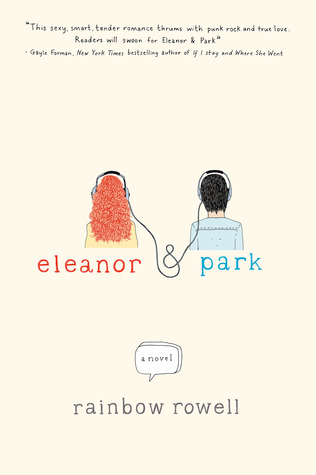
Young adult books often get a bad rap, especially young adult romance. Infamous series like Twilight come to represent the whole body of young adult literature, obscuring true gems of the genre that could stand up to any critical test of quality. Case in point: Eleanor and Park.
Big, redheaded, and garbed in unapologetically outlandish outfits, Eleanor is a walking target for high school ridicule. Park, a good-looking, comic-book-and-music-loving Korean kid, is an expert at flying under the radar. His possession of the last single seat on the bus lands him Eleanor as a seatmate when she starts school late after returning from exile by her abusive alcoholic of a stepfather. It sounds like the set-up for a Hollywood-grade meet-cute, but this is the first of many expectations of the convention that Rowell will flout throughout the novel. Eleanor and Park’s relationship begins quirkily with her reading comic books over Park’s shoulder on rides to and from school, which soon births a system of Eleanor borrowing comics each night to finish and return the next morning. The comics give Eleanor an escape from her tense and oppressive home environment – sharing her bedroom with several younger siblings, living in fear of a volatile stepfather, deprived by poverty of basic comforts and necessities – long before they ever even begin to talk, and the growing connection with Park soon becomes a lifeline.
With Eleanor and Park, Rowell enters that infamously far-fetched realm of teenage romance and reifies it. Their relationship is sweet, awkward, and authentic; it’s romantic but not romanticized, realistic but not belittling. Eleanor and Park’s feelings are real, but the world is not kind to them; forces from school bullies to bullying stepfathers conspire to interfere at nearly every turn. It’s their strength of character and commitment to their feelings that keeps them together, and that – more than any sappy, happy ending (don’t expect one here) – is what gives this book so much heart. Rowell’s almost lyrical descriptions, as perceptive as they are creative, are frosting on the cake – both sensual enough to cause butterflies and earnest enough to strike a chord of truth.
Literature is an exercise in empathy, but it is also an exercise in self-discovery. Never, arguably, is this function more important than in YA, whose readers by definition have such limited ranges of their own experience to draw on yet are in such a rich period of exploration and growth. Literature, for them, offers an opportunity to enter a realm in which they can explore, witness, and learn from experience without threat of consequence. Eleanor and Park successfully provides such opportunity. The story enthralls while portraying an authenticity of experience from which readers can glean meaningful new understanding about what it is like to be young and in love, to be both underdog and outsider, and to stay steady in an unstable home environment. There are no false notes in Rowell’s treatment of Eleanor’s harsh home life (which could easily slip into the melodramatic), the sense of “us versus the world” Eleanor and Park feel at school and at home, or the star-crossed-lovers-esque drama of their fight to be together. At turns heartwarming and heart wrenching, Eleanor and Park will make young adults yearn and adults nostalgic for the inimitable tumult of first love.
Wednesday, March 27, 2013
Saturday, March 2, 2013
Silhouette of a Sparrow
By Molly Beth Griffin
✭✭✭✭✩
Four Things I Liked About Silhouette of a Sparrow:
1. Setting/time period
2. Character-driven plot
3. Garnet’s silhouettes
4. Coming of age
I felt an affinity for this book before I even read it. For one, it’s published by Milkweed Editions, a non-profit publisher in Minneapolis, close to where I go to school. I like that Minneapolis has such a rich and productive literary community, all too uncommon outside of NYC. For another, the author and I share the same first name. According to a recent psychology lecture I attended, we are naturally predisposed to prefer things that even contain the letters in our name. So can’t blame me for liking something that contains the whole thing! ;)
It’s 1926 and Garnet Richardson is being exiled to the lake to limit her exposure to the polio epidemic endangering the city. Unlike many a disgruntled exiled heroine before her, she thrills at the freedom the lake resort and its nearby amusement park offers her. She dreams of a summer of fun and independence before she returns to an engagement and her final year of high school in the fall, after which she’ll be expected to settle down with her nice but bland boyfriend and surrender her passion for ornithology and learning to the demands of keeping house. Everything is not as she dreams, however. The watchful eye of her aunt cum chaperone compels Garnet to seek independence and excitement where she can, in a new job and a clandestine friendship with a flapper who makes life just a little brighter and Garnet herself a little more bold. But Garnet cannot escape the looming shadow of fall, and before the summer wanes, she will be forced to face challenging dilemmas about identity, loyalty, and what it means to do the right thing.
Garnet is such a charming protagonist, guys. I love her bookishness, her independent streak, her loyalty to the people she loves, her sense of self, her willingness to take a chance, and, of course, the silhouettes of birds she cuts out of fabric for fun. The 1920’s setting – featuring the requisite flappers and dance houses and bootleg liquor, despite taking place in the countryside – is always fun, and Griffin uses it to its best advantage, painting its trappings as quintessentially embodying the vivacious and rebellious spirit of youth. Though the 1920's may seem like an obvious setting for this kind of story (for the very reason of its devil-may-care metaphorical resonance with young adulthood), details like Garnet's interest in ornithology keep it quirky and fresh. The amusement park was a fun addition, too, being something new and controversial that we take for granted as being universally accepted and approved of today. I like how Griffin tackles GLBT themes without making them The Issue, rather weaving them as one thread into the complex web of identity discovery that takes place at Garnet’s age; it comes across as a forward-thinking lesson to be learned from a book that takes place almost a century ago. And, indeed, that’s one of the things that ultimately makes Silhouette of a Sparrow so compelling – the way Griffin crafts a tale as rooted in its historical setting as it is resonant with contemporary adolescents. That, to me, is the beauty of historical fiction at its best, when it connects the past with the present and reminds us how little we have really changed.
Books Read This Year: 19
Top 100 Progress: 50/100
✭✭✭✭✩
Four Things I Liked About Silhouette of a Sparrow:1. Setting/time period
2. Character-driven plot
3. Garnet’s silhouettes
4. Coming of age
I felt an affinity for this book before I even read it. For one, it’s published by Milkweed Editions, a non-profit publisher in Minneapolis, close to where I go to school. I like that Minneapolis has such a rich and productive literary community, all too uncommon outside of NYC. For another, the author and I share the same first name. According to a recent psychology lecture I attended, we are naturally predisposed to prefer things that even contain the letters in our name. So can’t blame me for liking something that contains the whole thing! ;)
It’s 1926 and Garnet Richardson is being exiled to the lake to limit her exposure to the polio epidemic endangering the city. Unlike many a disgruntled exiled heroine before her, she thrills at the freedom the lake resort and its nearby amusement park offers her. She dreams of a summer of fun and independence before she returns to an engagement and her final year of high school in the fall, after which she’ll be expected to settle down with her nice but bland boyfriend and surrender her passion for ornithology and learning to the demands of keeping house. Everything is not as she dreams, however. The watchful eye of her aunt cum chaperone compels Garnet to seek independence and excitement where she can, in a new job and a clandestine friendship with a flapper who makes life just a little brighter and Garnet herself a little more bold. But Garnet cannot escape the looming shadow of fall, and before the summer wanes, she will be forced to face challenging dilemmas about identity, loyalty, and what it means to do the right thing.
Garnet is such a charming protagonist, guys. I love her bookishness, her independent streak, her loyalty to the people she loves, her sense of self, her willingness to take a chance, and, of course, the silhouettes of birds she cuts out of fabric for fun. The 1920’s setting – featuring the requisite flappers and dance houses and bootleg liquor, despite taking place in the countryside – is always fun, and Griffin uses it to its best advantage, painting its trappings as quintessentially embodying the vivacious and rebellious spirit of youth. Though the 1920's may seem like an obvious setting for this kind of story (for the very reason of its devil-may-care metaphorical resonance with young adulthood), details like Garnet's interest in ornithology keep it quirky and fresh. The amusement park was a fun addition, too, being something new and controversial that we take for granted as being universally accepted and approved of today. I like how Griffin tackles GLBT themes without making them The Issue, rather weaving them as one thread into the complex web of identity discovery that takes place at Garnet’s age; it comes across as a forward-thinking lesson to be learned from a book that takes place almost a century ago. And, indeed, that’s one of the things that ultimately makes Silhouette of a Sparrow so compelling – the way Griffin crafts a tale as rooted in its historical setting as it is resonant with contemporary adolescents. That, to me, is the beauty of historical fiction at its best, when it connects the past with the present and reminds us how little we have really changed.
Books Read This Year: 19
Top 100 Progress: 50/100
Friday, December 28, 2012
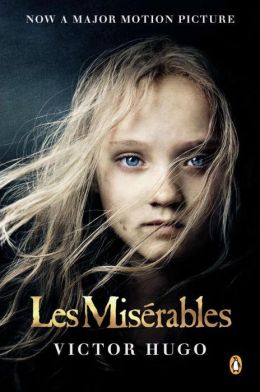
Les Misérables (Top 100 #50)
By Victor Hugo
★★★★☆
I am one of those people who don't like to see a film adaptation of something without having read the original book. Thus, moved by a curiosity about the new Les Misérables movie that came out recently - having never seen the Broadway show - I decided to tackle the colossal tome (1,232 fearsome pages long) that is Victor Hugo's Les Misérables. (And, finally, I'm able to mark one more book off the BBC Top 100 list!) I started it about a week and a half before I came home for winter break, and only finished it on Christmas day. That is a long time for me to take to finish a book.
That being said, I did not find Les Misérables a slow read. Not at all, in fact! Like Anna Karenina before it, Les Misérables surprised me by being quite readable indeed. In my experience, with books like these it's all in the translation. I got the movie tie-in copy (I know, I know, for shame) because it was cheaper, and that translation proved to be a good one, not that I have anything to compare it to. The storyline is engaging and Hugo's prose is flowing and descriptive without - at least in my opinion - being overly long-winded, as some writing of that time is wont to be. However, Hugo's approach to Les Misérables is as much that of a historian as that of a novelist, resulting in a number of lengthy (upwards of 50 pages) sections devoted to detailing this battle or that uprising without advancing the plot. During these sections - but these sections alone - my interest would wane and I would begin skimming rather than really reading, having a hard time ingesting the information when I couldn't easily plug it into a clear schema of plot or characterization.
For those, like me, not familiar with the storyline of Les Misérables via the Broadway musical, it concerns escaped convict Jean Valjean and the chance path that leads him to adopt Cosette, daughter of Fantine, who died alone and penniless, a victim of larger societal forces that conspired to separate her from her young daughter and leave her in abject poverty. Devoted to the protection and well-being of Cosette, Jean Valjean is forced to live under ever-changing assumed identities in order to evade discovery by Javert, a policeman obsessed with bringing Valjean to justice. These personal crises, shaped and exacerbated by the forces at work in the chaos of early nineteenth century Parisian society, come to a head in the July Revolution of 1830.
Les Misérables' characters tend toward the archetypal, but considering Hugo's ultimate purpose of crafting a sweeping landscape of society and the times rather than a detailed portrait of one individual's trials, I think it's appropriate that the characters be somewhat two-dimensional. Thus the portrayal of society's ills is individualized so as not to be overwhelming, but it's not so overly-individualized as to be non-universal. Jean Valjean's, Fantine's, and Marius's hardships are unique but not un-parallelled; similar stories of hardship and struggle were simultaneously played out in thousands of endless permutations throughout the city. The experiences of the characters of Les Misérables are microcosmic stand-ins for the collective experiences common to all Parisians during the tumultuous and downtrodden times of nineteenth century France, a period of near-constant revolution and perpetual unsettlement.
I haven't seen the movie yet, so I can't offer any opinions on the adaptation from page to stage to screen, but having read the book, I am more eager than ever to see it. Whatever your interest level in the movie may be - a long-time devoted fan or a disparager of musical theater - Les Misérables is a book worth the time investment, a classic for a reason. I would absolutely recommend it, daunting girth of the spine and all. The only reason I didn't give it five stars is because, while it was consistently good throughout, it lacked a certain "wow!" factor that it takes for me to endorse a book that highly.
Books Read This Year: 108
Top 100 Progress: 50/100
★★★★☆
I am one of those people who don't like to see a film adaptation of something without having read the original book. Thus, moved by a curiosity about the new Les Misérables movie that came out recently - having never seen the Broadway show - I decided to tackle the colossal tome (1,232 fearsome pages long) that is Victor Hugo's Les Misérables. (And, finally, I'm able to mark one more book off the BBC Top 100 list!) I started it about a week and a half before I came home for winter break, and only finished it on Christmas day. That is a long time for me to take to finish a book.
That being said, I did not find Les Misérables a slow read. Not at all, in fact! Like Anna Karenina before it, Les Misérables surprised me by being quite readable indeed. In my experience, with books like these it's all in the translation. I got the movie tie-in copy (I know, I know, for shame) because it was cheaper, and that translation proved to be a good one, not that I have anything to compare it to. The storyline is engaging and Hugo's prose is flowing and descriptive without - at least in my opinion - being overly long-winded, as some writing of that time is wont to be. However, Hugo's approach to Les Misérables is as much that of a historian as that of a novelist, resulting in a number of lengthy (upwards of 50 pages) sections devoted to detailing this battle or that uprising without advancing the plot. During these sections - but these sections alone - my interest would wane and I would begin skimming rather than really reading, having a hard time ingesting the information when I couldn't easily plug it into a clear schema of plot or characterization.
For those, like me, not familiar with the storyline of Les Misérables via the Broadway musical, it concerns escaped convict Jean Valjean and the chance path that leads him to adopt Cosette, daughter of Fantine, who died alone and penniless, a victim of larger societal forces that conspired to separate her from her young daughter and leave her in abject poverty. Devoted to the protection and well-being of Cosette, Jean Valjean is forced to live under ever-changing assumed identities in order to evade discovery by Javert, a policeman obsessed with bringing Valjean to justice. These personal crises, shaped and exacerbated by the forces at work in the chaos of early nineteenth century Parisian society, come to a head in the July Revolution of 1830.
Les Misérables' characters tend toward the archetypal, but considering Hugo's ultimate purpose of crafting a sweeping landscape of society and the times rather than a detailed portrait of one individual's trials, I think it's appropriate that the characters be somewhat two-dimensional. Thus the portrayal of society's ills is individualized so as not to be overwhelming, but it's not so overly-individualized as to be non-universal. Jean Valjean's, Fantine's, and Marius's hardships are unique but not un-parallelled; similar stories of hardship and struggle were simultaneously played out in thousands of endless permutations throughout the city. The experiences of the characters of Les Misérables are microcosmic stand-ins for the collective experiences common to all Parisians during the tumultuous and downtrodden times of nineteenth century France, a period of near-constant revolution and perpetual unsettlement.
I haven't seen the movie yet, so I can't offer any opinions on the adaptation from page to stage to screen, but having read the book, I am more eager than ever to see it. Whatever your interest level in the movie may be - a long-time devoted fan or a disparager of musical theater - Les Misérables is a book worth the time investment, a classic for a reason. I would absolutely recommend it, daunting girth of the spine and all. The only reason I didn't give it five stars is because, while it was consistently good throughout, it lacked a certain "wow!" factor that it takes for me to endorse a book that highly.
Books Read This Year: 108
Top 100 Progress: 50/100
Monday, November 26, 2012
The Casual Vacancy
By J.K. Rowling
★★★★★
For those quick to make comparisons between J.K. Rowling's new adult debut and the cultural monolith that is the Harry Potter series, The Casual Vacancy could not be more different from Harry Potter. There is no magic to be found in The Casual Vacancy. Quite apart from the fantastical veneer that made even the darkest moments of Harry Potter magical, The Casual Vacancy portrays reality with the unforgiving zoomed-in hyper-clarify of high-definition. Ostensibly about filling the casual vacancy left by the sudden premature death of parish councilman Barry Fairbrother, the story more substantively concerns itself with the occupants of Pagford (a small, idyllic town in the British countryside), their private lives and their politics.
The Casual Vacancy is an unromantic group portrait of small town British life; it is British (and Western) society in microcosm. From death to disease to addiction to bullying to the hardships of marriage and the trials of teenage-hood to psychological troubles to petty self-serving local politics, JKR tackles just about everything that might hide behind the picturesque doors of countryside cottages. She unearths the big problems eating away at the fabric of an outwardly charming small town (and, extrapolating, the society that subsumes it), and she does so with tight, engaging, and creative descriptive language that as an aspiring writer I could only admire in awe. Her characters, as usual, are three-dimensional, interesting, and well-crafted. And the plot, while not reaching the riveting, can't-put-it-down enthrallment of the Harry Potter series, marches along at a steady pace to reach the final dramatic and unexpected, yet satisfying, conclusion.
Though I can't pretend it's not jarring, at first, to find swearing instead of spell-casting, drug-using instead of potion-making, you grow used to it; eventually the swear words, like the spells and other magical lingo, stop being jarring and become just the language of the story, a language the reader achieves fluency in as naturally as the magical dialect of Harry Potter. Each instance of harsh adult reality that shocks at first soon stops catching you short; after a while you accept these divergences from the reassuring voice of the Harry Potter books and become - just as you were with Harry Potter - immersed in the story. It helps that I can fully understand why she chose to embark on such a departure from the fantasy of Harry Potter and flex her story-telling muscles in a completely new and opposite manner. I can see it being a case of wanting to prove herself a versatile writer to herself as much as to any naysayers who might've had her pegged as one genre wonder, or an exclusively children's author, or an out of control instance of beginner's luck, or whatever other ridiculous things people come up with to try to belittle the phenomenon that is Harry Potter by trying to squeeze it into some contrived, constrictive box. That said, due its grittiness and frequent use of profanity, The Casual Vacancy won't be for everyone. Especially those expecting something with the charm and positivity of the Harry Potter series.
The Casual Vacancy, although not going to worm its way into a place next to Harry Potter in my heart, does its job as a sophomore (in terms of being a distinct work) debut. It reaffirms what devoted fans already knew without question: JKR is a Talent.
Comment questions: Have you read The Casual Vacancy? If not, why? If so, what did you make of the dramatic departure, the swearing and the grittiness?
★★★★★
The Casual Vacancy is an unromantic group portrait of small town British life; it is British (and Western) society in microcosm. From death to disease to addiction to bullying to the hardships of marriage and the trials of teenage-hood to psychological troubles to petty self-serving local politics, JKR tackles just about everything that might hide behind the picturesque doors of countryside cottages. She unearths the big problems eating away at the fabric of an outwardly charming small town (and, extrapolating, the society that subsumes it), and she does so with tight, engaging, and creative descriptive language that as an aspiring writer I could only admire in awe. Her characters, as usual, are three-dimensional, interesting, and well-crafted. And the plot, while not reaching the riveting, can't-put-it-down enthrallment of the Harry Potter series, marches along at a steady pace to reach the final dramatic and unexpected, yet satisfying, conclusion.
Though I can't pretend it's not jarring, at first, to find swearing instead of spell-casting, drug-using instead of potion-making, you grow used to it; eventually the swear words, like the spells and other magical lingo, stop being jarring and become just the language of the story, a language the reader achieves fluency in as naturally as the magical dialect of Harry Potter. Each instance of harsh adult reality that shocks at first soon stops catching you short; after a while you accept these divergences from the reassuring voice of the Harry Potter books and become - just as you were with Harry Potter - immersed in the story. It helps that I can fully understand why she chose to embark on such a departure from the fantasy of Harry Potter and flex her story-telling muscles in a completely new and opposite manner. I can see it being a case of wanting to prove herself a versatile writer to herself as much as to any naysayers who might've had her pegged as one genre wonder, or an exclusively children's author, or an out of control instance of beginner's luck, or whatever other ridiculous things people come up with to try to belittle the phenomenon that is Harry Potter by trying to squeeze it into some contrived, constrictive box. That said, due its grittiness and frequent use of profanity, The Casual Vacancy won't be for everyone. Especially those expecting something with the charm and positivity of the Harry Potter series.
The Casual Vacancy, although not going to worm its way into a place next to Harry Potter in my heart, does its job as a sophomore (in terms of being a distinct work) debut. It reaffirms what devoted fans already knew without question: JKR is a Talent.
Comment questions: Have you read The Casual Vacancy? If not, why? If so, what did you make of the dramatic departure, the swearing and the grittiness?
Sunday, November 4, 2012
The Darkest Minds
By Alexandra Bracken
★★★★★
**Doing a standard review rather than a poem for this one because I was lucky enough to get access to an advanced copy via NetGalley and want to give it the full treatment!
I have been a bated-breath fan of Alex Bracken ever since her 2010 release of Brightly Woven which was reminiscent of Tamora Pierce's fantasy classics in all the best ways: a vibrant, original fantasy world; interesting and likable heroine; a charming and loyal if troubled and mysterious rogue of a romantic interest (not to mention a deft balance between romance and friendship, romantic development and actual action). I was totally enamored of her debut and have been eagerly waiting to see what she would do next ever since. The Darkest Minds, her forthcoming second novel (released on December 18; I got my advanced copy via NetGalley), absolutely lived up to my expectations. Girl delivered.
A fusion of the supernatural and dystopian genres, The Darkest Minds is set in a dystopian, economically broken United States in the not too distant future. In the midst of economic collapse, a mysterious disease ravages the country's children, attacking them as soon as they enter puberty. The unlucky majority die; those that survive develop supernatural abilities instead of succumbing to the disease. Abilities they don't understand, that make them a threat to the fragile US government, who decides the best course of action is to relocate these children to "rehabilitation camps." This is where we meet 16-year-old Ruby, at a rehabilitation camp called Thurmond, where she has been an inmate since her 10th birthday when her own parents called the police to come pick her up. When the truth about her powers risks exposure, Ruby makes her escape from Thurmond. On the road, she finds herself in the company of an eccentric band of fellow escapees - including their charming leader, Liam - in a race against time and truth as they attempt to outrun enemies who would exploit their powers in a fight against the government and make it safely to the East River, reputedly the last outpost of kids with abilities left free from the clutches of outside forces. But life outside the camp is a lot more complicated and a lot more dangerous than Ruby could've known and it's not always clear who the real enemy is - least of all when Ruby fears it could be Ruby herself. As Ruby grapples with her powers and the mixed dangers and responsibilities that come with them, she must decide where her loyalties lie and what side she must take in order to protect the ones she loves.
From page one, Alex Bracken immerses you in the dark world the US has transformed into at the hands of the disease and economic crisis. Thurmond is an unsettling place and the dangers Ruby faces feel all too real - not quite distant enough from reality for the reader to feel entirely safe, either. I thought that Bracken's development of the kids' powers and the five categories they fall into - green, blue, yellow, orange, and red - was quite creative, and if I sometimes didn't feel like I fully understood them, it was only because the kids themselves (especially Ruby) didn't either. True of Brightly Woven but all the more so in The Darkest Minds is how well Bracken creates the subtle dynamics of characters' histories and personalities, and how those play into their relationships with other characters. Each character's personality is fully developed and unique, and the report between the characters - especially Ruby, Liam, Chubs, and Zu - is delightful. It invites you not just to read and observe but participate in the story. And when the story reaches its emotional and plot climax - woah, boy. Watch out. The Darkest Minds wriggles into your heart and forms a soft spot there, then the ending punches you exactly where it knows it will hurt. And you won't see it coming - at least I didn't. I can't wait for Book 2!!!
★★★★★
**Doing a standard review rather than a poem for this one because I was lucky enough to get access to an advanced copy via NetGalley and want to give it the full treatment!
I have been a bated-breath fan of Alex Bracken ever since her 2010 release of Brightly Woven which was reminiscent of Tamora Pierce's fantasy classics in all the best ways: a vibrant, original fantasy world; interesting and likable heroine; a charming and loyal if troubled and mysterious rogue of a romantic interest (not to mention a deft balance between romance and friendship, romantic development and actual action). I was totally enamored of her debut and have been eagerly waiting to see what she would do next ever since. The Darkest Minds, her forthcoming second novel (released on December 18; I got my advanced copy via NetGalley), absolutely lived up to my expectations. Girl delivered.
A fusion of the supernatural and dystopian genres, The Darkest Minds is set in a dystopian, economically broken United States in the not too distant future. In the midst of economic collapse, a mysterious disease ravages the country's children, attacking them as soon as they enter puberty. The unlucky majority die; those that survive develop supernatural abilities instead of succumbing to the disease. Abilities they don't understand, that make them a threat to the fragile US government, who decides the best course of action is to relocate these children to "rehabilitation camps." This is where we meet 16-year-old Ruby, at a rehabilitation camp called Thurmond, where she has been an inmate since her 10th birthday when her own parents called the police to come pick her up. When the truth about her powers risks exposure, Ruby makes her escape from Thurmond. On the road, she finds herself in the company of an eccentric band of fellow escapees - including their charming leader, Liam - in a race against time and truth as they attempt to outrun enemies who would exploit their powers in a fight against the government and make it safely to the East River, reputedly the last outpost of kids with abilities left free from the clutches of outside forces. But life outside the camp is a lot more complicated and a lot more dangerous than Ruby could've known and it's not always clear who the real enemy is - least of all when Ruby fears it could be Ruby herself. As Ruby grapples with her powers and the mixed dangers and responsibilities that come with them, she must decide where her loyalties lie and what side she must take in order to protect the ones she loves.
From page one, Alex Bracken immerses you in the dark world the US has transformed into at the hands of the disease and economic crisis. Thurmond is an unsettling place and the dangers Ruby faces feel all too real - not quite distant enough from reality for the reader to feel entirely safe, either. I thought that Bracken's development of the kids' powers and the five categories they fall into - green, blue, yellow, orange, and red - was quite creative, and if I sometimes didn't feel like I fully understood them, it was only because the kids themselves (especially Ruby) didn't either. True of Brightly Woven but all the more so in The Darkest Minds is how well Bracken creates the subtle dynamics of characters' histories and personalities, and how those play into their relationships with other characters. Each character's personality is fully developed and unique, and the report between the characters - especially Ruby, Liam, Chubs, and Zu - is delightful. It invites you not just to read and observe but participate in the story. And when the story reaches its emotional and plot climax - woah, boy. Watch out. The Darkest Minds wriggles into your heart and forms a soft spot there, then the ending punches you exactly where it knows it will hurt. And you won't see it coming - at least I didn't. I can't wait for Book 2!!!
Tuesday, October 2, 2012
The Diviners
By Libba Bray
★★★★☆
The Diviners is the latest release from young adult author Libba Bray, known for her supernatural historical thrillers (The Rebel Angels trilogy and The Diviners) and her what I can best describe as hyper-reality contemporary fiction (Going Bovine and Beauty Queens, which I have previously reviewed on this blog). The Diviners is a serial murder mystery set in New York City in the 20's with a supernatural twist. I think my favorite part was her portrayal of New York in the 20's, a world of speakeasies and social movements, equal parts dangerous and exciting, modern and traditional - a whirlwind of constant motion and change, the old grappling with the new. But! It was first and foremost a murder mystery, so that's what I drew on for my poem.
"Naughty John, Naughty John
does his work with his apron on..."
The tune slithers its chilly finger
down your spine and you shiver
and your blood runs cold
and you want to scream
but you don't
because you know, with a sick,
foreboding certainty that there's no use,
because you're frozen in place
and your pulse races like a trapped,
panicked bird and you know
when you hear Naughty John's tune
he's got you.
★★★★☆
The Diviners is the latest release from young adult author Libba Bray, known for her supernatural historical thrillers (The Rebel Angels trilogy and The Diviners) and her what I can best describe as hyper-reality contemporary fiction (Going Bovine and Beauty Queens, which I have previously reviewed on this blog). The Diviners is a serial murder mystery set in New York City in the 20's with a supernatural twist. I think my favorite part was her portrayal of New York in the 20's, a world of speakeasies and social movements, equal parts dangerous and exciting, modern and traditional - a whirlwind of constant motion and change, the old grappling with the new. But! It was first and foremost a murder mystery, so that's what I drew on for my poem.
"Naughty John, Naughty John
does his work with his apron on..."
The tune slithers its chilly finger
down your spine and you shiver
and your blood runs cold
and you want to scream
but you don't
because you know, with a sick,
foreboding certainty that there's no use,
because you're frozen in place
and your pulse races like a trapped,
panicked bird and you know
when you hear Naughty John's tune
he's got you.
Saturday, September 29, 2012
The Perks of Being a Wallflower
By Stephen Chbosky
★★★★★
The Perks of Being a Wallflower is often heralded as the Catcher in the Rye of our generation. It's a cult classic among teenagers, and with the movie adaptation - written and directed by the author himself! - coming out this fall (starring the ever-wonderful Emma Watson), I thought I'd re-read it as a refresher before seeing the film! If anything, I liked it even more the second time around, with a few more years and experiences under my belt. Charlie's voice is simple and authentic, hovering alternatively somewhere between naive and jaded. He thinks just a little too much about the world around him, which causes him problems as a person but makes him a wonderful, perceptive narrator. Most adolescents (and adults thinking back on their adolescence!) will identify with some experience or feeling throughout the book, and that's what has earned it such a large and passionate following. The movie has been described as "nostalgic" and "life-affirming" and these two adjectives apply to the book as well. In keeping with my new blog initiative, I have written another poem for Perks (as it is affectionately called by fans). The most famous line from the book goes, "And in that moment, I swear we were infinite," and I couldn't help but take that as part of my inspiration.
There's a certain infinite quality
of the still lives immortalized
in photography; messy sprawling
jumbled relationships distilled
into their purest moments -
those clear, copacetic moments
when your soul is rushing soaring
swooping, buffeted by the tumult
of the nonstop motion of the world
spinning and lives living, yet somehow
despite the chaos, you trust this moment enough
to surrender to it, and in surrender
a stillness wells within your soul, a quiet calmness
that spreds throughout your body
and fills your heart
and whispers,
"I feel infinite."
There's a certain wistful quality
to happy memories preserved
in old photographs that makes me wish
I could live in infinite observation
of the moments they contain.
A wallflower - if you will - a witness
there to watch, to remember, to participate,
and when we're old or sad or we start to forget
those moments when we were together
and young and oh-so-alive,
it will be my privilege to remind us,
"We were there. We were happy.
And we were infinite."
Tuesday, September 18, 2012
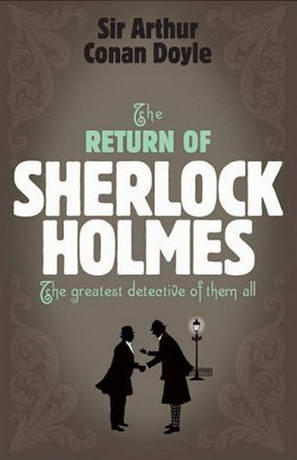
The Return of Sherlock Holmes
By Arthur Conan Doyle
★★★★☆
For today's post, I thought I'd try something new. The standard review format I've been relying on for the past couple years (certainly more sporadically this past year) has felt a little stale lately... whether from lack of readership or just from lack of my own inspiration, I'm not sure. Either way, I thought I might take a little more creative angle on the review thing. Instead of writing a review, I'll write a poem inspired by a few key passages that jumped out at me, or perhaps a particularly poignant scene or character... whatever most inspires me about what I just read. For today's book - The Return of Sherlock Holmes - that was the peculiar (as in both singular/unique and a little bit odd) dynamics of the friendship between Sherlock Holmes and Doctor Watson. Without further ado:
That oh-so-human warm flush
colours your cheeks with pleasure
you cannot/choose not/want not
to conceal; betrays your stoic
self-contained self-generated self-sufficient
pride; proves you to be not immune
(as we - some of us - never I - suspected)
to the spontaneous wonder which springs
from the awed, affectionate regard of a friend.
No, not quite the unfeeling machine
they believe you to be.
I know better. Of course.
I know you better; I have known
the softening of your features
that moves you to hide
your face your self from overexposure
(too raw is it, too unaccustomed
to exposure of any kind).
I have known the impulsive bow,
the irresistible (for you, for us) grin, and that
warm flush of colour oh-so-human
which accompany not the win alone, but
the intimate recognition.
★★★★☆
For today's post, I thought I'd try something new. The standard review format I've been relying on for the past couple years (certainly more sporadically this past year) has felt a little stale lately... whether from lack of readership or just from lack of my own inspiration, I'm not sure. Either way, I thought I might take a little more creative angle on the review thing. Instead of writing a review, I'll write a poem inspired by a few key passages that jumped out at me, or perhaps a particularly poignant scene or character... whatever most inspires me about what I just read. For today's book - The Return of Sherlock Holmes - that was the peculiar (as in both singular/unique and a little bit odd) dynamics of the friendship between Sherlock Holmes and Doctor Watson. Without further ado:
That oh-so-human warm flush
colours your cheeks with pleasure
you cannot/choose not/want not
to conceal; betrays your stoic
self-contained self-generated self-sufficient
pride; proves you to be not immune
(as we - some of us - never I - suspected)
to the spontaneous wonder which springs
from the awed, affectionate regard of a friend.
No, not quite the unfeeling machine
they believe you to be.
I know better. Of course.
I know you better; I have known
the softening of your features
that moves you to hide
your face your self from overexposure
(too raw is it, too unaccustomed
to exposure of any kind).
I have known the impulsive bow,
the irresistible (for you, for us) grin, and that
warm flush of colour oh-so-human
which accompany not the win alone, but
the intimate recognition.
Monday, July 9, 2012
Divergent
By Veronica Roth
★★★★ ☆
Four Things I Liked About Divergent:
1. Tough as nails heroine
2. Dystopian Chicago
3. Four
4. Daredevil feats
Yet another strong series starter. I’ve been hearing great things about this book all year online, but because I didn’t want to make the commitment of actually buying it and because my campus library has a distinct shortage of recent YA releases, I didn’t get around to seeing what all the fuss was about it until now.
Beatrice – or Tris, as she soon becomes – grew up in Chicago, but not the Chicago we all know and love. This Chicago exists some unspecified number of years in the future and, aside from a couple key landmarks like the Sears tower, is unrecognizable. The city is divided into five factions (Candor, Abnegation, Dauntless, Erudite, and Amity), which are like a mixture of vocation and cult. You declare your faction at age 16, and after that your faction becomes your world. If you transferred factions from the one you grew up in (often seen as betrayal), you will no longer live with your family and will only visit them on rare occasions. In a last second decision that surprises everyone except the reader, Beatrice transfers from her family’s faction of Abnegation to the tough and fearless Dauntless. A ruthless and competitive initiation period follows before the initiates can be fully accepted into the faction. As Tris fights for a position in her chosen faction in a competition that blurs the line between even close friend and rival, she struggles with a secret about her identity that may threaten not only her chances at initiation but her life – and the fraying threads that hold her fractioned society together.
Divergent is everything that a good series debut should be: compelling, exciting, inventive. I read the majority of it in about 12 hours. And while I am a fast reader, to put aside all other forms of entertainment to read something that quickly is somewhat rare. But it’s not without its flaws. I felt like book spent too much time focused on the initiation trials which, while interesting, meant that not a ton of ground had been laid for the climaxing of the dystopian subplot, the part where all hell breaks loose. I didn’t feel like I had a very good grasp on the society in Roth’s dystopia – how it worked, why it was formed, what its problems were. Tris’s experiences in Dauntless were very exciting to read, but they didn’t feel very connected to the events unfolding in the society as a whole. Which would have been fine if that’s all the book was, but because the events in society at large became so important in the last chapters of the book, it certainly felt like a weakness that I, the reader, wasn’t better prepared for those events. Feeding the reader more information about the society would also have made the motive behind Roth’s dystopia more clear. Often when a writer creates a dystopia, they are critiquing some system or characteristic of our own society. But what exactly that might have been in Divergent was not clear.
Overall, though, Divergent proves to be a promising beginning to an exciting trilogy. I have the sequel on hold at the library.
Books Read This Year: 54
Top 100 Progress: 48/100
★★★★ ☆
Four Things I Liked About Divergent:
1. Tough as nails heroine
2. Dystopian Chicago
3. Four
4. Daredevil feats
Yet another strong series starter. I’ve been hearing great things about this book all year online, but because I didn’t want to make the commitment of actually buying it and because my campus library has a distinct shortage of recent YA releases, I didn’t get around to seeing what all the fuss was about it until now.
Beatrice – or Tris, as she soon becomes – grew up in Chicago, but not the Chicago we all know and love. This Chicago exists some unspecified number of years in the future and, aside from a couple key landmarks like the Sears tower, is unrecognizable. The city is divided into five factions (Candor, Abnegation, Dauntless, Erudite, and Amity), which are like a mixture of vocation and cult. You declare your faction at age 16, and after that your faction becomes your world. If you transferred factions from the one you grew up in (often seen as betrayal), you will no longer live with your family and will only visit them on rare occasions. In a last second decision that surprises everyone except the reader, Beatrice transfers from her family’s faction of Abnegation to the tough and fearless Dauntless. A ruthless and competitive initiation period follows before the initiates can be fully accepted into the faction. As Tris fights for a position in her chosen faction in a competition that blurs the line between even close friend and rival, she struggles with a secret about her identity that may threaten not only her chances at initiation but her life – and the fraying threads that hold her fractioned society together.
Divergent is everything that a good series debut should be: compelling, exciting, inventive. I read the majority of it in about 12 hours. And while I am a fast reader, to put aside all other forms of entertainment to read something that quickly is somewhat rare. But it’s not without its flaws. I felt like book spent too much time focused on the initiation trials which, while interesting, meant that not a ton of ground had been laid for the climaxing of the dystopian subplot, the part where all hell breaks loose. I didn’t feel like I had a very good grasp on the society in Roth’s dystopia – how it worked, why it was formed, what its problems were. Tris’s experiences in Dauntless were very exciting to read, but they didn’t feel very connected to the events unfolding in the society as a whole. Which would have been fine if that’s all the book was, but because the events in society at large became so important in the last chapters of the book, it certainly felt like a weakness that I, the reader, wasn’t better prepared for those events. Feeding the reader more information about the society would also have made the motive behind Roth’s dystopia more clear. Often when a writer creates a dystopia, they are critiquing some system or characteristic of our own society. But what exactly that might have been in Divergent was not clear.
Overall, though, Divergent proves to be a promising beginning to an exciting trilogy. I have the sequel on hold at the library.
Books Read This Year: 54
Top 100 Progress: 48/100
Sunday, July 8, 2012
A Million Suns
By Beth Revis
★★★★★
Five Things I Liked About A Million Suns:
1. Truly surprising plot twists
2. Conspiracy theories
3. World-building
4. Beautiful description
5. Suspense
It’s shaping up to be a summer of series for me, between Across the Universe, Game of Thrones (currently reading book two), and Divergent (review to come). Having read and enjoyed Across the Universe a week or two ago, its already released sequel immediately went into my hold queue at the library. A Million Suns resumes three months after the events of Across the Universe. Eldest is dead; so is Orion. Elder leads Godspeed now, and peopled with free thinkers for the first time generations, the ship stirs with the seeds of unrest. Released from the mind-numbing effects of phydus, the population of Godspeed awakens to the harsh realities of centuries-old Godspeed’s disintegration, and they're not happy with what they see. Meanwhile Amy and Elder delve into the potentially dangerous secrets of the ship’s command and mission – and must take responsibility for whatever they find. As the ship deteriorates into greater and greater disorder, Amy and Elder wrestle with the implications of their newfound knowledge. One thing alone is certain: life on Godspeed is about to change.
A Million Suns achieves a rare feat for a sequel: it manages to improve upon its predecessor. Everything I loved about Across the Universe was present in A Millions Suns, but even better. The plot development was more surprising, more suspenseful, more satisfying. The characters became even more detailed and their relationships richer and more complex. The writing – especially her descriptions of the world outside Godspeed – was even more lovely and luminous. It almost makes me nervous, going into anticipating the third and final book in the trilogy. Will she be able to continue this trend? Will the third book be able to improve on the second as much as the second did on the first? And yet I have no reason to doubt her; so far, Revis has more than shown she can deliver – and then some. I will be eagerly anticipating its release come January!
Books Read This Year: 53
Top 100 Progress: 48/100
★★★★★
Five Things I Liked About A Million Suns:
1. Truly surprising plot twists
2. Conspiracy theories
3. World-building
4. Beautiful description
5. Suspense
It’s shaping up to be a summer of series for me, between Across the Universe, Game of Thrones (currently reading book two), and Divergent (review to come). Having read and enjoyed Across the Universe a week or two ago, its already released sequel immediately went into my hold queue at the library. A Million Suns resumes three months after the events of Across the Universe. Eldest is dead; so is Orion. Elder leads Godspeed now, and peopled with free thinkers for the first time generations, the ship stirs with the seeds of unrest. Released from the mind-numbing effects of phydus, the population of Godspeed awakens to the harsh realities of centuries-old Godspeed’s disintegration, and they're not happy with what they see. Meanwhile Amy and Elder delve into the potentially dangerous secrets of the ship’s command and mission – and must take responsibility for whatever they find. As the ship deteriorates into greater and greater disorder, Amy and Elder wrestle with the implications of their newfound knowledge. One thing alone is certain: life on Godspeed is about to change.
A Million Suns achieves a rare feat for a sequel: it manages to improve upon its predecessor. Everything I loved about Across the Universe was present in A Millions Suns, but even better. The plot development was more surprising, more suspenseful, more satisfying. The characters became even more detailed and their relationships richer and more complex. The writing – especially her descriptions of the world outside Godspeed – was even more lovely and luminous. It almost makes me nervous, going into anticipating the third and final book in the trilogy. Will she be able to continue this trend? Will the third book be able to improve on the second as much as the second did on the first? And yet I have no reason to doubt her; so far, Revis has more than shown she can deliver – and then some. I will be eagerly anticipating its release come January!
Books Read This Year: 53
Top 100 Progress: 48/100
Tuesday, June 26, 2012
Marcelo in the Real World
By Francisco X. Stork
★ ★ ★ ★ ★
Five Things I Liked About Marcelo in the Real World:
1. Lovely, poetic and profound yet realistic dialogue
2. Finely tuned and unique narrative voice
3. Thoughtful characters (as in both caring and full of thoughts)
4. Non-black and white relationships
5. Vermont
How lovely is this cover?? How pathetic is this intro?? Cut me some slack; this is my fifth review in 24 hours. Okay, jumping right in.
Falling toward the more high-functioning end of the autism spectrum, 17-year-old Marcelo has lived his life in the protective environment created by his family and Patterson, the special school he’s attended since kindergarten. He’s looking forward to spending his summer working at Patterson tending the therapeutic ponies before beginning his senior year at Patterson in the fall. But Marcelo’s protected world is turned upside-down by a last minute change of plans when his father tells him he will be instead working in the mailroom of his father’s legal firm. It is high time, his father believes, that Marcelo assimilates into the “real world.” Navigating the ins-and-outs and ups-and-downs of the often tense social and business nuances of the office proves to be the most overwhelming and challenging experience Marcelo has ever faced, but with thoughtfulness, courage, and simple wisdom, it may also prove to be the most rewarding.
It’s hard to read Marcelo in the Real World without thinking of The Curious Incident of the Dog in the Night-time. The stripped-down, keen observations and narration of the autistic protagonists are refreshing and eye-opening. Marcelo may not be encountering anything we haven’t seen before in our own lives, in some capacity, but seeing the “real world” through his un-jaded eyes is a novel experience. The confusion he experiences when he tries to apply his previously uncomplicated logic to the blurry issues of injustice and suffering, selfishness and manipulation, love and desire will strike a chord with all readers, sorry to see his innocence stripped away and sorry for ourselves for having to work out these same issues in our own lives. Marcelo in the Real World inspires empathy as much as sympathy, evoking the bittersweet taste adulthood with all its freedoms, sorrows, challenges, and beauty leaves on the tongue.
Marcelo in the Real World came highly critically acclaimed to my attention, and in my opinion more than lived up to its reputation.
Books Read This Year: 51
Top 100 Progress: 48/100
★ ★ ★ ★ ★
Five Things I Liked About Marcelo in the Real World:
1. Lovely, poetic and profound yet realistic dialogue
2. Finely tuned and unique narrative voice
3. Thoughtful characters (as in both caring and full of thoughts)
4. Non-black and white relationships
5. Vermont
How lovely is this cover?? How pathetic is this intro?? Cut me some slack; this is my fifth review in 24 hours. Okay, jumping right in.
Falling toward the more high-functioning end of the autism spectrum, 17-year-old Marcelo has lived his life in the protective environment created by his family and Patterson, the special school he’s attended since kindergarten. He’s looking forward to spending his summer working at Patterson tending the therapeutic ponies before beginning his senior year at Patterson in the fall. But Marcelo’s protected world is turned upside-down by a last minute change of plans when his father tells him he will be instead working in the mailroom of his father’s legal firm. It is high time, his father believes, that Marcelo assimilates into the “real world.” Navigating the ins-and-outs and ups-and-downs of the often tense social and business nuances of the office proves to be the most overwhelming and challenging experience Marcelo has ever faced, but with thoughtfulness, courage, and simple wisdom, it may also prove to be the most rewarding.
It’s hard to read Marcelo in the Real World without thinking of The Curious Incident of the Dog in the Night-time. The stripped-down, keen observations and narration of the autistic protagonists are refreshing and eye-opening. Marcelo may not be encountering anything we haven’t seen before in our own lives, in some capacity, but seeing the “real world” through his un-jaded eyes is a novel experience. The confusion he experiences when he tries to apply his previously uncomplicated logic to the blurry issues of injustice and suffering, selfishness and manipulation, love and desire will strike a chord with all readers, sorry to see his innocence stripped away and sorry for ourselves for having to work out these same issues in our own lives. Marcelo in the Real World inspires empathy as much as sympathy, evoking the bittersweet taste adulthood with all its freedoms, sorrows, challenges, and beauty leaves on the tongue.
Marcelo in the Real World came highly critically acclaimed to my attention, and in my opinion more than lived up to its reputation.
Books Read This Year: 51
Top 100 Progress: 48/100
Monday, June 25, 2012
I am the Messenger
By Markus Zusak
★ ★ ★ ★ ☆
Four Things I Liked About I Am The Messenger:
1. “I am not the messenger. I am the message.”
2. “Sometimes people are beautiful. Not in looks. Not in what they say. Just in what they are.”
3. How touching ordinary lives can be, and how ordinary people can touch lives
4. Close-knit friends
Markus Zusak is most well known for being the genius behind The Book Thief. Which is why I was curious to read some of his earlier and modern work. I don’t remember The Book Thief terribly well, having read it right after it came out several years ago now, but based on my vague recollections + the out-and-out ardor the literary community harbors for it, I would venture to say that had I read I am the Messenger when it was first released, I would never have expected that the same writer would go on to produce an opus like The Book Thief. That’s not to say that I am the Messenger was bad, just that it doesn’t have that special quality that has made The Book Thief such a well-loved and critically acclaimed work.
Ed Kennedy leads an unambitious, unremarkably ordinary existence. He drives a cab. He lives in a cheap shack with his smelly, old dog the Doorman as his only companion. On his nights off, he plays cards with his friends and wallows in his unrequited love for his best friend, Audrey. But after Ed accidentally without-really-meaning-to thwarts a bank robbery, things change. He receives a playing card inscribed with three addresses. No names, no dates, just locations. And thus begins Ed’s mission: to visit these addresses and deliver messages to them. Ed is no longer Ed the Ordinary. He is the Messenger. But who is behind his mission? And how will it end?
I am the Messenger is divided into five parts. Through the third part, I had decided to give the book only 3 stars. I wasn’t super impressed. The premise behind the playing card missions seemed contrived and thin, and the overall message of the story (which was clear from like chapter five) a bit too heavy-handed. But the culmination first three parts turned out to be more than they seemed at the time, having set the stage for the much more affective final two parts of the novel. And by the time I reached the end, Zusak had built the story's affectivity such that the final two lines were real zingers, and I am the Messenger had earned that extra fourth star. I’m still not convinced by the premise and think maybe another round of editing – such as tweaking the backstory behind where his missions came from – but the last couple parts of the book had real power to them, enough for me to see why it might’ve earned the Printz Award that figures so prominently on this otherwise pretty lame cover. The Book Thief certainly marks significant growth of Zusak as a writer; it will be interesting to see what he comes out with in the future, whether it lives up to The Book Thief or falls more on level with I am the Messenger.
Books Read This Year: 50
Top 100 Progress: 48/100
★ ★ ★ ★ ☆
Four Things I Liked About I Am The Messenger:
1. “I am not the messenger. I am the message.”
2. “Sometimes people are beautiful. Not in looks. Not in what they say. Just in what they are.”
3. How touching ordinary lives can be, and how ordinary people can touch lives
4. Close-knit friends
Markus Zusak is most well known for being the genius behind The Book Thief. Which is why I was curious to read some of his earlier and modern work. I don’t remember The Book Thief terribly well, having read it right after it came out several years ago now, but based on my vague recollections + the out-and-out ardor the literary community harbors for it, I would venture to say that had I read I am the Messenger when it was first released, I would never have expected that the same writer would go on to produce an opus like The Book Thief. That’s not to say that I am the Messenger was bad, just that it doesn’t have that special quality that has made The Book Thief such a well-loved and critically acclaimed work.
Ed Kennedy leads an unambitious, unremarkably ordinary existence. He drives a cab. He lives in a cheap shack with his smelly, old dog the Doorman as his only companion. On his nights off, he plays cards with his friends and wallows in his unrequited love for his best friend, Audrey. But after Ed accidentally without-really-meaning-to thwarts a bank robbery, things change. He receives a playing card inscribed with three addresses. No names, no dates, just locations. And thus begins Ed’s mission: to visit these addresses and deliver messages to them. Ed is no longer Ed the Ordinary. He is the Messenger. But who is behind his mission? And how will it end?
I am the Messenger is divided into five parts. Through the third part, I had decided to give the book only 3 stars. I wasn’t super impressed. The premise behind the playing card missions seemed contrived and thin, and the overall message of the story (which was clear from like chapter five) a bit too heavy-handed. But the culmination first three parts turned out to be more than they seemed at the time, having set the stage for the much more affective final two parts of the novel. And by the time I reached the end, Zusak had built the story's affectivity such that the final two lines were real zingers, and I am the Messenger had earned that extra fourth star. I’m still not convinced by the premise and think maybe another round of editing – such as tweaking the backstory behind where his missions came from – but the last couple parts of the book had real power to them, enough for me to see why it might’ve earned the Printz Award that figures so prominently on this otherwise pretty lame cover. The Book Thief certainly marks significant growth of Zusak as a writer; it will be interesting to see what he comes out with in the future, whether it lives up to The Book Thief or falls more on level with I am the Messenger.
Books Read This Year: 50
Top 100 Progress: 48/100
Across the Universe
By Beth Revis
★ ★ ★ ★ ☆
Four Things I Liked About Across the Universe:
1. Vibrant, imaginative future world
2. Future humans: Will time and technological advancement necessarily change us for the better?
3. Characters
4. Stars
Across the Universe is yet another book I’ve been meaning to read for a while but never got around to actually procuring. Thank you public library. One benefit of being home for the summer: easy access to free books. Not that there’s any dearth of books on a college campus; there’s just a significant lack of YA offerings. Unsurprisingly.
In Across the Universe, Revis imagines a not-too-distant present in which we are capable of cryogenically preserving human life and the world 300 years into the future when a spaceship’s cargo hold full of experts who volunteered to settle a new planet deemed habitable by NASA are scheduled to be re-animated. Amy and her family are part of this group. But when Amy is wakened alone and 50 years ahead of schedule, it becomes clear that all has not gone according to plan on the spaceship Godspeed. Together with Elder, rebellious leader-in-training, Amy discovers just how many secrets can be hidden aboard a sealed ship.
Revis’ imagining of a ship 300 years in our future rings surprisingly realistic. I don’t know by what criteria one could judge such things as “realistic” verses “off base” but somehow the world of Across the Universe just felt really…plausible. I had no qualms about buying into her fiction (unlike, for example, the fiction of Maureen Johnson's The Name of the Star); I stepped readily into the world of Godspeed, happy to observe with curiosity and an open mind.
A miniscule pocket of human life in the vast foreignness of outer space, the world aboard Godspeed is a foreign world unto itself. Revis fills it with customs, accents, advancements, and histories detailed enough to be convincing yet exotic enough to be fascinating. It was easy to see how, given the chain events that had unfurled between the ship’s departure from Earth and Amy’s waking, Godspeed’s society and leadership would have evolved the way it did – making humanity’s classic mistakes adapted by a whole new context and under all-new conditions. It was interesting to look at Earth’s history and beliefs through the eyes of humans who considered themselves far removed (in the most literal way, as well as figurative) and advanced from it. I also enjoyed just the act of imagining Revis’ futuristic world in my mind – how the ship would look and how it would contain imitations of cities and farmland – something she made very easy. The world of Across the Universe was also a colorful one, from Amy’s vibrant red hair (I couldn’t help but picture this Youtuber) to Harley’s paintings to the monoethnic skin tone of Godspeed’s people. Revis’ characters were alluring and interesting, likable even when they were flawed, and above all very, very human.
A strange and beautiful novel. I already have the sequel on hold at the library.
Books Read This Year: 49
Top 100 Progress: 48/100
★ ★ ★ ★ ☆
Four Things I Liked About Across the Universe:
1. Vibrant, imaginative future world
2. Future humans: Will time and technological advancement necessarily change us for the better?
3. Characters
4. Stars
Across the Universe is yet another book I’ve been meaning to read for a while but never got around to actually procuring. Thank you public library. One benefit of being home for the summer: easy access to free books. Not that there’s any dearth of books on a college campus; there’s just a significant lack of YA offerings. Unsurprisingly.
In Across the Universe, Revis imagines a not-too-distant present in which we are capable of cryogenically preserving human life and the world 300 years into the future when a spaceship’s cargo hold full of experts who volunteered to settle a new planet deemed habitable by NASA are scheduled to be re-animated. Amy and her family are part of this group. But when Amy is wakened alone and 50 years ahead of schedule, it becomes clear that all has not gone according to plan on the spaceship Godspeed. Together with Elder, rebellious leader-in-training, Amy discovers just how many secrets can be hidden aboard a sealed ship.
Revis’ imagining of a ship 300 years in our future rings surprisingly realistic. I don’t know by what criteria one could judge such things as “realistic” verses “off base” but somehow the world of Across the Universe just felt really…plausible. I had no qualms about buying into her fiction (unlike, for example, the fiction of Maureen Johnson's The Name of the Star); I stepped readily into the world of Godspeed, happy to observe with curiosity and an open mind.
A miniscule pocket of human life in the vast foreignness of outer space, the world aboard Godspeed is a foreign world unto itself. Revis fills it with customs, accents, advancements, and histories detailed enough to be convincing yet exotic enough to be fascinating. It was easy to see how, given the chain events that had unfurled between the ship’s departure from Earth and Amy’s waking, Godspeed’s society and leadership would have evolved the way it did – making humanity’s classic mistakes adapted by a whole new context and under all-new conditions. It was interesting to look at Earth’s history and beliefs through the eyes of humans who considered themselves far removed (in the most literal way, as well as figurative) and advanced from it. I also enjoyed just the act of imagining Revis’ futuristic world in my mind – how the ship would look and how it would contain imitations of cities and farmland – something she made very easy. The world of Across the Universe was also a colorful one, from Amy’s vibrant red hair (I couldn’t help but picture this Youtuber) to Harley’s paintings to the monoethnic skin tone of Godspeed’s people. Revis’ characters were alluring and interesting, likable even when they were flawed, and above all very, very human.
A strange and beautiful novel. I already have the sequel on hold at the library.
Books Read This Year: 49
Top 100 Progress: 48/100
I've Got Your Number
By Sophie Kinsella
★ ★ ★ ☆ ☆
Three Things I Liked About I’ve Got Your Number:
1. London (okay…this one’s definitely a default).
2. Wedding planning/drama
3. E-text-olary novel
Sophia Kinsella makes me laugh. Seriously, she is to my (young) adult self what Meg Cabot was to my pre-teen self: always reliable for some good old fashioned funny, frivolous chick-lit with romantic drama tempered by an ample dose of romantic comedy. Not to mention heroines sweet, silly, and serious by turns, all of whom I’d love to be friends with. You might recognize her name from her series Confessions of a Shopaholic, which was actually adapted into a movie.
Poppy Wyatt is just two weeks away from living out every girl’s secret, most idealistic romantic fantasy: meeting a handsome, rich, talented, and loving man at the altar, wearing a gorgeous family heirloom of an engagement ring. Things are going better than she ever could have dreamed…until – oops! – she misplaces her gorgeous family heirloom of an engagement ring. On the very day her intimidating soon-to-be in-laws are arriving from Chicago. As if that wasn’t enough, moments after the ring goes missing, so does her phone. But what at first seems like unmitigated disaster may turn out to be something different entirely, as an abandoned phone Poppy obtains from a trash bin (finder’s keepers) pulls her into the world of one Sam Roxton. As the two begin communicating, it soon becomes clear that neither of their lives will emerge from the experience unchanged.
Implementing a texting take on the epistolary form (i.e. “e-text-olary”) can often be kind of an iffy move on an author’s part. I’ve seen it done badly enough times to be immediately skeptical. But Kinsella got it right in I’ve Got Your Number. The text exchanges between Poppy and Sam were some of the most amusing in the entire novel, and were some of the most significant scenes in terms of character and relationship development. I was also impressed that Kinsella was able to effectively use photo attachment texts in addition to standard text messages, especially since she only narrated what had been sent rather than including actual pictures (smart move; pictures would have been over the top and disruptive).
Whenever I like an unapologetically chick-lit novel, I feel the need to defend it/myself for some reason. Why should a book like I’ve Got Your Number be rated higher than other books that, if not enjoyable or successful reads, at least tried to tackle something a little more ambitious or original? I think the answer to that lies right there in my statement: unapologetic. I will be the first to admit that Sophie Kinsella’s books are formulaic; that her heroines (and leading men) are virtually interchangeable; that her plots are predictable, and if you charged them with being cheesy, too, I would have a hard time arguing with you. But her books never try to pass themselves off as being any more than that. They deliver exactly what they advertise: frivolous, silly fun.
Books Read This Year: 48
Top 100 Progress: 48/100
★ ★ ★ ☆ ☆
Three Things I Liked About I’ve Got Your Number:
1. London (okay…this one’s definitely a default).
2. Wedding planning/drama
3. E-text-olary novel
Sophia Kinsella makes me laugh. Seriously, she is to my (young) adult self what Meg Cabot was to my pre-teen self: always reliable for some good old fashioned funny, frivolous chick-lit with romantic drama tempered by an ample dose of romantic comedy. Not to mention heroines sweet, silly, and serious by turns, all of whom I’d love to be friends with. You might recognize her name from her series Confessions of a Shopaholic, which was actually adapted into a movie.
Poppy Wyatt is just two weeks away from living out every girl’s secret, most idealistic romantic fantasy: meeting a handsome, rich, talented, and loving man at the altar, wearing a gorgeous family heirloom of an engagement ring. Things are going better than she ever could have dreamed…until – oops! – she misplaces her gorgeous family heirloom of an engagement ring. On the very day her intimidating soon-to-be in-laws are arriving from Chicago. As if that wasn’t enough, moments after the ring goes missing, so does her phone. But what at first seems like unmitigated disaster may turn out to be something different entirely, as an abandoned phone Poppy obtains from a trash bin (finder’s keepers) pulls her into the world of one Sam Roxton. As the two begin communicating, it soon becomes clear that neither of their lives will emerge from the experience unchanged.
Implementing a texting take on the epistolary form (i.e. “e-text-olary”) can often be kind of an iffy move on an author’s part. I’ve seen it done badly enough times to be immediately skeptical. But Kinsella got it right in I’ve Got Your Number. The text exchanges between Poppy and Sam were some of the most amusing in the entire novel, and were some of the most significant scenes in terms of character and relationship development. I was also impressed that Kinsella was able to effectively use photo attachment texts in addition to standard text messages, especially since she only narrated what had been sent rather than including actual pictures (smart move; pictures would have been over the top and disruptive).
Whenever I like an unapologetically chick-lit novel, I feel the need to defend it/myself for some reason. Why should a book like I’ve Got Your Number be rated higher than other books that, if not enjoyable or successful reads, at least tried to tackle something a little more ambitious or original? I think the answer to that lies right there in my statement: unapologetic. I will be the first to admit that Sophie Kinsella’s books are formulaic; that her heroines (and leading men) are virtually interchangeable; that her plots are predictable, and if you charged them with being cheesy, too, I would have a hard time arguing with you. But her books never try to pass themselves off as being any more than that. They deliver exactly what they advertise: frivolous, silly fun.
Books Read This Year: 48
Top 100 Progress: 48/100
The Name of the Star
By Maureen Johnson
★ ★ ☆ ☆ ☆
Two Things I Liked About The Name of the Star:
1. Everything was anglophilia and nothing hurt.
2. Boarding school (…in London).
The one problem with restarting this blog in the summertime is that it is really hard to keep up with my own pace. I blow through books faster than I can blog about them. As of this post, I am fully four books behind schedule. Whoops. Part of that is laziness about sitting down to put my reactions into words (it takes less effort and is more enjoyable just to move onto the next book!), and part of it is that I’ve been reading at a rate of about 1.5 books every 2 days. So here goes my attempt to catch up. Up first: Maureen Johnson's The Name of the Star.
Louisiana transplant Rory Deveaux moves to England when her professor parents take a year-long sabbatical, enrolling at a London boarding school while her parents settle in Bristol. The very day she arrives, a body is found resembling the crime scene of Jack the Ripper’s first victim. Pretty soon, the city is in uproar as the police are baffled by the lack of any evidence leading to the copycat killer, despite the fact that the murders were committed within full view of one of London’s many infamous CCTV cameras. After witnessing a man’s presence at the second murder site – a presence her roommate is unable to corroborate – Rory realizes a newfound ability may have caused her to inadvertently stumble onto the case’s biggest lead. Too bad she can’t tell anyone.
I’ve been curious about this book ever since its release a few months ago, but until now haven’t taken the time and effort to actually procure and read it. I was drawn to the book for several reasons: a) London boarding school. I mean, seriously; b) I’m morbidly fascinated by serial killing, and became somewhat familiar with Jack the Ripper lore during my time in London this past January; and c) I think Maureen Johnson is one of the most genuinely and unpretentiously amusing people I’m aware of existing in this world. Her Twitter feed is always witty and entertaining. But for some reason, I never end up liking her books as much as I want to like them. And I want to like them a lot, because I like her a lot. But they always seem to be disappointing. Perfectly adequate reads, but nothing particularly special. The Name of the Star followed this trend. Sure I enjoyed it well enough, but overall it fell kind of flat. As a heroine, Rory wasn’t particularly interesting, nor were any of the supporting characters (and their relationships with the heroine) particularly well rounded or fleshed out. I wasn’t invested in the outcome of their conflicts. And the plot itself was pretty thin. Johnson was asking the reader to suspend a certain amount of incredulity in order for us to buy into her supernatural premise, but it just wasn’t convincing enough for me to accept. And for a story promising suspense and intrigue, I just…never felt very suspended or intrigued. If I had to sum up my sentiments throughout reading The Name of the Star in one word it would be: indifferent**.
One thing this book did succeed in is making me incredibly nostalgic for London, with the setting and the constant drinking of tea… In fact, after finishing it, I brewed my own cup of tea and scrounged for something that could pass for a biscuit, then wallowed in memories and anticipation for next spring (when I’ll be studying abroad in London).
**I feel irrationally guilty for saying this, as if I'm slandering a personal acquaintance or something. I think it's because I do like her so well as a person and because - due to her Twitter and blog and so on - I feel like, to some extent, I do actually know her as a person.
Books Read This Year: 47
Top 100 Progress: 48/100
★ ★ ☆ ☆ ☆
Two Things I Liked About The Name of the Star:
1. Everything was anglophilia and nothing hurt.
2. Boarding school (…in London).
The one problem with restarting this blog in the summertime is that it is really hard to keep up with my own pace. I blow through books faster than I can blog about them. As of this post, I am fully four books behind schedule. Whoops. Part of that is laziness about sitting down to put my reactions into words (it takes less effort and is more enjoyable just to move onto the next book!), and part of it is that I’ve been reading at a rate of about 1.5 books every 2 days. So here goes my attempt to catch up. Up first: Maureen Johnson's The Name of the Star.
Louisiana transplant Rory Deveaux moves to England when her professor parents take a year-long sabbatical, enrolling at a London boarding school while her parents settle in Bristol. The very day she arrives, a body is found resembling the crime scene of Jack the Ripper’s first victim. Pretty soon, the city is in uproar as the police are baffled by the lack of any evidence leading to the copycat killer, despite the fact that the murders were committed within full view of one of London’s many infamous CCTV cameras. After witnessing a man’s presence at the second murder site – a presence her roommate is unable to corroborate – Rory realizes a newfound ability may have caused her to inadvertently stumble onto the case’s biggest lead. Too bad she can’t tell anyone.
I’ve been curious about this book ever since its release a few months ago, but until now haven’t taken the time and effort to actually procure and read it. I was drawn to the book for several reasons: a) London boarding school. I mean, seriously; b) I’m morbidly fascinated by serial killing, and became somewhat familiar with Jack the Ripper lore during my time in London this past January; and c) I think Maureen Johnson is one of the most genuinely and unpretentiously amusing people I’m aware of existing in this world. Her Twitter feed is always witty and entertaining. But for some reason, I never end up liking her books as much as I want to like them. And I want to like them a lot, because I like her a lot. But they always seem to be disappointing. Perfectly adequate reads, but nothing particularly special. The Name of the Star followed this trend. Sure I enjoyed it well enough, but overall it fell kind of flat. As a heroine, Rory wasn’t particularly interesting, nor were any of the supporting characters (and their relationships with the heroine) particularly well rounded or fleshed out. I wasn’t invested in the outcome of their conflicts. And the plot itself was pretty thin. Johnson was asking the reader to suspend a certain amount of incredulity in order for us to buy into her supernatural premise, but it just wasn’t convincing enough for me to accept. And for a story promising suspense and intrigue, I just…never felt very suspended or intrigued. If I had to sum up my sentiments throughout reading The Name of the Star in one word it would be: indifferent**.
One thing this book did succeed in is making me incredibly nostalgic for London, with the setting and the constant drinking of tea… In fact, after finishing it, I brewed my own cup of tea and scrounged for something that could pass for a biscuit, then wallowed in memories and anticipation for next spring (when I’ll be studying abroad in London).
**I feel irrationally guilty for saying this, as if I'm slandering a personal acquaintance or something. I think it's because I do like her so well as a person and because - due to her Twitter and blog and so on - I feel like, to some extent, I do actually know her as a person.
Books Read This Year: 47
Top 100 Progress: 48/100
Wednesday, June 20, 2012
Bitterblue
By Kristin Cashore
★ ★ ★ ★ ☆
Four Things I Liked About Bitterblue:
1. Return to the Graceling world
2. Relationships between characters
3. Charming rogue love interest
4. Coming full circle
I’ve been a fan of Kristin Cashore’s books ever since I first read her debut, Graceling, a few years ago (3 or 4, I think?). Graceling felt really reminiscent of Tamora Pierce’s books, but without being overtly referential; the idea of gracelings is a unique and compelling one. It’s the strength of her female characters and the enjoyable blend of fantasy adventure, intrigue, and romance on the cusp between the early and later young adult demographic that brought Pierce’s works to mind. Having spent a good chunk of my childhood devouring Pierce’s many series, that was a very positive thing. I was excited to have found a new author that fit my somewhat narrow taste profile for fantasy books. And while the companion novel, Fire, didn’t quite live up to the standard set by Graceling (it may simply have lacked the extra dose of specialness that comes of being a new discovery), it certainly didn’t disappoint. And neither did Graceling’s recently released sequel: Bitterblue.
Bitterblue picks up eight years after Graceling left off. Bitterblue is a young woman now, ruling queen of the kingdom her father Leck (a corrupt king capable of controlling people's thoughts vanquished in Graceling, for those of you not familiar) left in shambles before he died. Stuck in her tower office day in and day out completing paper work and concerned by the odd behavior of her staff and the fragmented, conflicted reports she is receiving about her kingdom, Bitterblue starts to sneak out at night in disguise to see the state of the city outside her castle walls for herself. What she finds is that eight years later, Leck’s influence is far from over and her work as queen has only just begun.
I mentioned earlier that the target readership of Cashore’s stories straddles the line between early and late young adulthood, and for none of her books is this more true than Bitterblue. Some of the topics the book discusses, especially concerning the crimes the sociopathic Leck committed during his tyrannical and deranged reign as king, are quite dark for any stage of young adulthood, much less early adolescence. Cashore also kind of insidiously tackled some of our current political/social issues by including analogues in the story, and I’m not quite sure how I feel about that. Of course when you’re creating a fantasy world it’s entirely in your control, and there’s no reason why issues that crop up today shouldn’t crop up in your fantasy world too, but when those issues are so salient to modern political controversy, it feels a little heavy-handed to have them be controversial in a fantasy novel that may take place in a world technologically historical but its being released in a world rooted very much in the present.
Qualms aside, it was a pleasure to return to the cast of characters I grew so fond of in Graceling. And the three-dimensionality with which Cashore crafts her characters makes the story all the more engaging and the relationships all the more heartwarming – or upsetting, as the case may be. The new set of characters introduced for the sake of Bitterblue’s plotline were deftly integrated with the returning cast, and it was lovely to see her reach back to Fire, too, publishing an original novel, it’s prequel/companion, and a sequel all out of chronological order and yet having them all come full circle. Bitterblue also does a good job of tying up loose ends from Graceling, dealing with its own unique and pertinent conflicts, while establishing new subplots that could just as well be left as they are at the end of the book or be picked up and continue in a further installment. All in all, definitely a satisfying read for fans of Graceling and Fire, though perhaps less so for anyone who were to pick it up as a stand-alone.
Books Read This Year: 46
Top 100 Progress: 48/100
★ ★ ★ ★ ☆
Four Things I Liked About Bitterblue:
1. Return to the Graceling world
2. Relationships between characters
3. Charming rogue love interest
4. Coming full circle
I’ve been a fan of Kristin Cashore’s books ever since I first read her debut, Graceling, a few years ago (3 or 4, I think?). Graceling felt really reminiscent of Tamora Pierce’s books, but without being overtly referential; the idea of gracelings is a unique and compelling one. It’s the strength of her female characters and the enjoyable blend of fantasy adventure, intrigue, and romance on the cusp between the early and later young adult demographic that brought Pierce’s works to mind. Having spent a good chunk of my childhood devouring Pierce’s many series, that was a very positive thing. I was excited to have found a new author that fit my somewhat narrow taste profile for fantasy books. And while the companion novel, Fire, didn’t quite live up to the standard set by Graceling (it may simply have lacked the extra dose of specialness that comes of being a new discovery), it certainly didn’t disappoint. And neither did Graceling’s recently released sequel: Bitterblue.
Bitterblue picks up eight years after Graceling left off. Bitterblue is a young woman now, ruling queen of the kingdom her father Leck (a corrupt king capable of controlling people's thoughts vanquished in Graceling, for those of you not familiar) left in shambles before he died. Stuck in her tower office day in and day out completing paper work and concerned by the odd behavior of her staff and the fragmented, conflicted reports she is receiving about her kingdom, Bitterblue starts to sneak out at night in disguise to see the state of the city outside her castle walls for herself. What she finds is that eight years later, Leck’s influence is far from over and her work as queen has only just begun.
I mentioned earlier that the target readership of Cashore’s stories straddles the line between early and late young adulthood, and for none of her books is this more true than Bitterblue. Some of the topics the book discusses, especially concerning the crimes the sociopathic Leck committed during his tyrannical and deranged reign as king, are quite dark for any stage of young adulthood, much less early adolescence. Cashore also kind of insidiously tackled some of our current political/social issues by including analogues in the story, and I’m not quite sure how I feel about that. Of course when you’re creating a fantasy world it’s entirely in your control, and there’s no reason why issues that crop up today shouldn’t crop up in your fantasy world too, but when those issues are so salient to modern political controversy, it feels a little heavy-handed to have them be controversial in a fantasy novel that may take place in a world technologically historical but its being released in a world rooted very much in the present.
Qualms aside, it was a pleasure to return to the cast of characters I grew so fond of in Graceling. And the three-dimensionality with which Cashore crafts her characters makes the story all the more engaging and the relationships all the more heartwarming – or upsetting, as the case may be. The new set of characters introduced for the sake of Bitterblue’s plotline were deftly integrated with the returning cast, and it was lovely to see her reach back to Fire, too, publishing an original novel, it’s prequel/companion, and a sequel all out of chronological order and yet having them all come full circle. Bitterblue also does a good job of tying up loose ends from Graceling, dealing with its own unique and pertinent conflicts, while establishing new subplots that could just as well be left as they are at the end of the book or be picked up and continue in a further installment. All in all, definitely a satisfying read for fans of Graceling and Fire, though perhaps less so for anyone who were to pick it up as a stand-alone.
Books Read This Year: 46
Top 100 Progress: 48/100
Saturday, June 16, 2012
A Game of Thrones
By George R.R. Martin
★ ★ ★ ★ ☆
Four Things I Liked About A Game of Thrones:
1. Richly developed and inventive fantasy world
2. Intrigue
3. Complicated, flawed characters
4. Epicness
So… it’s been a while. Five months, to be exact. The only excuse I can offer for my neglect of this blog is just that – an excuse. But I will offer it to you anyway! Basically, it boils down to falling out of the habit of posting. I spent the month of January in London, doing a Theater in London course for January term at school. I was so utterly busy that I barely had time to read, let alone write down my thoughts about it. And when I got back? Well, some habits are a lot easier to break than to form. Blogging is one of them, I discovered. Busy with schoolwork, book after book went by un-reviewed, despite my best intentions and several underlined and highlighted reminders in my planner to review!!! whatever book I had most recently finished. But now that it’s summer and I have hours upon hours of spare time on my hands, I thought that one of the many ways I can make my free time productive would be to start posting again. So here I am.
I find that after a demanding semester – and more especially, after a demanding end to a semester – all I want to read is something fast-paced, engrossing, and mentally unchallenging. The popularity of the Game of Thrones TV show this year has put these books on my radar (to be read before sampling the televised adaptation, as per unwritten bibliophilic law), and after seeing Snow White and the Huntsman put me in the mood for epic fantasy, A Game of Thrones seemed like the perfect choice for a Get Into Summer Reading! book. Verdict: it was.
Taking place in a land where seasons last for decades and the Long Winter has begun baring its teeth at the cowering summer, A Game of Thrones encompasses a wide host of characters, but primarily concerns power tensions between the Starks of Winterfell, the king’s bloodline, and his conniving family by marriage the Lannisters. The epic spans the southern summer kingdom (home to the king’s seat of power), the Wall protecting the Seven Kingdoms from the ominous northern lands beyond, and the foreign land of the East, home to the Dothraki and the grudge-holding progeny of the overthrown former king of the Seven Kingdoms. In A Game of Thrones, Martin spawns an epic series riddled with plotting and treachery and hidden motives, where the game of thrones is a deadly power play and even as a reader you can never be sure who deserves your trust.
One of the most compelling things about A Game of Thrones is how richly developed it is. Whenever I read fantasy, one of the first ways I judge a book’s merit is how original and how thoroughly and convincingly developed its world is. For example, Eragon’s world bears a few too many striking similarities to Tolkien to be token homage. Martin’s world, however, is creative and convincing; I loved the epic grandeur of the Wall and how he successfully created two wildly distinct cultures between the Seven Kingdoms and the East. His characters were as richly developed as his setting. I was talking with a friend about them, and we discussed how impossible it is to separate out the “good guys” from the “bad guys.” They’re all just so human. There are no heroes in A Game of Thrones. There’s no one who wouldn’t betray their honor for the right incentive. Nor is there anyone without a single shred of honor to their name. The characterization is endlessly complex – and extensive. The narrative switches points of view with each chapter, cycling through about eight different main characters and concerning a cast of dozens that can be hard to keep straight sometimes. A Game of Thrones is a sprawling epic (and a series bulkier than you could carry all at once in your arms), to be sure, but the prospect of navigating my way through the rest of the series is an exciting one. I can’t wait to devour the remaining books this summer. And to get my hands on the Season 1 of the show, for comparison’s sake.
Conversation Starter: Have you jumped on the Game of Thrones fanwagon yet? If so, are you a fan of the show or the books? If both, which is better?
Books Read This Year: 45
Top 100 Progress: 48/100
★ ★ ★ ★ ☆
Four Things I Liked About A Game of Thrones:
1. Richly developed and inventive fantasy world
2. Intrigue
3. Complicated, flawed characters
4. Epicness
So… it’s been a while. Five months, to be exact. The only excuse I can offer for my neglect of this blog is just that – an excuse. But I will offer it to you anyway! Basically, it boils down to falling out of the habit of posting. I spent the month of January in London, doing a Theater in London course for January term at school. I was so utterly busy that I barely had time to read, let alone write down my thoughts about it. And when I got back? Well, some habits are a lot easier to break than to form. Blogging is one of them, I discovered. Busy with schoolwork, book after book went by un-reviewed, despite my best intentions and several underlined and highlighted reminders in my planner to review!!! whatever book I had most recently finished. But now that it’s summer and I have hours upon hours of spare time on my hands, I thought that one of the many ways I can make my free time productive would be to start posting again. So here I am.
I find that after a demanding semester – and more especially, after a demanding end to a semester – all I want to read is something fast-paced, engrossing, and mentally unchallenging. The popularity of the Game of Thrones TV show this year has put these books on my radar (to be read before sampling the televised adaptation, as per unwritten bibliophilic law), and after seeing Snow White and the Huntsman put me in the mood for epic fantasy, A Game of Thrones seemed like the perfect choice for a Get Into Summer Reading! book. Verdict: it was.
Taking place in a land where seasons last for decades and the Long Winter has begun baring its teeth at the cowering summer, A Game of Thrones encompasses a wide host of characters, but primarily concerns power tensions between the Starks of Winterfell, the king’s bloodline, and his conniving family by marriage the Lannisters. The epic spans the southern summer kingdom (home to the king’s seat of power), the Wall protecting the Seven Kingdoms from the ominous northern lands beyond, and the foreign land of the East, home to the Dothraki and the grudge-holding progeny of the overthrown former king of the Seven Kingdoms. In A Game of Thrones, Martin spawns an epic series riddled with plotting and treachery and hidden motives, where the game of thrones is a deadly power play and even as a reader you can never be sure who deserves your trust.
One of the most compelling things about A Game of Thrones is how richly developed it is. Whenever I read fantasy, one of the first ways I judge a book’s merit is how original and how thoroughly and convincingly developed its world is. For example, Eragon’s world bears a few too many striking similarities to Tolkien to be token homage. Martin’s world, however, is creative and convincing; I loved the epic grandeur of the Wall and how he successfully created two wildly distinct cultures between the Seven Kingdoms and the East. His characters were as richly developed as his setting. I was talking with a friend about them, and we discussed how impossible it is to separate out the “good guys” from the “bad guys.” They’re all just so human. There are no heroes in A Game of Thrones. There’s no one who wouldn’t betray their honor for the right incentive. Nor is there anyone without a single shred of honor to their name. The characterization is endlessly complex – and extensive. The narrative switches points of view with each chapter, cycling through about eight different main characters and concerning a cast of dozens that can be hard to keep straight sometimes. A Game of Thrones is a sprawling epic (and a series bulkier than you could carry all at once in your arms), to be sure, but the prospect of navigating my way through the rest of the series is an exciting one. I can’t wait to devour the remaining books this summer. And to get my hands on the Season 1 of the show, for comparison’s sake.
Conversation Starter: Have you jumped on the Game of Thrones fanwagon yet? If so, are you a fan of the show or the books? If both, which is better?
Books Read This Year: 45
Top 100 Progress: 48/100
Saturday, December 24, 2011
The Secret History
By Donna Tartt
★★★★☆
Four Things I Liked About The Secret History:
1. Secret society
2. College
3. Mystery
4. Suspense
I’ve been intrigued by this book on the Top 100 List for some time now. Maybe it’s the innate fascination with anything “secret,” the compulsion to be included. It’s also set at a college in Vermont, which a) adds to the air of seclusion and mystery and b) have you ever noticed how few novels actually deal with the college years? It’s rather remarkable, considering how romanticized the freedom of those years is. And they’re arguably a period even more fertile for character development than the teenage years. You’d think authors would be all over that! But they’re not.
Anyway. The Secret History opens with the murder of one member of an exclusive group of friends. It then rewinds to the beginning, working its way back to the opening scene, and then spending the rest of the novel detailing the aftermath. The story revolves around an entitled, eccentric, and somewhat depraved group of 5 students who make up one unconventional professor’s elite classics seminar. Richard, the narrator and new arrival to Hampden College, is initially drawn to the group by their heady aura of mystery and sophistication; they were apart from the rest of the student body and also, seemingly, above. He soon learns, however, that they harbor a dark secret, and once he’s involved, there’s no going back…
The Secret History is one of those books that only ever divulge just enough to tantalize you with the promise that the rest is forthcoming, which works well to keep the reader interested, but can also be kind of frustrating. Especially since you never know whose story you can trust or to what extent the narrator is reliable – or mislead himself. This would have been a five star book, but it got a little too wrapped up in itself… like it was so enamored of how interesting it thought itself that it couldn’t tell when it was losing its audience and ought to find a natural way to finish up quickly.
Books Read This Year: 97
Top 100 Progress: 48/100
★★★★☆
Four Things I Liked About The Secret History:
1. Secret society
2. College
3. Mystery
4. Suspense
I’ve been intrigued by this book on the Top 100 List for some time now. Maybe it’s the innate fascination with anything “secret,” the compulsion to be included. It’s also set at a college in Vermont, which a) adds to the air of seclusion and mystery and b) have you ever noticed how few novels actually deal with the college years? It’s rather remarkable, considering how romanticized the freedom of those years is. And they’re arguably a period even more fertile for character development than the teenage years. You’d think authors would be all over that! But they’re not.
Anyway. The Secret History opens with the murder of one member of an exclusive group of friends. It then rewinds to the beginning, working its way back to the opening scene, and then spending the rest of the novel detailing the aftermath. The story revolves around an entitled, eccentric, and somewhat depraved group of 5 students who make up one unconventional professor’s elite classics seminar. Richard, the narrator and new arrival to Hampden College, is initially drawn to the group by their heady aura of mystery and sophistication; they were apart from the rest of the student body and also, seemingly, above. He soon learns, however, that they harbor a dark secret, and once he’s involved, there’s no going back…
The Secret History is one of those books that only ever divulge just enough to tantalize you with the promise that the rest is forthcoming, which works well to keep the reader interested, but can also be kind of frustrating. Especially since you never know whose story you can trust or to what extent the narrator is reliable – or mislead himself. This would have been a five star book, but it got a little too wrapped up in itself… like it was so enamored of how interesting it thought itself that it couldn’t tell when it was losing its audience and ought to find a natural way to finish up quickly.
Books Read This Year: 97
Top 100 Progress: 48/100
Looking For Alaska
By John Green
★★★★★
Five Things I Like About Looking for Alaska:
1. Alaska’s “life library”
2. Boarding school
3. Pranking
4. Quotable quotes
5. Realistic romanticism
It’s no secret that I’m a big fan of John Green, person and author. I’ve read Looking for Alaska before. But lately my copy has been making the rounds as I’ve been recommending it to uninitiated friends and family, and I started to feel a little sheepish about enthusiastically pressing my copy into other people’s hands while unable to rehash the finer details afterward. So I decided to reread it.
Miles “Pudge” Halter is a bit of a nonentity at his public high school in Florida. With no social life to speak of, the only things he’s got going for him are good grades and a penchant for memorizing the last words of famous people (pretty cool things, true, but not super satisfying to a 16-year-old). In order to seek the “Great Perhaps” that will hopefully add an air of mystery and/or excitement into his mundane existence, Pudge transfers to Culver Creek boarding school for his junior year. There, he meets the manic, alluring, inimitable Alaska Young. Alaska takes Miles by the hand and pulls him into her labyrinth, spins him around until he’s sick from dizziness, then leaves him there to find his way out alone, with nothing but inscrutable riddles of clues – “How will we ever get out of this labyrinth?” “Straight and fast” – to guide him (metaphorically speaking).
A fan of Young Adult literature, I will freely admit that the vast majority of books in the genre pander to the shallow side of young adult taste. Not John Green. John’s books appeal to the adult side of young adults; the side that’s starting to ask existential questions; the side that’s becoming disillusioned in a genuine way (not that angst-ridden “No one understands me” phase that so many teens seem to go through); the side that’s trying to make sense of a world unfiltered by the rosy lenses of childhood as they weather the transition from childlike naiveté to the realities of adulthood without losing hope or becoming wholly disenchanted. John Green introduces teens to the less idealistic adult world without being overly escapist – by introducing fantastical loopholes – or demoralizing – by painting a bleaker picture than necessary.
Conversation Starter: Have you ever had an Alaska in your life? What happened?
★★★★★
Five Things I Like About Looking for Alaska:
1. Alaska’s “life library”
2. Boarding school
3. Pranking
4. Quotable quotes
5. Realistic romanticism
It’s no secret that I’m a big fan of John Green, person and author. I’ve read Looking for Alaska before. But lately my copy has been making the rounds as I’ve been recommending it to uninitiated friends and family, and I started to feel a little sheepish about enthusiastically pressing my copy into other people’s hands while unable to rehash the finer details afterward. So I decided to reread it.
Miles “Pudge” Halter is a bit of a nonentity at his public high school in Florida. With no social life to speak of, the only things he’s got going for him are good grades and a penchant for memorizing the last words of famous people (pretty cool things, true, but not super satisfying to a 16-year-old). In order to seek the “Great Perhaps” that will hopefully add an air of mystery and/or excitement into his mundane existence, Pudge transfers to Culver Creek boarding school for his junior year. There, he meets the manic, alluring, inimitable Alaska Young. Alaska takes Miles by the hand and pulls him into her labyrinth, spins him around until he’s sick from dizziness, then leaves him there to find his way out alone, with nothing but inscrutable riddles of clues – “How will we ever get out of this labyrinth?” “Straight and fast” – to guide him (metaphorically speaking).
A fan of Young Adult literature, I will freely admit that the vast majority of books in the genre pander to the shallow side of young adult taste. Not John Green. John’s books appeal to the adult side of young adults; the side that’s starting to ask existential questions; the side that’s becoming disillusioned in a genuine way (not that angst-ridden “No one understands me” phase that so many teens seem to go through); the side that’s trying to make sense of a world unfiltered by the rosy lenses of childhood as they weather the transition from childlike naiveté to the realities of adulthood without losing hope or becoming wholly disenchanted. John Green introduces teens to the less idealistic adult world without being overly escapist – by introducing fantastical loopholes – or demoralizing – by painting a bleaker picture than necessary.
Conversation Starter: Have you ever had an Alaska in your life? What happened?
Books Read This Year: 94
Top 100 Progress: 48/100
Sunday, December 18, 2011
Is Everyone Hanging Out Without Me? (And Other Concerns)
By Mindy Kaling
★★★☆☆
Three Things I Liked About Is Everyone Hanging Out Without Me? (And Other Concerns):
1. Girl talk
2. Humor
3. Homebody Hollywood
I haven’t actively followed The Office in two or three years now (though they are all on Netflix instant, and I would love to catch up if I ever find myself with enough spare time to watch 4+ seasons), but when I did, Kelly – played by the funny and talented Mindy Kaling - was one of my favorite characters. I liked her even more when I learned that this lovable ditz was played by someone with Ivy League brains! Smart and funny is always a winning combo in my book. Anyway, so even though I don’t follow The Office anymore, when I learned that Mindy was releasing a book, I knew that I wanted to read it. I wanted to know what this oh-so-likable bundle of contradictions (smart and driven, goofy and fashion-obsessed) had to say. As it turns out: a lot. Mindy is a self-described chatterbox, and somehow, that translates to the page.
Reading Is Everyone Hanging Out Without Me? (And Other Concerns) is like having one of those long, tangent-ridden gossip sessions with a best friend. It’s fun, witty, a little frivolous – just like a good gossip should be. It was fun to get the scoop on Hollywood from someone who worked her butt off to get there, who is neither jaded nor star struck nor affectedly humble, but simply someone happy and proud to be where she is. She hasn’t lost her excitement over things I’m sure plenty of other stars take for granted (photo-shoots, red carpets, etc.), but she’s also realistic about them, portraying both the glamorous and the not-so-glam. I gave it only three stars, though, because as fun as it was, it felt kind of like it was still in the editing process – late in the editing process, to be sure – but still at that point where the editor might say, “Hey Mindy, this draft is really good. I laughed, I snorted, I sympathized. But I think it needs a little more direction. Let’s see what we can come up with.” And then they would decide that, yeah, maybe there was a little somethin’-somethin’ they could add to make it feel a little more robust, to fill it out around the edges. I’ve got to say, though, that its slimness did suit my purposes perfectly; it was a great book to pick up and set down a little absentmindedly last week. With the impending end of the semester tugging my mind in 5 different directions at once, I had no extra mental faculties to spare for keeping complicated plot lines straight anymore.
Books Read This Year: 98
Top 100 Progress: 48/100
★★★☆☆
Three Things I Liked About Is Everyone Hanging Out Without Me? (And Other Concerns):
1. Girl talk
2. Humor
3. Homebody Hollywood
I haven’t actively followed The Office in two or three years now (though they are all on Netflix instant, and I would love to catch up if I ever find myself with enough spare time to watch 4+ seasons), but when I did, Kelly – played by the funny and talented Mindy Kaling - was one of my favorite characters. I liked her even more when I learned that this lovable ditz was played by someone with Ivy League brains! Smart and funny is always a winning combo in my book. Anyway, so even though I don’t follow The Office anymore, when I learned that Mindy was releasing a book, I knew that I wanted to read it. I wanted to know what this oh-so-likable bundle of contradictions (smart and driven, goofy and fashion-obsessed) had to say. As it turns out: a lot. Mindy is a self-described chatterbox, and somehow, that translates to the page.
Reading Is Everyone Hanging Out Without Me? (And Other Concerns) is like having one of those long, tangent-ridden gossip sessions with a best friend. It’s fun, witty, a little frivolous – just like a good gossip should be. It was fun to get the scoop on Hollywood from someone who worked her butt off to get there, who is neither jaded nor star struck nor affectedly humble, but simply someone happy and proud to be where she is. She hasn’t lost her excitement over things I’m sure plenty of other stars take for granted (photo-shoots, red carpets, etc.), but she’s also realistic about them, portraying both the glamorous and the not-so-glam. I gave it only three stars, though, because as fun as it was, it felt kind of like it was still in the editing process – late in the editing process, to be sure – but still at that point where the editor might say, “Hey Mindy, this draft is really good. I laughed, I snorted, I sympathized. But I think it needs a little more direction. Let’s see what we can come up with.” And then they would decide that, yeah, maybe there was a little somethin’-somethin’ they could add to make it feel a little more robust, to fill it out around the edges. I’ve got to say, though, that its slimness did suit my purposes perfectly; it was a great book to pick up and set down a little absentmindedly last week. With the impending end of the semester tugging my mind in 5 different directions at once, I had no extra mental faculties to spare for keeping complicated plot lines straight anymore.
Books Read This Year: 98
Top 100 Progress: 48/100
Subscribe to:
Posts (Atom)